

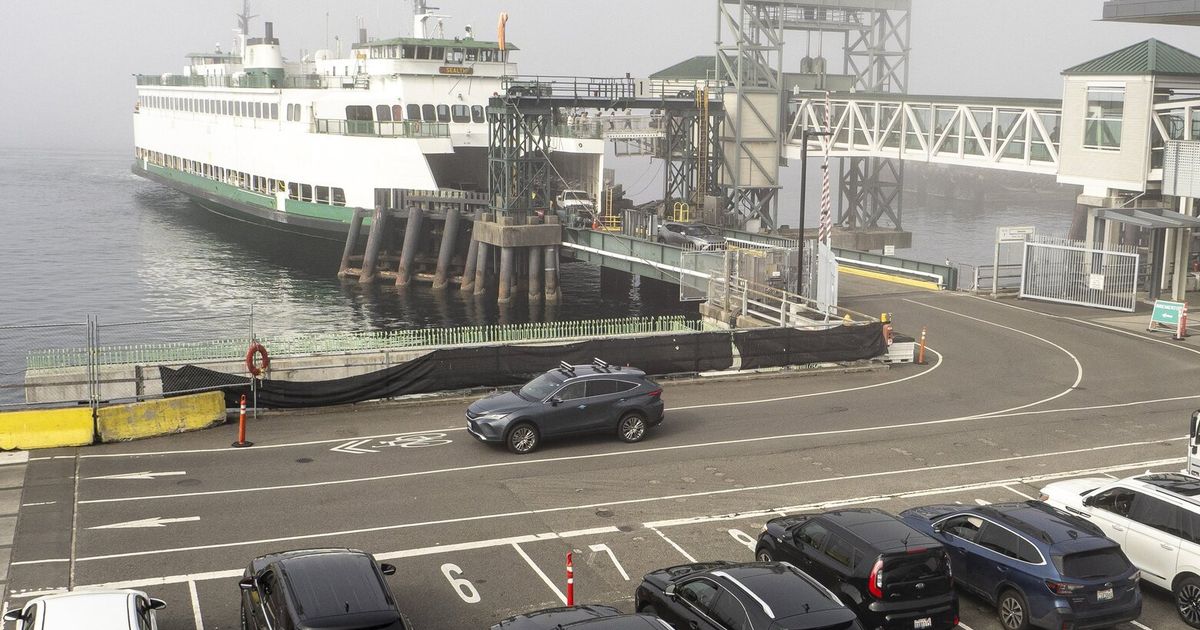
Washington state’s ferry system is still not OK.
A “sickout” Monday, in which 23 engine room employees took unplanned paid leave, was enough to grind the nation’s largest system of marine highways to a near full stop. Workers, students and tens of thousands of others counting on crossing Puget Sound had little choice but to make other plans.
The engineers that maintain an antiquated fleet have complained for several years their pay isn’t keeping up with the maritime industry, or even among their counterparts who work above the deck plates on WSF’s vessels. Under Coast Guard rules, the fleet can’t sail without them.
The engine room workforce made its point Monday, loud and clear.
But crippling a vital transportation system, with less than two dozen employees calling out sick, exposes a deeper fissure Gov. Bob Ferguson and members of the state Legislature have yet to repair. Engineers and mechanics are still spread far too thin for the system, and the growing wage gap between them and other mariners will continue to exacerbate that deficiency.
The system is entirely too dependent on overtime. Engine room crews worked more than 100,000 hours of overtime in 2025, with some engineers logging up to 1,500 hours in additional shifts, according to the Marine Engineers’ Beneficial Association, the union rep resenting them. Operating this way is unsustainable.
The state Legislature’s House and Senate transportation committees are well aware of this problem. Given the state’s dire budget deficit, meeting the demands of these workers may be difficult. Ferguson’s Office of Financial Management, which negotiates with the state’s public sector unions, argued this year there is no money for pay increases. But lawmakers must plan for a long-term resolution to grow the engine room ranks, especially in the senior-most positions.
In the meantime, the ferries must keep sailing.
Ferguson said Monday that while he discussed “challenges” facing MEBA with its leaders, its members do not have the right to “cause significant harm and inconvenience to the people of Washington state.” A continuation of any activities that curtail what is a critical transportation lifeline is unacceptable and risks eroding public support for their cause.
Part of the shock of Monday’s events is that Washington State Ferries has been slowly recovering from years of neglect by Ferguson’s predecessor, Jay Inslee, and a Legislature that failed to invest in an ongoing maritime workforce and fund new vessels. Throughout a summer that included Seattle hosting the FIFA Men’s World Cup, Washington state’s ferry system largely performed with a regularity that evoked its prepandemic years, when commuters could expect WSF to maintain a steady schedule.
Yet hidden under that success was a system that leans too hard on its current engine room crews, which work 12-hour shifts, seven days in a row. Overtime creeps into what are supposed to be off weeks. Burnout has become inescapable, crew members say.
Previous collective bargaining agreements have opened a wage disparity between engine room crews and higher-earning ferry workers on the higher decks of the vessels. And, following negotiations this summer, an arbitrator maintained OFM’s 0% stance. Meanwhile, an arbitrator gave the above-deck workforce 4% lifts in pay in each of the next two years, aggravating the wage gap further.
Ultimately, this week’s labor shortages should remind policymakers that Washington State Ferries is still far from its reliable, pre-COVID-19 operation. Lawmakers have only funded construction of three new vessels in an effort to rebuild the fleet; but the system will need 13 more by 2040. And though they’ve invested in replenishing the workforce, they have more work ahead — particularly to swell the ranks of mechanics and engineers who keep Washington’s people and economy moving over Puget Sound.
