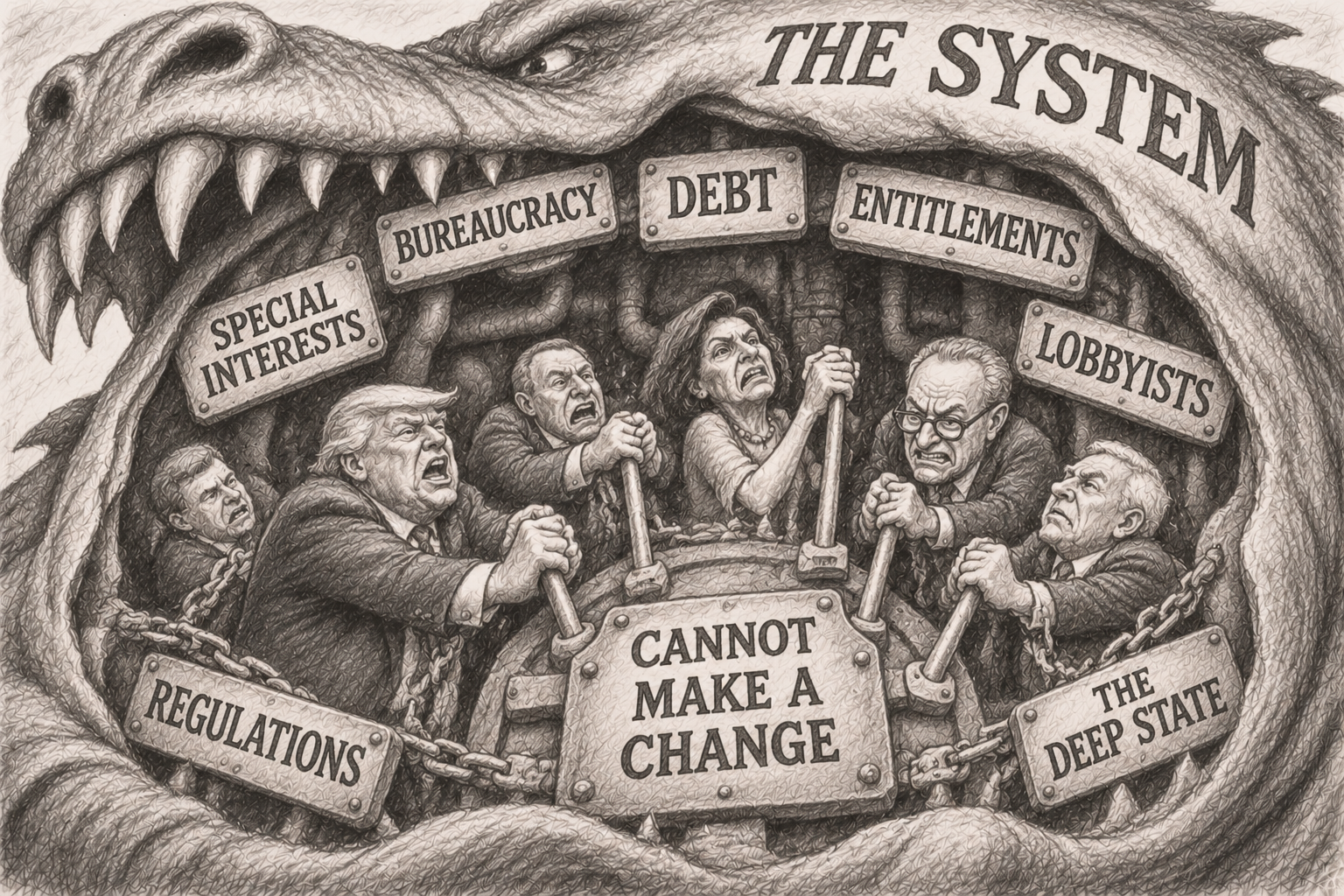
I am waiting for the real soap-opera to begin. Congress’ targeting of Jared Kushner. But let me make this clear. The Democrats are NOT united. They now have a progressive wing sort of like the Republicans had the Tea Party who would buck the establishment and then Speaker John Boehner retaliated by removing anyone from the Tea Party from any committee having to do with finance.
Adam Green, co-founder of Progressive Change Campaign Coalition, called out Schummer saying: “It’s a matter of leveraging the awesome people who just got elected and the fresh mandate they have to force Chuck Schumer to
think bigger.” So expect conflicts for some people because when they first get in Congress they are all pumped up and think they will make a difference. I was once young and naive. They will soon see how the belly of the beast works from the inside. This should be fun to watch as they begin to understand the system is the system.
Looking at Kushner, all I hear about is corruption is their mandate and they can be expected to target Kushner and they are hoping that will lead to Trump. That will be the #1 unspoken policy. Kushner thinks he has skirted the law by claiming he is a “volunteer” not a government employee. He has a problem.
The Constitution’s Foreign Emoluments Clause bars US officers from accepting payments from foreign states. Before Trump returned to office, Kushner pledged to stay out of “foreign policy work.” He added: “I served in government, and I think my track record is pretty impeccable,” he told Axios in February 2024. “Now I’m a private investor.”
Kushner is only looking at the money dangling in front of his eyes. His argument that he is only a unpaid volunteer, is not credible. The Justice Department’s own Office of Legal Counsel has found that anyone “quite clearly engaging in a governmental function” under the president’s direction counts as a government employee, appointment or not.
Last March, Democrats on the House Foreign Affairs Committee asked Trump to send Kushner to testify publicly, and Trump ignored the request. That is NOT going to prevale now. Starting in January, Democrats will control every committee in both chambers – and with it the power to compel his testimony.
That’s where the “volunteer” defense could backfire. The Justice Department says the president’s “immediate advisers,” which it defines as his “alter ego,” are immune from congressional testimony. To claim that protection, Trump would have to argue that Kushner is one of the most important officials in government after insisting for two years that he isn’t part of it at all.
Even if a court accepted that argument, the immunity doesn’t cover “inquiry related to their own private affairs,” and Kushner’s work at Affinity is private by definition. And because Kushner says he isn’t an executive-branch employee, the Senate could sue to enforce a subpoena on its own, without relying on Trump’s Justice Department.
Democrats could also go around him. They could subpoena Affinity, its auditor Ernst & Young, its custodian banks, including Bank of America, and partners in deals like the firm’s acquisition of Electronic Arts with Saudi Arabia’s sovereign wealth fund.
Investigators could demand records of Kushner. If Kushner refuses, there could be a contempt charge. If Congress holds someone in contempt and the Department of Justice (DOJ) refuses to prosecute or imprison that person, it is a serious institutional conflict, but it does not automatically trigger a “constitutional crisis” in the strict legal sense. The more accurate characterization is that this is a structural deadlock resulting from the separation of powers, and it is not unprecedented in history.
Precisely because criminal prosecution depends on the Executive Branch, Congress has historically retained two other options, though both have drawbacks. First would be that Congress can authorize its legal counsel to file a civil lawsuit in federal court, asking the court to order the individual to comply with the subpoena. This is the most common approach in modern practice, but it is time-consuming and often lasts until the end of the congressional term.
The Constitution implies that Congress has the Inherent Contempt power to directly order its Sergeant at Arms to arrest and detain contemnors. However, this power has not been used by either chamber since 1935, because it is procedurally cumbersome and politically risky. Moreover, DOJ’s OLC has issued opinions stating that if the contemnor is an Executive Branch official invoking executive privilege, Congress’s use of this power is constitutionally problematic. But Kushner claims to be a volunteer.
This could become a “Constitutional Crisis” should Trump try to issue a Pardon for Kushner. The Constitution’s Pardon Clause grants the President the power to “grant Reprieves and Pardons for Offenses against the United States, except in Cases of Impeachment.” The core limitations of this power include are limited to federal law exclusively and cannot interfere with state-level criminal prosecutions. However, if Congress moves to IMPEACH PRESIDENT TRUMP, this is the exception to a pardon. This clearly does not apply to impeachment cases.
If the House of Representatives initiates an impeachment inquiry against Trump, it can compel Kushner to testify or produce documents through its subpoena power, provided that the subpoena is issued within the scope of the House’s authorized investigation. However, Kushner is not limited to the Fifth Amendment as a defense—he can also raise executive privilege (particularly with respect to communications with Trump), or challenge the validity of the subpoena itself.
A “constitutional crisis” depends on the definition. If defined as “one branch openly defying the core prerogatives of another branch“: This does have crisis characteristics, because Congress’s oversight power is being effectively neutralized, and it may retaliate through other means (such as blocking appropriations or refusing to confirm nominees).
If defined as “the system being unable to function at all“: This is usually not the case. The system provides a release valve: Congress can choose civil litigation (letting the judicial branch intervene) or simply let the matter expire at the end of the term. Historically, when DOJ refused to prosecute (such as during the Bush administration when Harriet Miers and Josh Bolten were held in contempt), Congress ultimately resolved the issue through civil litigation or political negotiation, rather than triggering a government shutdown or complete breakdown of the system. The parties typically settle or the information is eventually obtained through other means after the political climate changes.
If you recall, in 2019 and 2024, the Democratic-controlled House held then-Attorney General Barr and Attorney General Garland in contempt, respectively, and DOJ refused to prosecute in both cases. This did not lead to the collapse of the constitutional order, but rather manifested as intense political and legal wrestling.
This is an institutional confrontation (political question), not a legal “constitutional crisis” in the narrow sense. The real consequence is usually a deadlock in congressional oversight, with the final resolution depending on the political will of Congress to pursue civil litigation or the outcome of elections.

WhatsApp messages with Saudi Crown Prince Mohammed bin Salman, will no doubt be at the top of the list. They could also seek details on reports that he pitched investors for billions while attending Davos as part of the official U.S. delegation. The record has been established. Since 2025, Democrats have sent letters demanding information on Kushner and Trump has protected him. Those days are rapidly coming to an end. Even the unrest in Albania involves Kushner real estate deals with the government.
There are some people in this world who think the more zeros they can add to their net worth somehow makes them more important or successful than another. It is not about lifestyle or being able to buy another car. This is how they think they measure success. The more money means I am better than you. In advising many people over more than 50 years, I came to see that the more money was not proof of anything if you lie, cheat, and steal to get it. To me, it was accomplishment not how many zeros you add to your net worth. I believe Kushner is simply trying to add zeros. That was what I encountered with 99% of the people I in NYC.
I use to manage money for Deutsche bank. I went to dinner with the head of the bank for Asia. He asked me how did I ever build one of the largest advisory firms in the world, especially in Japan. I replied:
“I don’t trade against my clients. I trade with them.”
You heard Goldman Sachs respond to Congress at the hearing on April 27, 2010, when CEO Lloyd Blankfein stated in his testimony that Goldman Sachs “certainly did not bet against our clients,” and that the firm “managed risk in the way our shareholders and regulators would expect.”
Goldman Sachs’ public defense to Congress was “we did not bet against clients, shorting was merely hedging,” but its internal emails showed that the firm was fully aware that the products it sold would fail, while privately celebrating profits from those failures. The Senate subcommittee’s conclusion was that Goldman Sachs misled both clients and Congress.
The object in NYC is always to make money and the clients are the opposition. I believe it was Kushner who brought Goldman into Trump’s first administration.
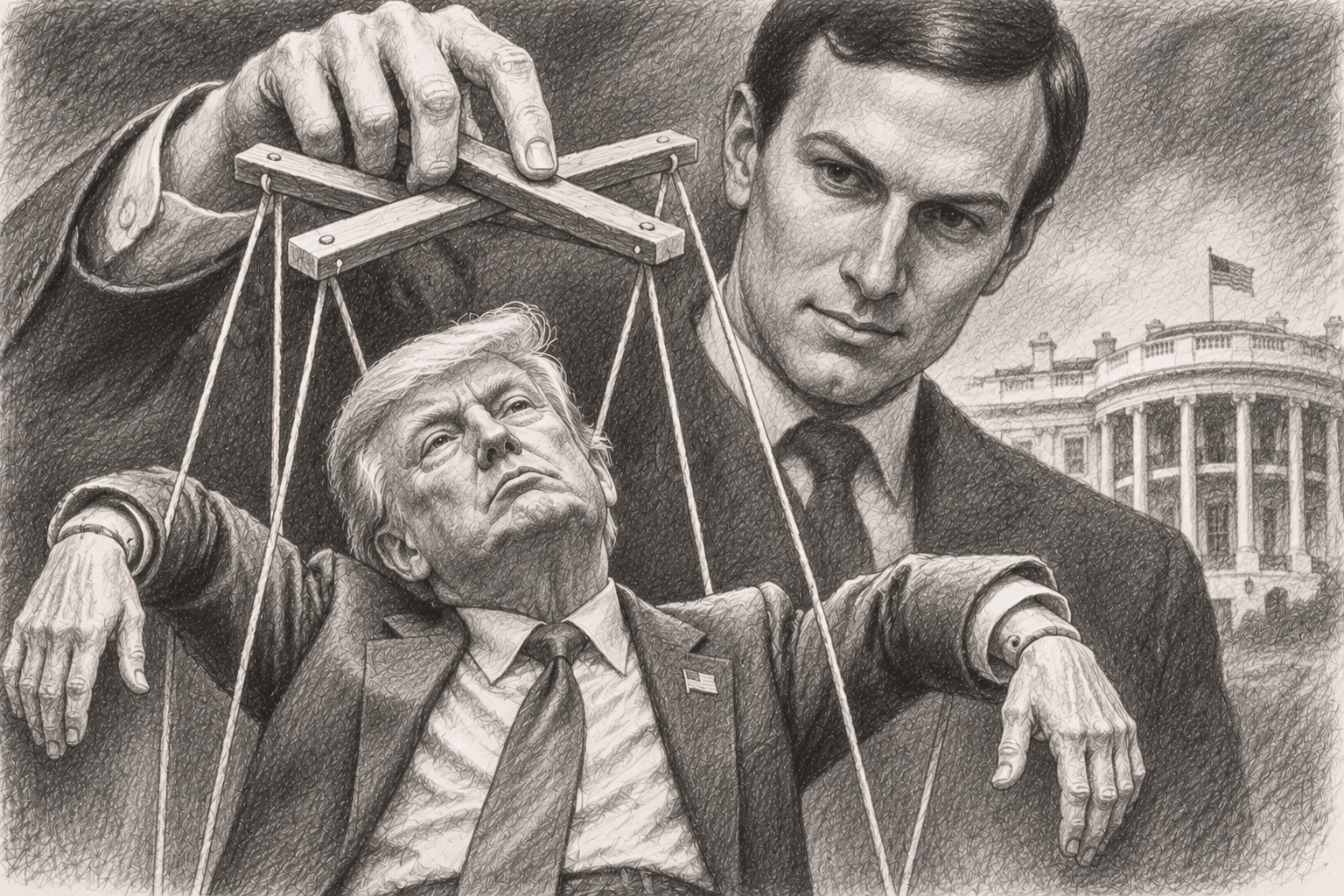
I think we will have some interesting times ahead. I have no idea to what extent Trump was involved. Was he manipulated, or part of it? If they think they could get Trump out of office before 2028, they will certainly give it a shot. Exposing what really happened, is only going to undermine the CONFIDENCE in both sides.