

(Editor’s note: This op-ed is part of a Seattle Times Opinion series exploring the First Amendment and its five freedoms.)
Even without their heads, we knew who the women were.
Their bodies had been dumped in the middle of the dirt road where they would be seen at first light by the locals headed to the market next to our patrol base.
With notes pinned to their burqas, the Taliban declared them “American whores” — serving as a reminder of who really controlled this remote area in Southern Afghanistan. When the district’s police captain reluctantly showed up at our demand, he sleepily shrugged at our anger. What did we want him to do?
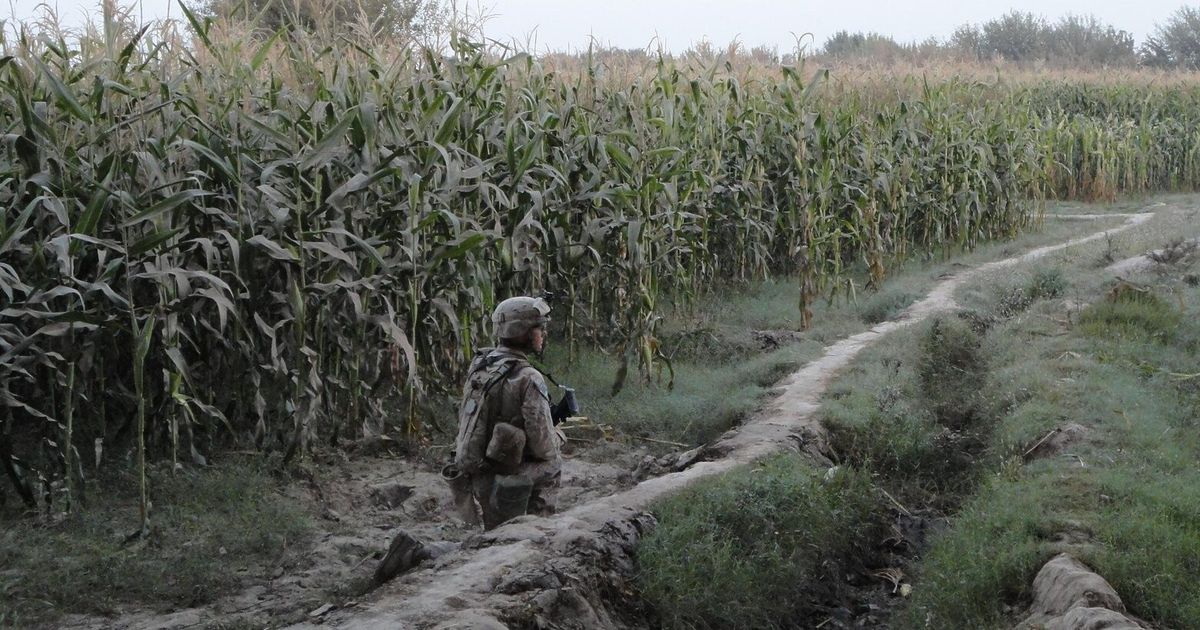
By then, my team had been deployed to the Helmand’s fertile river valley for nearly a year, supporting a local Marine unit nicknamed “America’s Battalion.” Despite years of costly fighting and heavy losses in the country’s deadliest region — with thousands of lives and billions of dollars lost by 2010 alone — American officials maintained that the country would soon be peaceful and secure in Afghan hands. Yet these women’s story painted a very different picture.
Weeks before Marine officials told reporters that the Afghan government could handle taking over security, the women and their children had frantically appeared at an outpost for the local Afghan National Police. Their husbands had been tortured and killed by the Taliban for working on U.S.-funded projects. They needed help. But the police refused to listen or do anything. The women were not originally from the area, they were not members of the dominant Barakzai tribe and they were Shia Muslims in a Sunni area. As outsiders and a minority within a minority, the police simply did not care.
Having exhausted all of the rights afforded by the Afghan government, they came to us because they had no other choice. But our mission was restricted to strategic national targets. So we scrounged up what little food we could, knowing that the widows would have no options to feed their children. A few days later we were standing over their dead bodies.
The police captain again rolled his eyes and spit in the dirt. “They’re just women, and they’re not even our women,” he told us through an interpreter. His only solution to our demand that he do something? He could order his policemen to roll the women’s bodies into the ditch. That was all of the vindication or justice he would provide.
While most Americans think of the First Amendment as protecting speech or religion, it also protects a much more fundamental right: To petition the government for a redress of grievances.
Far from an afterthought, the Revolutionary War was fought because the British government had refused to listen to the colonies’ complaints. Instead, the founders noted in the Declaration of Independence, their “repeated Petitions have been answered only by repeated injury.” Recognizing its importance, the U.S. Supreme Court has called the right to petition “the most precious of the liberties safeguarded by the Bill of Rights,” which is implied by “[t]he very idea of a government, republican in form.”
As a practical matter, the right to petition — which protects our ability to seek recourse when we have been wronged by another citizen or the government itself — is fundamental to all other rights. Without the right to file a complaint or lawsuit when other rights have been invaded, those rights are meaningless and can never be enforced. What good is the right to free speech or protest if we cannot challenge censorship by an overbearing local ordinance? What protection do we have against an unlawful arrest by the police if we cannot seek an order for our release? What chance do we have of obtaining justice for our murdered family members if the government will not even listen to our cries?
Like all times of turmoil during our nation’s history, the right to petition continues to protect us today. Unlike those women in Afghanistan, this right safeguards us against the excesses of government abuses and protects minority voices from being ignored or suppressed.
It is why the community can come together to protest for change and racial justice. It is why we can seek to recall an official who abuses his power. It is how we remind ourselves that “We the People” represent the “perfect Union” at the core of our democratic Republic.
We should never forget — or allow our government to overlook — the power that dwells in our right to petition.
