

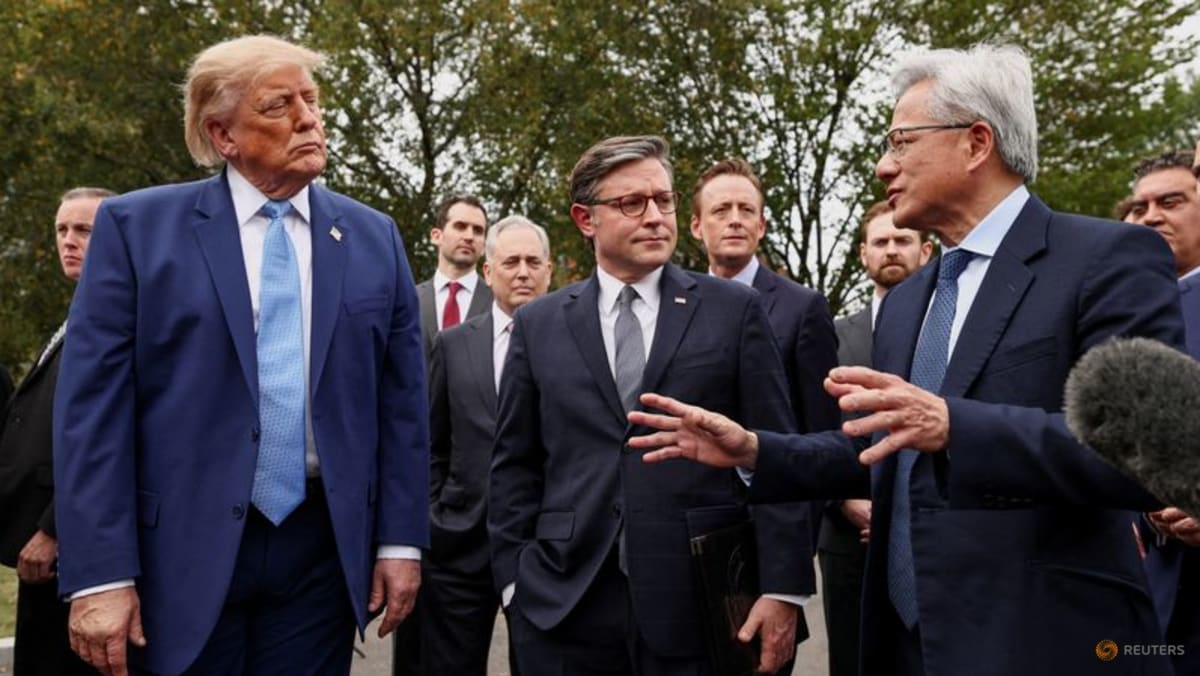
REPUBLICANS EYE EXPORT RESTRICTIONS
The case has revived claims among China critics in Washington that US export policies are too weak, boosting calls for more restrictions.
Reuters reported that Chinese AI companies are trying to rent Nvidia-powered computing capacity outside China because they are worried the Jensen Huang allegations could spur Washington to tighten restrictions on their ability to access the company’s chips remotely.
Congressional Republicans are keen to attach new restrictions on exporting advanced AI chips to China in the annual defence authorisation Bill, a must-pass measure that funds the military and typically attracts bipartisan support, according to a Senate aide, who spoke on the condition of anonymity.
Lawmakers are pressing their colleagues to pass at least four Bills on chip exports, according to statements since Monday.
The AI Overwatch Act would give Congress more power over advanced AI chip exports. The Chip Security Act would require companies to track the location of advanced AI processors to prevent smuggling.
The Match Act would pressure US allies to restrict sales and maintenance of advanced chipmaking equipment destined for China. The Remote Access Security Act would give the Commerce Department the tools to stop Chinese firms from renting overseas data centres to access Nvidia chips.
Jensen Huang is separately expected to testify before Congress before Thanksgiving, which falls on Nov 26.
House Foreign Affairs Chairman Brian Mast, a Florida Republican, told reporters on Thursday that congressional staff spoke with Nvidia on Wednesday night about a date and location for his testimony.
Mast and two other leading House Republicans asked Huang last week to brief them behind closed doors about his relationship with the suspected Chinese spy.
