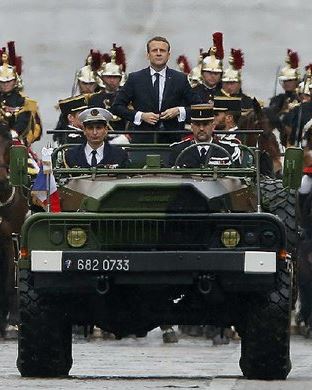
French troops have been operating inside Ukraine for months, and apparently the French Parliament was never informed. Radio France Internationale has exposed a confidential military mission known as Operation Volia, involving French soldiers deployed to train Ukrainian forces and maintain military equipment. AFP confirmed the presence of a small French contingent through a source familiar with the operation. These soldiers have reportedly been entering Ukraine since at least the summer of 2026, operating in small teams under the direction of a French general. We are now discovering that French military personnel were sent into an active war zone without the elected representatives of the French people being told what their own military was doing.
The operation was reportedly concealed behind another French military mission known as Gerfaut, which has operated in Poland since 2023. According to RFI, soldiers assigned to Ukraine were instructed to say they were traveling to Poland. France has trained approximately 25,000 Ukrainian soldiers since 2023, primarily through operations in France and Poland, but this latest revelation confirms that some of that assistance has extended directly onto Ukrainian soil. An anonymous source insisted that the soldiers were not engaged in combat and that the mission was strictly limited to training and technical support.
What happens if a Russian missile strikes a facility where French soldiers are training Ukrainian troops? What happens if French servicemen are killed? Does Macron then announce that Russia has attacked France and demand retaliation? Russia has repeatedly warned that foreign military personnel operating inside Ukraine could become legitimate targets. Putin reiterated that warning during discussions with American representatives on November 12. The French government may insist that these soldiers are not combatants, but Moscow is under no obligation to accept Paris’s interpretation of their presence. A single incident could become the excuse for a far greater confrontation, and the French public would discover the extent of its government’s military involvement only after its soldiers had been killed.
France’s Constitution contains provisions requiring the government to inform Parliament about military interventions abroad. Article 35 requires notification within three days of an intervention and parliamentary authorization when such an intervention continues beyond four months. Whether this particular training mission legally falls within those requirements remains a question for French constitutional authorities. Nevertheless, the fact that lawmakers reportedly did not know about Operation Volia raises serious questions about accountability. The government cannot expect the population to accept the consequences of military escalation while withholding information necessary for democratic oversight.

Parliament is now questioning how Macron managed to send soldiers into Ukraine without informing the elected representatives of the French people. Senator Cédric Perrin, chairman of the Senate’s Defense Committee, reminded the government that notifying Parliament is a constitutional obligation. “The proper functioning of democracy depends on it,” he declared. Perrin also warned that French society is divided over Ukraine and that the issue must be debated during the presidential campaign. Yet here we have a president quietly deploying French military personnel into an active war zone while lawmakers reportedly remain in the dark. What kind of democracy allows the executive to make decisions carrying the risk of direct confrontation with Russia without even informing Parliament? Macron may insist these soldiers are merely training Ukrainians and maintaining equipment, but if one of them is killed by a Russian missile, the French people will be forced to confront the consequences of a military commitment they were never properly told about.
European leaders are dragging their nations toward a confrontation with Russia while their own economies deteriorate. France is already struggling with enormous sovereign debt, fiscal instability, and mounting social unrest. The government cannot solve its domestic financial problems, yet it continues expanding military commitments abroad. The French taxpayer finances the equipment, the training, the personnel, and the expanding military bureaucracy, while the politicians decide how much of the operation the public is permitted to know. When the consequences arrive, it will be ordinary families who pay the price.

Macron has spent years promoting the possibility of deploying European troops to Ukraine, presenting military involvement as necessary to protect European security. France and Britain have also been developing plans for a multinational force that could operate in Ukraine after a cessation of hostilities. But Operation Volia demonstrates that a limited French military presence has already existed during the war itself. There is a substantial difference between preparing a future security arrangement after a peace agreement and quietly deploying personnel into a conflict that has not ended. The French government owes its citizens a clear explanation of where those boundaries have been drawn.
The timing is especially disturbing as our War Cycle continues to point toward escalating tensions throughout Europe. Russia and NATO are already engaged in an increasingly dangerous confrontation involving sanctions, intelligence operations, military assistance, and expanding deployments along Russia’s borders. Every additional commitment creates another opportunity for an incident that neither side can easily control. Governments always insist that their latest military action is limited and defensive. The problem comes when an adversary interprets that same action as direct participation in the war.
The people of France have every right to demand answers about the deployment of their military. How many soldiers were sent? Who authorized the operation? How close were they operating to active combat? What arrangements exist if French personnel are killed or captured? These questions should have been addressed before the mission began, not after journalists uncovered its existence. A government that asks its citizens to accept the possibility of war must at least be willing to tell them when their own soldiers have been sent into danger.
Europe has already suffered enough from politicians who believed they could manage military escalation without losing control. France should remember the enormous human cost of the two world wars before accepting the gradual expansion of another military confrontation. The French people deserve transparency, particularly when the decisions being made could eventually place their country in direct conflict with a nuclear power. Nobody should discover that their government has been moving closer to war only when the bodies begin coming home.