

 Oura
OuraWearable tech – currently dominated by smart watches – is a multi-billion dollar industry with a sharp focus on health tracking.
Many premium products claim to accurately track exercise routines, body temperature, heart rate, menstrual cycle and sleep patterns, among others.
Health Secretary Wes Streeting has talked about a proposal to give wearables to millions of NHS patients in England, enabling them to track symptoms such as reactions to cancer treatments, from home.
But many doctors – and tech experts – remain cautious about using health data captured by wearables.
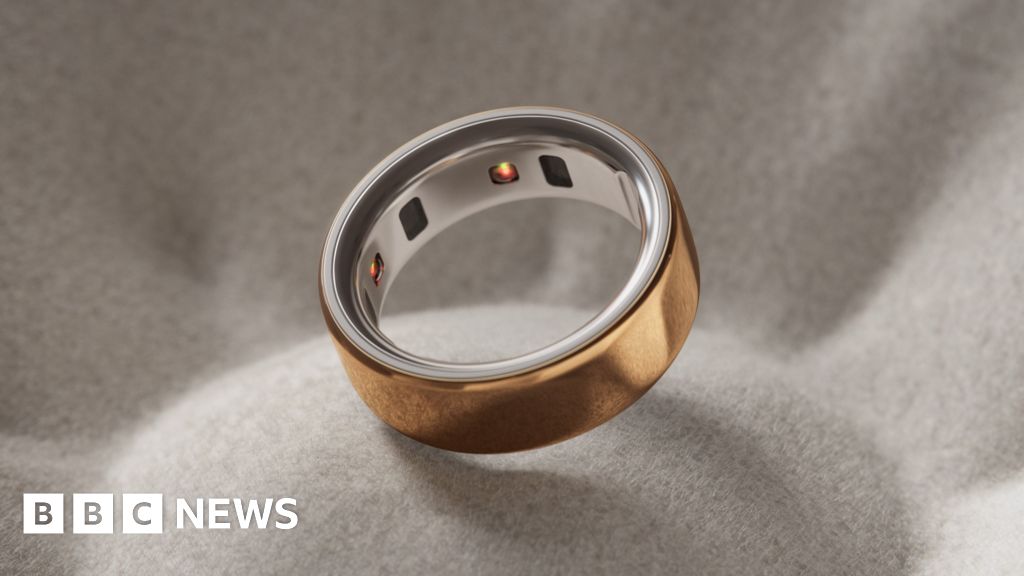
I’m currently trying out a smart ring from the firm Ultrahuman – and it seemed to know that I was getting sick before I did.
It alerted me one weekend that my temperature was slightly elevated, and my sleep had been restless. It warned me that this could be a sign I was coming down with something.
I tutted something about the symptoms of perimenopause and ignored it – but two days later I was laid up in bed with gastric flu.
I didn’t need medical assistance, but if I had – would the data from my wearable have helped healthcare professionals with my treatment? Many wearable brands actively encourage this.
The Oura smart ring, for example, offers a service where patients can download their data in the form of a report to share with their doctor.

 Getty Images
Dr Jake Deutsch, a US-based clinician who also advises Oura, says wearable data enables him to “assess overall health more precisely” – but not all doctors agree that it’s genuinely useful all of the time.
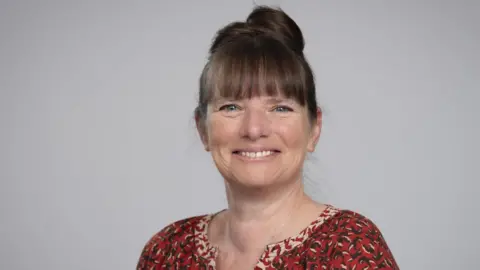
Dr Helen Salisbury is a GP at a busy practice in Oxford. She says not many patients come in brandishing their wearables, but she’s noticed it has increased, and it concerns her.
“I think for the number of times when it’s useful there’s probably more times that it’s not terribly useful, and I worry that we are building a society of hypochondria and over-monitoring of our bodies,” she says.
Dr Salisbury says there can be a large number of reasons why we might temporarily get abnormal data such as an increased heart rate, whether it’s a blip in our bodies or a device malfunction – and many of them do not require further investigation.
“I’m concerned that we will be encouraging people to monitor everything all the time, and see their doctor every time the machine thinks they’re ill, rather than when they think they’re ill.”
And she makes a further point about the psychological use of this data as a kind of insurance policy against shock health diagnoses. A nasty cancerous tumour for example, is not necessarily going to be flagged by a watch or an app, she says.
What wearables do is encourage good habits – but the best message you can take from them is the same advice doctors have been giving us for years. Dr Salisbury adds: “The thing you can actually do is walk more, don’t drink too much alcohol, try and maintain a healthy weight. That never changes.”
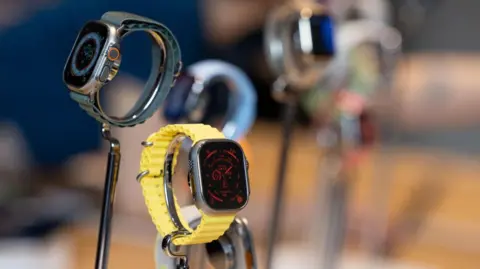
The Apple Watch is reported to be the world’s best-selling smart watch, although sales have slowed lately.
Apple didn’t comment, but the tech giant uses true stories of people whose lives have been saved because of the heart tracking function of the device in its marketing, and anecdotally I have heard plenty of those too. What I haven’t heard however, is how many cases of false positives there are.
In many cases when patients present their data to healthcare professionals, clinicians prefer to try to recreate it using their own equipment, rather than simply trust what the wearable has captured.
There are several reasons for this, says Dr Yang Wei, associate professor in wearable technologies at Nottingham Trent University – and they’re all very practical.
“When you go to hospital, and you measure your ECG [electrocardiogram, a test that checks the activity of your heart], you don’t worry about power consumption because the machine is plugged into the wall,” he says.
“On your watch, you’re not going to measure your ECG continuously because you drain your battery straight away.”
In addition, movement – both of the wearable itself on a wrist, for example, and general movement of the person wearing it – can “create noise” in the data it collects, he adds, making it less reliable.
 Helen Salisbury
Dr Wei points to the ring on my finger.
“The gold standard to measure the heart rate is from the wrist or direct from the heart,” he says. “If you measure from the finger, you’re sacrificing accuracy.”
It is the role of software to fill in such data gaps, he says – but there’s no international standard for wearables here – for either the sensors and software that power wearable devices, or for the data itself, and even what format it is gathered in.
The more consistently a device is worn, the more accurate its data is likely to be. But here’s a cautionary tale.
Ben Wood was out for the day when his wife received a series of alarming notifications from his Apple Watch, telling her he had been in a car crash. It advised her to text him rather than call because he may need to keep the line clear for the emergency services.
The alerts were genuine, and sent to her as his emergency contact – but in this case unnecessary. Ben was out at a race track driving some fast cars. He admitted that he “wasn’t very gifted” at it – but said he felt safe at all times.
“The boundaries between incident and alert need to be managed carefully,” he wrote in a blog post. “I’m curious to see how device-makers, emergency services, first responders and individuals think about this technology in the future.”
Pritesh Mistry, digital technologies fellow at the Kings Fund, agrees that there are significant challenges around folding current patient-generated data into our healthcare systems, and adds that the discussion has already been going on for several years in the UK without any clear resolution.
He says there’s “a good case to be made” for the use of wearables in the UK government’s current drive to push care out of hospitals and into community settings.
“But without that underpinning foundation of technology enablement in terms of the infrastructure, and supporting the workforce to have the skills, knowledge, capacity and confidence, I think it’s going to be a challenge,” he adds.
