

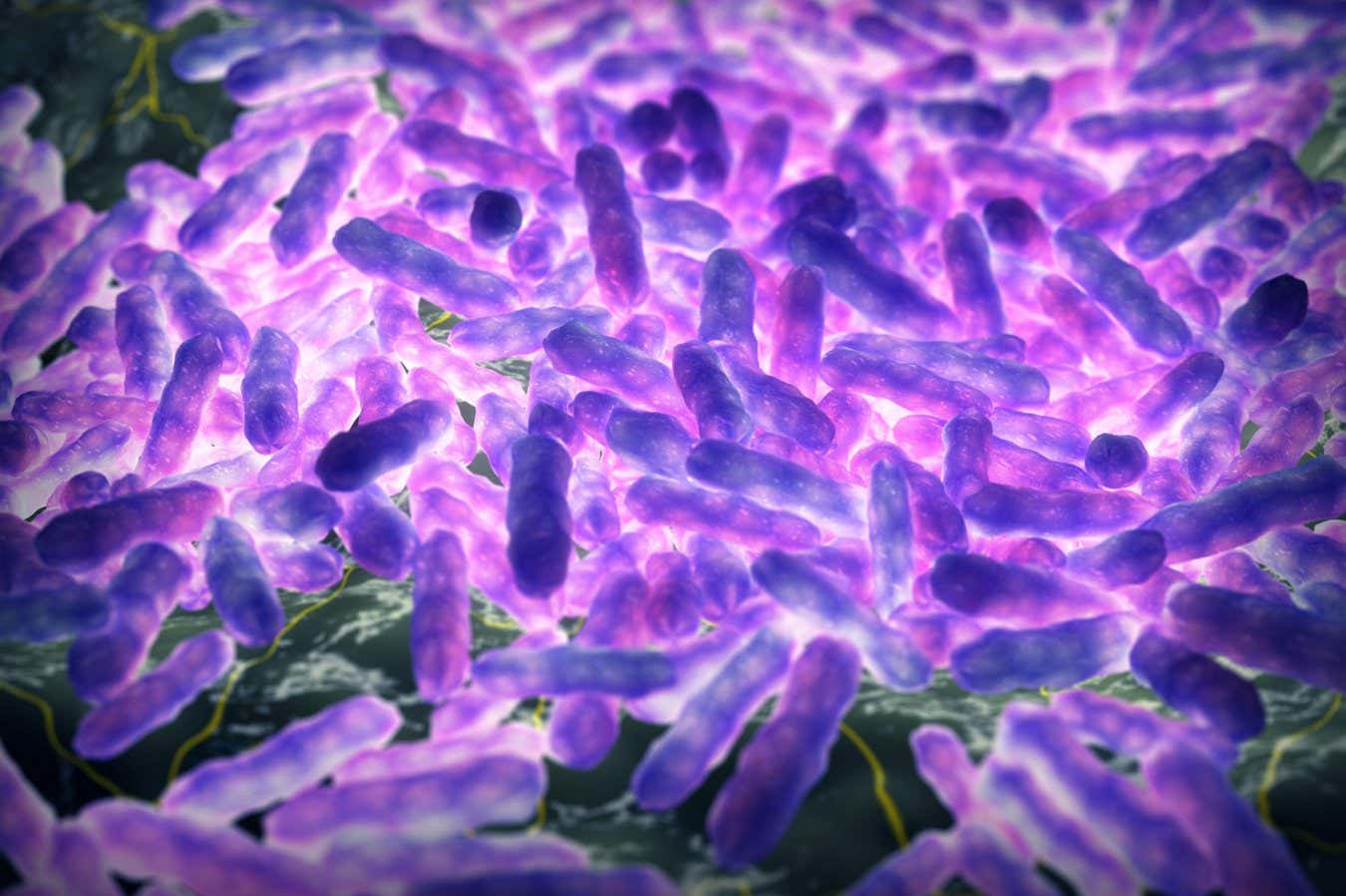
Leprosy can be caused by two species of bacteria, Mycobacterium leprae or Mycobacterium lepromatosis
nobeastsofierce Science/Alamy
A form of leprosy affected people in the Americas long before the arrival of Europeans, contrary to popular belief.
“The narrative around leprosy has been always been that it’s this awful disease that Europeans brought to America,” says Nicolàs Rascovan at the Pasteur Institute in Paris. “Well, our discovery changes that.”
The vast majority of leprosy cases worldwide are caused by the bacterium Mycobacterium leprae. But in 2008, Xiang-Yang Han at the University of Texas MD Anderson Cancer Center and his colleagues discovered a second causative agent, M. lepromatosis, in two people from Mexico who had leprosy. Since then, scientists have found more cases of this pathogen in the US, Canada, Brazil and Cuba – as well as in four people in Singapore and Myanmar.
Wanting to know more about this understudied pathogen, Rascovan teamed up with Han and other researchers, as well as Indigenous communities, to analyse ancient DNA from 389 people who lived in the Americas before European contact.
They found M. lepromatosis in the remains of one person near the Alaska-Canada border and two others along the south-eastern coast of Argentina, all carbon-dated to about 1000 years ago. The bacteria’s genomes varied slightly, hinting at distinct strains separated by around 12,000 kilometres. “It spread so fast, on a continental level, in just a matter of centuries,” says Rascovan.
DNA from dozens of modern cases – mostly from the US and Mexico – revealed that nearly all contemporary strains are essentially clones, showing only minor changes since ancient times. But the team also identified one rare and unusually ancient strain in a modern person that hadn’t turned up in archaeological remains, suggesting that at least two distinct lineages of M. lepromatosis are still infecting people in North America today – alongside the M. leprae strains introduced by Europeans.
Combined, the analyses suggest that the bacteria have been branching out and evolving in the Americas for nearly 10,000 years. About 3000 years ago, one line of the pathogen mutated into a form that now infects red squirrels in the UK and Ireland – leading to problems like swollen skin and crusty lesions.
As for its origins, genetic data show that M. lepromatosis and M. leprae split from a common ancestor more than 700,000 years ago, although where in the world that divergence happened remains unknown.
Modern cases of M. lepromatosis seem to affect the blood vessels, especially in the legs and feet – unlike M. leprae, which mainly attacks the nerves, says Han. In some people carrying M. lepromatosis, the blood flow gets blocked, causing the skin to die and break down. That can lead to deadly complications, including severe secondary infections by bacteria like Staphylococcus aureus. This disease can also spread beyond the skin, turning up in organs like the liver and spleen. Consequently, some people die before their bones have time to show any signs of leprosy.
That could help explain why archaeologists hadn’t identified leprosy in ancient remains from the Americas, says Han. While skeletons in Europe and Asia often show classic signs of bone damage from leprosy, the ancient individual from Canada in this study had only vague jaw lesions that could be caused by many conditions – and the two skeletons from Argentina showed no signs of leprosy at all.
Annemieke Geluk at Leiden University in The Netherlands says this “beautiful study” has forced a rethinking of the disease’s history. “My teaching slides state that there was no leprosy in the Americas before Europeans colonised it,” she says. “Now I have to update my slides!”
Beyond that historical significance, the research also sheds lights on a pressing public health issue. Leprosy is re-emerging in parts of the world, she says, and rising antimicrobial resistance could make it harder to treat. “Surveillance is very important,” says Geluk. “We need a global effort to map what strains are out there.”
Topics:
