

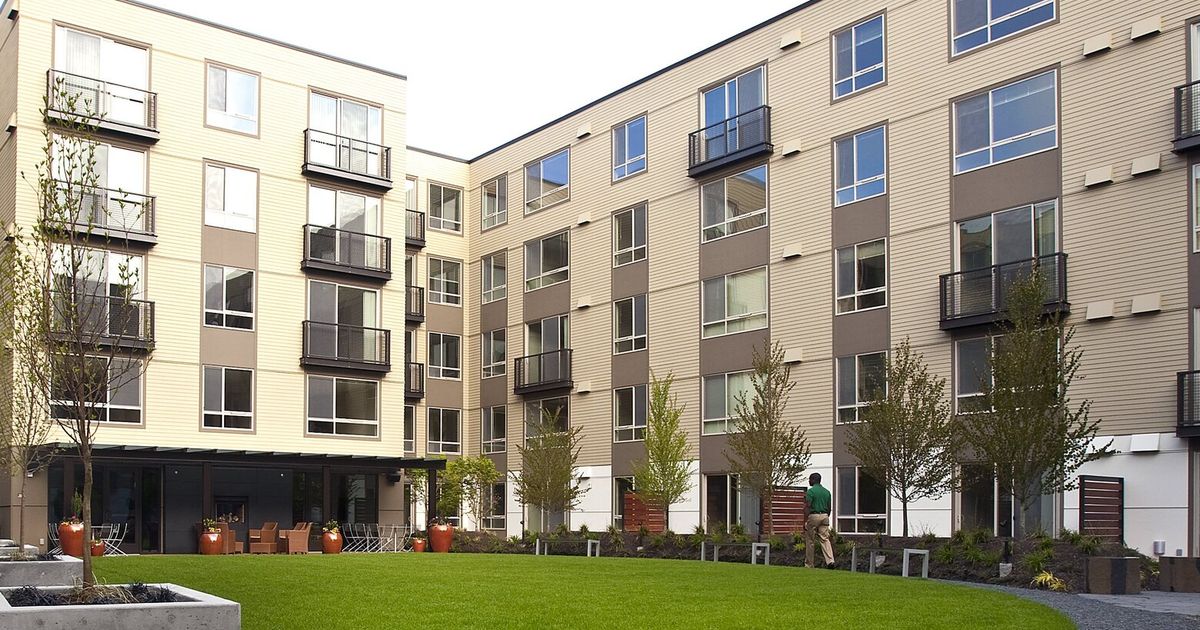
Last November, Seattle voters approved the historic $970 million housing levy renewal. What voters did not get to decide is a stealth housing tax they are already paying thanks to the Multifamily Tax Exemption, or MFTE. The City Council will soon be deciding whether to renew this tax exemption for developers, but a recent University of Washington study suggests that MFTE is no longer an effective way to meet priority housing needs.
The exemption is intended to encourage the construction of affordable housing. However, it allows market-rate housing owners and investors to essentially shift their property taxes onto the rest of us — to the tune of over $80 million dollars in 2024 alone, according to the Seattle Office of Housing. Last year, that cost the owner of a median-valued ($804,000) Seattle home an extra $145 on top of the housing levy.
In exchange for setting aside 20% of the units in new multifamily developments for income-qualified tenants, the MFTE allows the building owner to forgo property tax on all the residential units for 12 years or longer. Those taxes are shifted to other property owners; there is also a loss of revenue because in some MFTE buildings, taxes are deferred until the exemption period ends. In 2024, that translated into a $9 million loss to Seattle coffers and $35 million countywide, per the UW study.
The Seattle Office of Housing reports there are 6,636 income-restricted MFTE units across 286 buildings in Seattle. This is less than 3% of the total rental units in the city, according to the city’s Comprehensive Plan. The majority of those are for renters making between 75% and 90% of the Area Median Income. For a two-person household, that is between $82,786 and $99,343.
The UW study addresses two questions: Is MFTE a development incentive, and how do the public costs — the shift of the tax burden to other taxpayers — compare with the private benefits, such as the tax savings to building owners and rent reduction for tenants?
The UW report concludes there is no way to prove that the MFTE tax break was needed to incentivize the construction of new housing. Recent action by the City Council to approve housing in the stadium district seems to prove the opposite. In that case, the developer accepted the requirement to set aside 50% of housing units for income-qualified renters without using any “city funding.” Here’s the wrinkle: This housing would be eligible for a property tax exemption on all 990 units as long as 198 of them meet MFTE income restrictions, because the tax shift is not considered “city funding.”
Over its history, MFTE has produced far more studio and one-bedroom units than larger units — the Office of Housing reports that just 13% of them are two-bedroom, and less than 1% are three-bedroom. The city, however, has stated a growing need for greater rent discounts and more two- and three-bedroom units for families. Developers interviewed for the UW study say that the tax breaks don’t justify those goals because their investors and lenders won’t “accept a lower yield … or give up a little bit in profit.”
According to the One Seattle Comprehensive Plan, Seattle will need 62,740 net new units of housing affordable to households earning less than 50% Area Median Income over the next 20 years. (Seattle AMI was $121,608 in 2023.) Market-rate developers say MFTE can’t produce housing at this level of affordability.
Meanwhile, nonprofit developers already have ways to create this housing by tapping into Mandatory Housing Affordability program funds, the low-income housing levy, the payroll expense tax and funds from the State Housing Finance Commission.
State-mandated zoning changes will soon allow between four and six units of housing on every former single-family lot in Seattle and more accessory dwelling units to incentivize the construction of “missing middle” housing. Then there is the new Seattle Public Housing Developer, with a voter-approved $50 million (estimated) annual revenue stream to acquire or construct housing where no one pays more than 30% of their income for rent and basic utilities.
It’s time to say goodbye to MFTE, give property owners a little break and unlock that $9 million per year in deferred taxes to help reduce Seattle’s budget deficit. MFTE has outlived its usefulness.
If you would like to share your thoughts, please submit a Letter to the Editor of no more than 200 words to be considered for publication in our Opinion section. Send to: letters@seattletimes.com
