

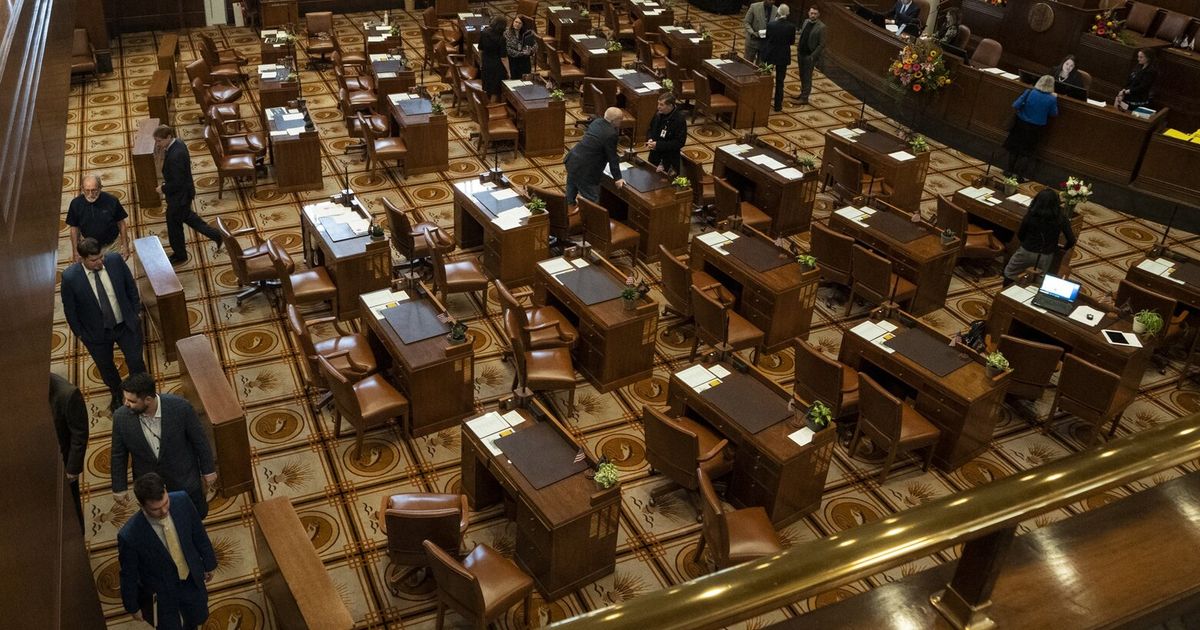
An Oregon plan to help save local journalism is close to the finish line but it’s unclear whether Senate Bill 686 will pass before the Legislature adjourns.
The bill would require Google and Meta to pay publishers for the value news adds to their platforms in the state. But it will likely die unless it receives a vote in the next few days.
Getting tech giants to pay is a linchpin to saving local journalism, which is increasingly consumed on or through their websites.
America lost more than a third of its local newspapers, which provide most local reporting, as this technical and economic disruption grew over the last two decades.
A relative smattering of digital news startups and nonprofits have emerged and some are doing stellar journalism. But the overall industry, and civic literacy, will continue its decline until local outlets secure fair compensation for their work online.
Despite skepticism about “the media,” the vast majority of Americans value and trust local news: 85% believe it’s important to their communities, according to Pew Research Center.
Governments have tried to help but Google and Meta fight aggressively whenever they’re told to pay local news outlets for their work. They have threatened and bullied entire nations to scuttle or weaken these policies. They also create the appearance of division by giving grants to a few nonprofits and news organizations that question the policies.
Oregon’s policy follows a template used in Australia. In 2021, it required Google and Meta to negotiate with local news outlets, not just a few giant media corporations.
California and Washington failed to pass related policies over the last two years. A federal proposal is languishing in Congress despite bipartisan support and the Trump administration’s prosecution of Google for antitrust violations that harmed publishers.
Policymakers face many pressing issues. This one may not seem urgent, because there’s “news” everywhere and many are fatigued by the national-news fire hose.
But what’s rapidly disappearing, and not being replaced by social media, is local reporting that informs voters, holds institutions accountable and binds communities. Rural areas are suffering the most.
In Oregon, tech giants are using their usual playbook. They’re threatening a news blockade in the state and a few publishers who received grants are criticizing the model, creating fear and doubt among legislators.
Still, SB 686 advanced last week out of a committee to the full Senate, where a vote could happen Saturday, according to the office of state Sen. Khanh Pham, the lead sponsor. Then the bill would need to move through the House before the Legislature adjourns.
Legislators have to wrap up by June 29 but could adjourn earlier, without finishing SB 686 and other consequential bills.
“Earlier this week the best guess was they were going to leave town and this and a lot of other stuff were going to be left on the table,” said Jeb Bladine, publisher of Yamhill County’s News-Register.
Now supporters are “waiting day to day” and hoping for a timely vote.
Bladine believes his family-owned weekly would be a relatively large beneficiary because it employs so many journalists — more than dailies in Eugene, Salem and Medford, he said.
The bill would require platforms to pay publishers a fixed amount, totaling $122 million a year, based on research estimating how much they profit from news content. Payments would be allocated based on the number of journalists employed.
Alternatively, platforms could negotiate individual deals with each outlet or enter arbitration to settle payments.
If they pay the lump sum or enter arbitration, 10% would go to a nonprofit at the University of Oregon that would make grants to small outlets.
In Bladine’s case, he estimates the News-Register’s share of a lump-sum payment could cover salaries of three or four of its nine journalists.
“It could make us solvent,” he said.
SB 686 was reworked by a Senate committee last week to address legal concerns, removing one hurdle.
Legislators should see through another — the platforms’ threats to block news.
Publishers are already losing web traffic from the platforms. That’s worsening regardless of SB 686. The loss of web-traffic revenue makes it even more important that publishers get compensated by trillion-dollar companies using their material.
Google is fading publishers’ visibility on its platform. It’s replacing the series of links in search results with AI summaries of material it’s scraping and regurgitating. The Wall Street Journal recently detailed this “AI armageddon” for online news publishers.
“Chatbots are replacing Google searches, eliminating the need to click on blue links and tanking referrals to news sites,” it reported. “As a result, traffic that publishers relied on for years is plummeting.”
Google and Meta made similar threats in Australia in 2021. Instead of being bullied, its then conservative-led government stood up for local news. Platforms ended up paying, to the benefit of small, large and rural news organizations.
Canada also resisted the bullying and its liberal-led government passed a similar policy two years ago, though payments ended up much smaller than expected.
Meta technically blocked news in Canada. That coincided with the company deprioritizing news all over because of strategy changes.
But Canadians are still finding news on Meta sites through workarounds. Independent news outlets have also reportedly found ways to recover and are reconsidering their dependence on fickle platforms.
Meanwhile, Bladine is seeking donations and trying to drum up more support from local advertisers to keep the ship afloat.
If SB 686 gets tech giants to pay, it won’t be a bonanza. But it would help Bladine and other local news providers keep serving their communities until their next business model takes hold.
“We’d be able to maintain a news department,” he said, “a healthy news department.”
