

In their efforts to offset tax cuts and exert more control over the Federal Reserve, some U.S. legislators have lately focused attention on an otherwise obscure element of monetary policy: The Fed, they argue, should stop paying interest on the cash reserves that banks hold at the central bank.
It’s a bad idea, in more ways than one.
The authority to pay interest on reserves, a power granted to the Fed by Congress in 2008, has enhanced the Fed’s ability to support the economy. It puts a floor on short-term interest rates, because banks have little incentive to charge less than what they can earn risk-free at the central bank. It encourages banks to keep plenty of reserves, helping ensure that they have enough cash to meet unexpected demands and to satisfy the liquidity requirements that were considerably strengthened following the Great Financial Crisis. It allows the central bank to provide emergency liquidity to the financial system without undermining its monetary policy.
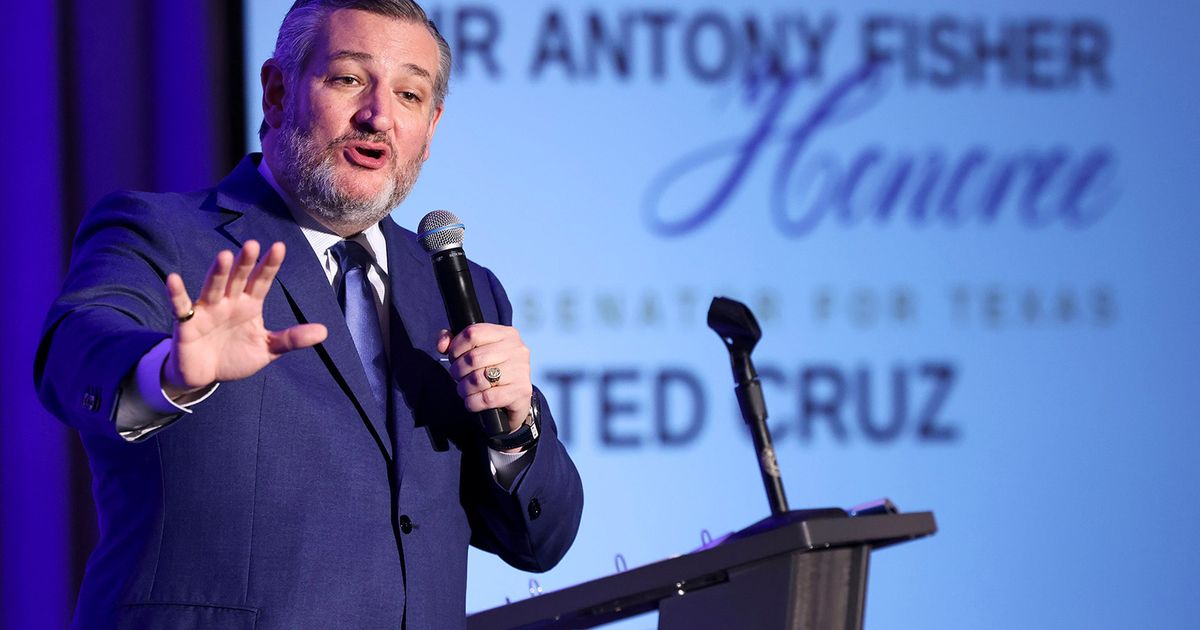
Yet suddenly, legislators want to eliminate the practice. Some, notably Sen. Ted Cruz, posit that doing so would save the U.S. government more than $1 trillion over the next decade. Others think it’s necessary to shrink the Fed’s $6.7 trillion balance sheet, which they say unduly exposes taxpayers to losses and gives the central bank too large of a footprint in financial markets. These ideas are misguided.
Let’s start with the supposed savings. For the Fed, reserves are created when it increases its holdings of interest-earning assets such as Treasury securities. If it stopped paying interest, banks would reduce their reserves to the bare minimum needed to execute payments into and out of their accounts at the Fed.
This, in turn, would require the Fed to sell off assets to restore the balance between the demand and supply of reserves. Otherwise, short-term interest rates would plummet to zero. The reduction in the Fed’s balance sheet, in turn, would reduce its interest income. With both sides of its balance sheet shrinking by the same amount, its profits and its remittances to the U.S. Treasury wouldn’t materially change.
True, the size and composition of the Fed’s balance sheet entails some risks: Its pandemic-era asset purchases, for example, have resulted in more than $200 billion in losses to taxpayers. But this isn’t the fault of interest on reserves. It happened because the central bank invested the reserves in longer-dated assets, then had to push up short-term rates sharply to combat inflation. As a result, the interest payments on reserves overwhelmed the income earned on the assets, precipitating losses. One can argue that the Fed’s asset purchase program and interest-rate policy were flawed, but those are separate issues.
Should the Fed have a smaller footprint? I don’t see why. This would effectively entail a return to the pre-2008 regime, in which banks had to closely manage their reserves, borrowing from one another whenever they found themselves short of cash. Central bank reserves are the ultimate high-quality liquid asset. Why shouldn’t the Fed provide as much as needed to enable banks to meet their obligations?
Beyond that, paying interest on reserves — and hence maintaining a larger balance sheet — makes the Fed’s job easier in numerous ways. As long as reserves are ample — that is, above the level that banks need for liquidity and payments — the central bank need only change the interest rate on those reserves to affect short-term rates more broadly. It needn’t tinker with the quantity of reserves in the banking system.
By contrast, under the previous scarce-reserves regime, the Fed had to ensure that supply met demand precisely. This was difficult because events beyond its control — such as fluctuations in the Treasury’s cash balance at the Fed or the demand for currency — affected the amount of reserves. To keep the federal funds rate within its target range, the Fed had to impose a complicated set of reserve requirements for banks and conduct frequent open-market operations.
The current regime also bolsters the Fed’s ability to act as the lender of last resort and to intervene effectively during financial crises. Under the pre-2008 regime, it had to limit the size of its special liquidity facilities in order to ensure that usage would not undermine its control of interest rates. Now, it can provide an open-ended backstop, which is far more credible and hence effective in restoring market function and financial stability.
In sum, prohibiting the Fed from paying interest on reserves wouldn’t save money, wouldn’t protect taxpayers and would undermine the central bank’s ability to stabilize financial markets and the economy. Legislators should drop this very bad idea.
