

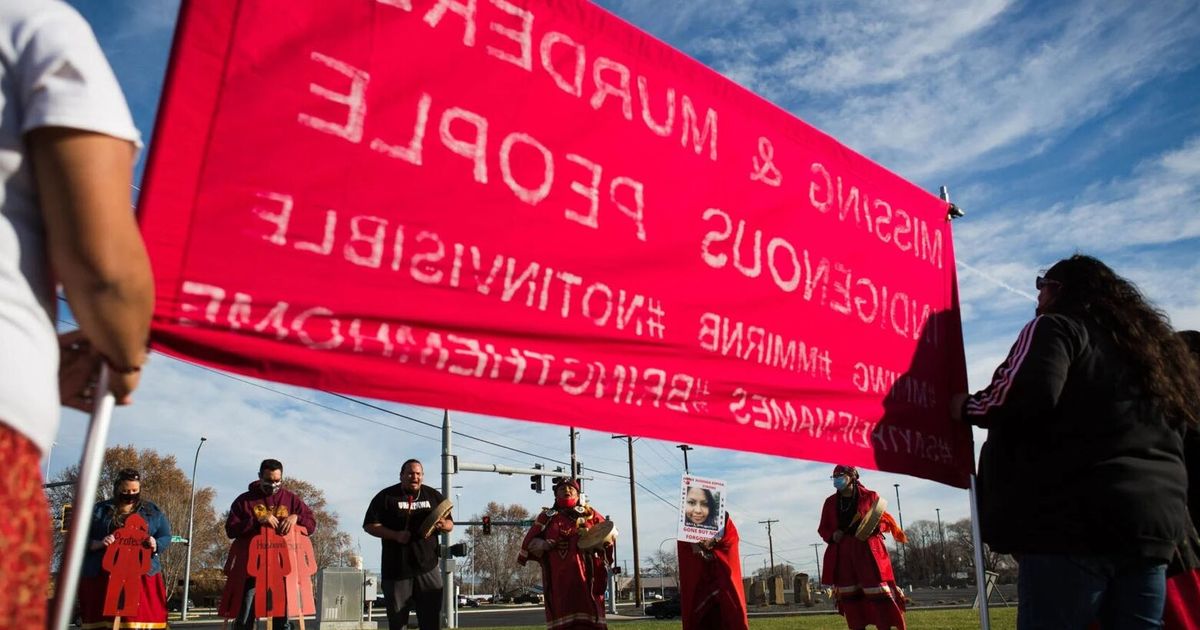
Three new reports from Washington’s Missing and Murdered Indigenous Women and People Task Force offer encouraging news about a horror that has shadowed many local families for decades.
But the reports also lay out some stark realities that underscore the urgent need to press forward with ongoing efforts to find the missing, pursue perpetrators and educate communities across the state.
The Legislature established the task force, which is administered through the State Attorney General’s Office, in 2021. The group includes a wide range of people, representing government agencies, law enforcement, social service offices and other community members.
The Yakama Nation’s Patricia “Patsy” Whitefoot — whose sister Daisy Mae Heath disappeared in 1987 and is considered a victim of homicide — is one of the task force’s five executive committee members.
The best news from the reports the task force released on June 2?
More than 80% of 150 people reported missing since July 2022 have been found, thanks to the statewide Missing Persons Alert System. And as of May, a new tool kit, customized for Indigenous families and communities searching for lost people, is available.
Meantime, a new cold case unit that helps police track Indigenous missing-person cases made its first arrest last month.
Many more cases, of course, are still unsolved, and the task force’s reports help frame the looming challenges that remain. The Yakima Herald-Republic’s Tammy Ayer quoted this key passage from the report:
“Despite growing awareness and ongoing initiatives, Indigenous communities continue to encounter systemic barriers to justice, including gaps in reporting, limited coordination among agencies, and insufficient resources,” the report said. “These challenges highlight the necessity of sustained efforts, policy reforms and strengthened collaboration between Tribal, state and federal entities.
“Only through dedicated action can justice be found for victims and healing for their families.”
And clearly, a lot of families need healing.
Indigenous people account for less than 2% of the state’s population, yet between 2006 and 2024, roughly 6% of Washington’s homicide victims were Native. During that same time, the homicide rate averaged 10.6 per 100,000 Indigenous people, compared with 3.5 per 100,000 for non-Natives.
The explanations for that disparity are many, but the task force highlighted several chronic conditions that raise risks for Indigenous families — poverty, housing instability, inadequate support services — and pledged to keep advocating for resources to address them.
Complain all you want about the things the Legislature gets wrong — state lawmakers have run up a long list of missteps over the years — but establishing the Missing and Murdered Indigenous Women and People Task Force is one they got right.
In three short years, the task force has taken on a long-term, large-scale problem and methodically produced tangible results that are being felt in the Yakima Valley and beyond.
It will take significant resources to effect the changes that are needed to achieve further progress, but the task force deserves statewide gratitude for what it’s already accomplished.
The work this group is doing is commendable and long overdue.
