

This summer, a broad coalition of people who love the great American outdoors — hunters and anglers, Republicans and Democrats, hikers, runners and off-road vehicle users — rose up in opposition to a poorly conceived proposal in Congress to sell millions of acres of public lands.
Happily, a bipartisan group of lawmakers helped quash the proposal. But there are new efforts to chip away at our public land and water heritage.
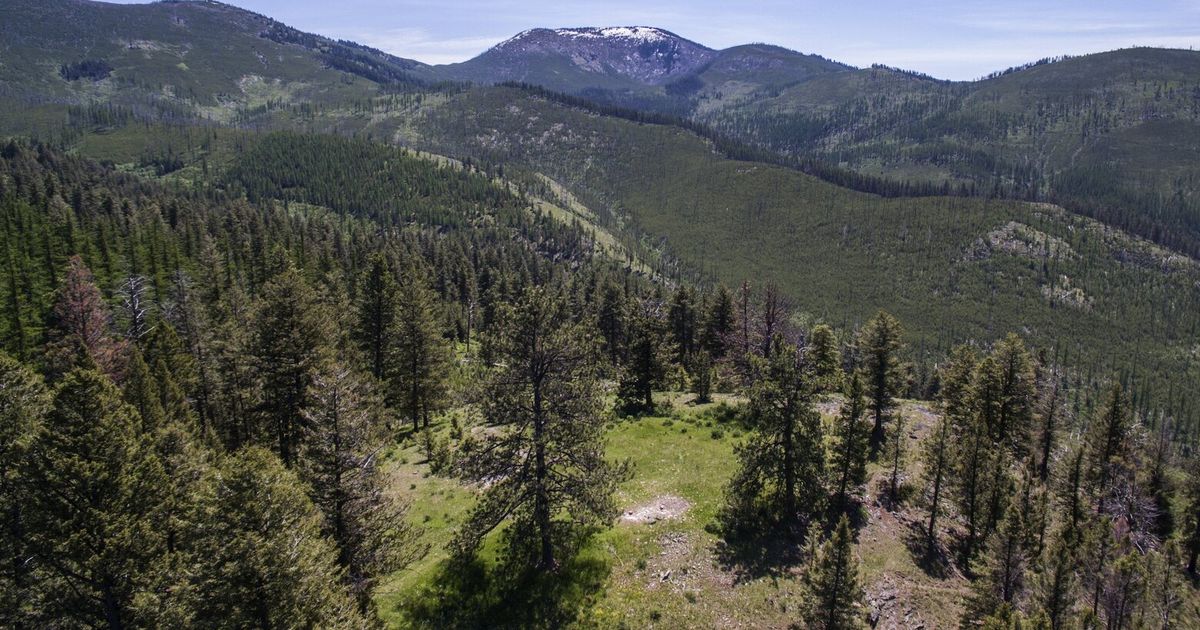
The latest would rescind a longstanding policy known as the Roadless Area Conservation Rule, which prevents construction of new roads in 58.5 million acres of pristine national forests across the country.
We led the charge for the roadless rule in 2001 as leaders of the Forest Service. At more than 600 public meetings and in over 1.5 million public comments, the vast majority of people advocated for stronger protections for roadless areas. Because of its many benefits for fish and wildlife, clean water and the health of our forests, repealing it would not be in the nation’s interest.
Roadless areas represent some of the finest public fishing and hunting opportunities in the United States.
Key habitat for native brook trout can be found in New Hampshire’s White Mountain National Forest, as well as Vermont’s Green Mountain National Forest, where one of us caught our first native brook trout in a roadless area. Likewise, one of us caught our first steelhead in a roadless area of the Tongass National Forest, where more than 70% of the forest’s remaining trout, steelhead and salmon habitat is found within roadless areas.
Elk and deer love roadless areas, so it’s no coincidence that each of us shot our first elk in an area without roads in Idaho. The state of Utah designated 80% of its roadless lands as crucial habitat for mule deer.
Their importance, however, is not limited to fish and wildlife and hunters and anglers. Roadless areas are also sources of drinking water for more than 60 million Americans.
The Department of Agriculture, which oversees the Forest Service, argues that the roadless rule prevents the USFS from thinning and cutting trees to prevent wildfire. That is incorrect.
The rule allows for forest health treatments, such as cutting smaller trees and undergrowth to help restore healthy forests. That work helps to reduce the risk of unnaturally intense fires. In fact, states such as Idaho, Utah, Nevada and Wyoming have treated a higher percentage of roadless areas for hazardous fuels than areas that have roads.
In Idaho, 36% of national forest lands treated to reduce wildfire risks were in roadless areas; in Utah 38%; in Montana, 1 in 5 acres of national forests treated to reduce wildfire risks have been in roadless areas.
About nine out of 10 fires on national forests are caused by people, and of those nearly 80% occur near roads. Roadless areas, almost by definition, are generally located far away from developed communities. Instead of repealing the roadless rule, the administration would do well to focus on reducing the risk of catastrophic wildfires in forests near developed communities.
The timber industry is generally not interested in logging roadless areas. Even before the roadless rule, these forests were without roads — which are almost always built to allow for timber cutting — for a reason. They are usually found in higher elevations with steeper slopes, erosive soils and lower timber values. The cost to carry out timber sales in these areas almost always exceeds the revenue generated for taxpayers.
Twenty-four years ago, we proposed putting these areas off-limits to new roads because most Americans value their public lands for the sense of wildness, naturalness, clean water and remote recreation opportunities they provide.
At the same time, Americans want to know the federal government is a wise steward of their resources. When we proposed the roadless rule, the Forest Service was carrying a maintenance backlog of more than $8 billion on its existing road system. Circumstances have not improved since then. The overall deferred maintenance list for the agency today is $8.6 billion, and with recent staffing and budget cuts the situation will get worse.
It makes no sense to continue to build more roads into pristine areas when the Forest Service cannot afford to take care of roads and other infrastructure it has already built.
We are hard-pressed to think of many other policies carried on through six presidents — three Republican and three Democratic. The roadless rule’s staying power reflects its popularity. Rescinding it belies ecological, economic and plain common sense. We urge the administration to keep it intact.
