

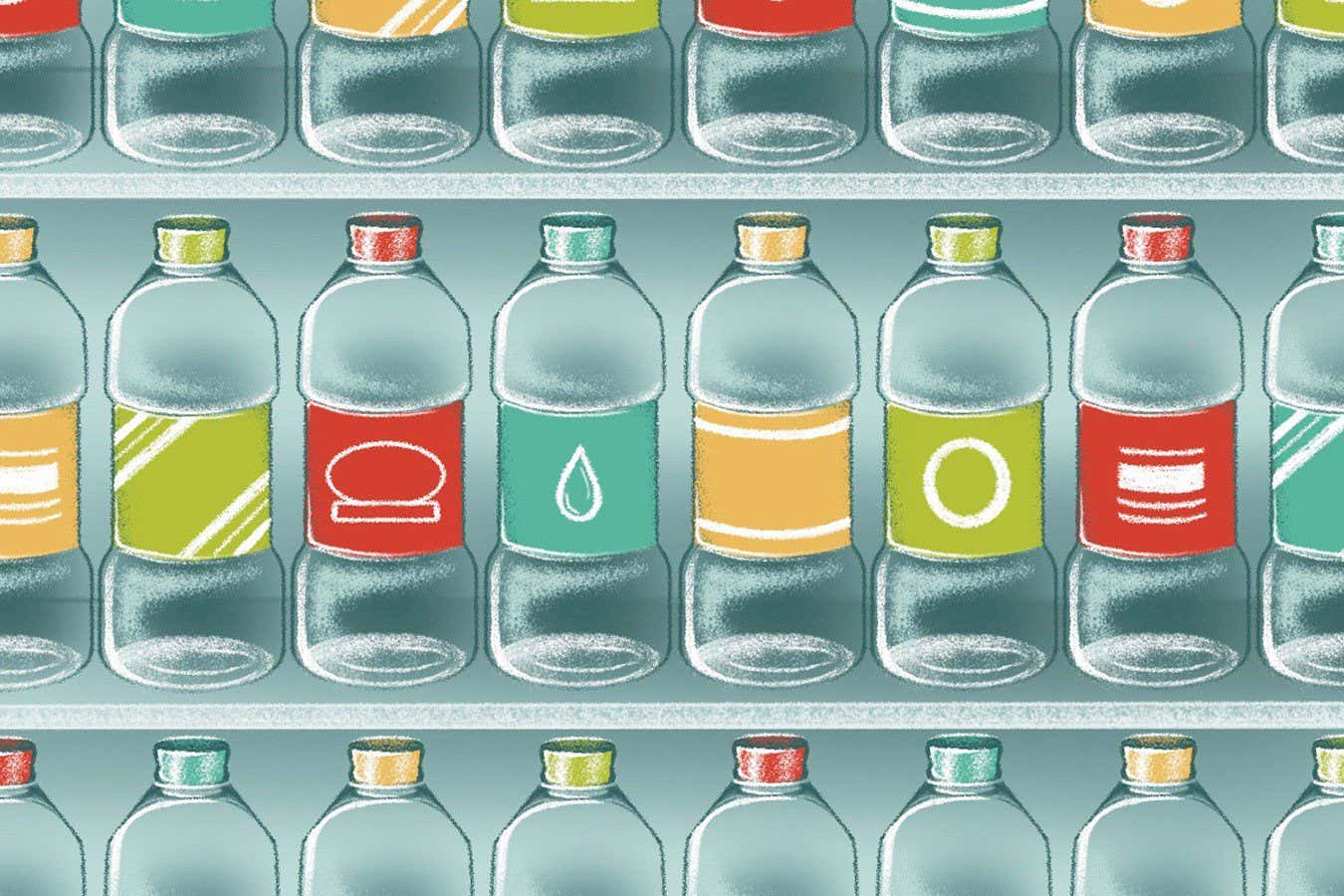
“To improve both plastics recycling and reuse, make brands use similar packaging for products in the same category”
Elaine Knox
Ever since the US-based National Biscuit Company launched the first branded consumer package in 1899 – putting its Uneeda soda crackers in waxed paper inside a cardboard box – brands have seen packaging as a marketing tool. From the 1950s onwards, as companies increasingly switched to using plastic, competition accelerated and packaging became the best way to signal a distinct identity – picture Tide’s orange detergent jug or Heinz’s squeezy ketchup bottle.
But as brands added a growing array of pigments, materials, and other complexities, the already fragile economics of plastics recycling collapsed. Just 10 per cent of plastic packaging is recycled globally. Meanwhile, reusable packaging remains niche.
There is a simple yet powerful way to improve both plastics recycling and reuse – make brands use similar packaging for products in the same category.
Let’s take recycling first. Even with decades of consumer education and investment in infrastructure, it is too expensive to sort much plastic packaging into individual subtypes. Pigments can’t be eliminated and sorting by colour is expensive, so much coloured plastic gets downcycled into grey pipes or building material. Supply is inconsistent and fragmented, and virgin plastic is invariably cheaper, so reliable buyers for most used plastics don’t exist.
Standardisation could dramatically improve things. If product categories followed uniform guidelines for plastic type, colour, labels and adhesives, recyclers could cheaply recover far more material. This could finally make recycling economically viable and help achieve the dream of “circularity”, in which a new bottle is made from an old one.
The case for standardised reuse systems is as compelling. Today, the few brands experimenting with reuse mostly use different containers. These need individual return points alongside custom washing equipment and quality checks, which increase expense and complexity while reducing convenience. Reuse systems based on standardised packaging and shared infrastructure could capture 40 per cent of the market, versus 2 per cent under a fragmented approach, according to the Ellen MacArthur Foundation.
Standardised packaging may sound like an assault on capitalism to some, but brands already produce similar packaging for milk jugs in the UK and for toothpaste tubes in many countries. And standardised packaging wouldn’t mean that all products have to be identical. Brands could still use labels, washable inks, embossing and other techniques to differentiate themselves. They could also still use their own shapes and sizes of packaging, so long as these don’t impede sorting.
Admittedly, it is hard to imagine rivals like Procter & Gamble and Unilever voluntarily agreeing to put their shampoo in the same-coloured bottles. But as data mounts about the billions of dollars lost each year from single-use plastics that are burned or landfilled – and research sheds more light on the health risks linked to thousands of poorly studied chemicals in plastics – brands may find their corner is harder to defend. Legally, it could be argued that the damage caused by bespoke packaging outweighs any harms caused to brands from standardised containers.
Increasingly, brands may not have a choice. In Europe and other parts of the world, policy is already requiring reuse targets and the use of more recycled content. Standardised packaging offers brands a path to meet such goals while sidestepping a jump in complexity and costs.
Similar shampoo bottles won’t solve everything, of course. But such changes increasingly look like good business sense. Without them, truly circular packaging remains a distant dream.
Topics:
