

When we prevent or put an end to genocide, we honour the victims of past genocides and, in doing so, keep their memory alive. We draw a clear line between reasonable human behaviour and our capacity to inflict unimaginable violence on others. In doing so, we help ensure the suffering of the past is not repeated.
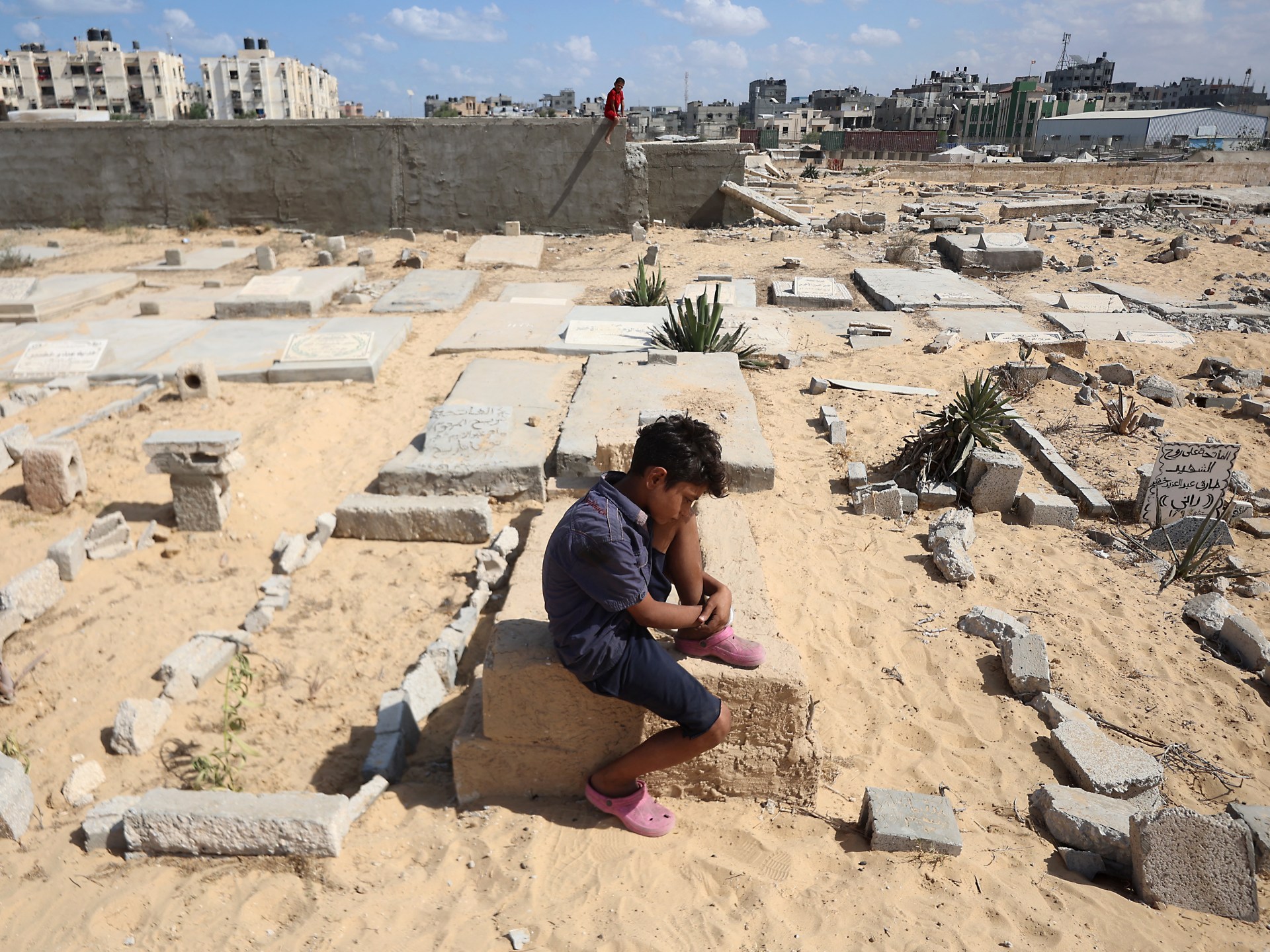
This is why it is painful for survivors of genocide, and those who have inherited the trauma from their parents and grandparents, to witness the atrocities currently being committed by the State of Israel against the Palestinian population. Naturally, one grieves for the tens of thousands of innocent people, including children, slaughtered in Gaza. But one also feels betrayed, because the repetition of genocidal violence once again dishonours the memories of loved ones lost long ago.
We write this column together because the horrors of genocide still reverberate within us every day: Jill’s father, Gene, was a prisoner at Auschwitz in 1944 at the age of 16, and Damir was a child in Bosnia during the genocide and ethnic cleansing of the 1990s. We have both lost dozens of family members, who vanished in gas chambers or across multiple mass graves.
How bystanders witness atrocity has changed over the generations. For Gene, it was the people in his hometown in Hungary who walked by while Jews were being mistreated, and the teachers who stood by when a Hungarian Nazi, invited to speak at his high school, shouted that Jews were the cause of all of Europe’s problems. One of those same teachers helped the Hungarian police identify the Jews in town so that they could be deported. Other townspeople watched through their curtains as the Jews were marched away.
In Bosnia in 1992, villagers saw the machinery of death at work as mass graves were dug, smelled the stench of decomposing bodies, and said nothing. Neighbours peeked between the curtains of their windows, but they remained silent. Europe watched the siege of Damir’s hometown, Sarajevo, on live television for 1,425 days straight. Fifteen hundred children were killed. Fifteen thousand children were wounded. And in 1995, in Srebrenica, which was declared a “safe area” under United Nations protection, the world watched as 8,000 men and boys were separated from their families in front of UN soldiers and systematically murdered over a weekend.
The ultimate betrayal of genocide is not only committed by those who do the killing, but by those who avert their eyes. Genocide requires not only perpetrators but also bystanders. The Bosnian genocide played out on the evening news, and so bystanders became global witnesses in the millions.
Today, social media allows us to hear from and communicate with victims as a genocide occurs. Imagine if Gene could have posted to anyone who would listen about the slave labour, the starvation rations, and his terror of the daily selections, where anyone could be chosen to be sent to the gas chambers. Or if 10-year-old Damir could have posted about his fear of death in the basement of his apartment block in Sarajevo, the terrifying sound a mortar shell makes on impact, and how easily a bomb shreds human flesh and bone.
Perhaps we could also imagine Damir reposting a video his 12-year-old cousin Ibrahim made of his parents and 10-year-old brother Omer as they fled their burning village, only to be intercepted by the Serbs in the mountains of southern Bosnia. The video would abruptly end as they were captured. Ibrahim and Omer were murdered with their family, their bones still scattered across separate unmarked mass graves.
Two years ago, we would have thought that such personal communications, received by millions, would have put an end to the suffering. We would have thought that it was the lack of visibility, the lack of personal connection, and the lack of detail about human suffering that allowed genocide to happen – that made it possible to stand by.
Did we have too much faith in humanity? The test is now. During the Holocaust, there were people who intervened to save lives. When Gene’s family was marched through town, he saw a different schoolteacher standing in sorrow on his front porch, tipping his hat in respect. After several months of starving in a slave labour camp, Gene was assigned to work with a German civilian engineer who fed him food stolen from the SS dining room. Bosnia was no different. Good people did brave things. Some could not bring themselves to execute their victims; they lowered their weapons and walked away. Damir’s friend was saved by a Serb neighbour who risked his life to smuggle her family out of a notorious concentration camp in eastern Bosnia, where they had been tortured for 17 months. Decades later, this friend named her baby after her Serb rescuer.
In 2000, shortly after he arrived in Australia as a refugee, Damir was walking on the campus of La Trobe University, where he was studying. Something caught his attention among the layers of posters glued to a pillar. Through slow excavation, he uncovered the words “Silence is Consent” and discovered a poster from 1993, calling for a Bourke Street protest against the killing in Bosnia. This relic of activism and resistance showed Damir that, while he and his family were struggling to stay alive, people on the other side of the world were trying to help.
Perhaps the weekly protests in Melbourne and around the world in support of Gaza send a similar message of solidarity. And now the Sumud flotilla is on its way to Gaza to do more than protest, but to intervene. They may not succeed in getting aid to those in need, but will others take their place? Will we form an endless line of ordinary people ready to sacrifice to bring an end to genocide – bystanders no more?
There are no curtains to hide behind. The victims are on our screens, in our homes, pleading for us to act. And the choice to act, or not to act, lies with us all.
The views expressed in this article are the authors’ own and do not necessarily reflect Al Jazeera’s editorial stance.
