

For decades, the North Atlantic Treaty Organization (NATO) prepared for war, confident in its advantage over any adversary. Its member states invested heavily in state-of-the-art weapons. Stealth aircraft, precision weaponry, secretive submarines and city-sized aircraft carriers stood as the guardians of the West.
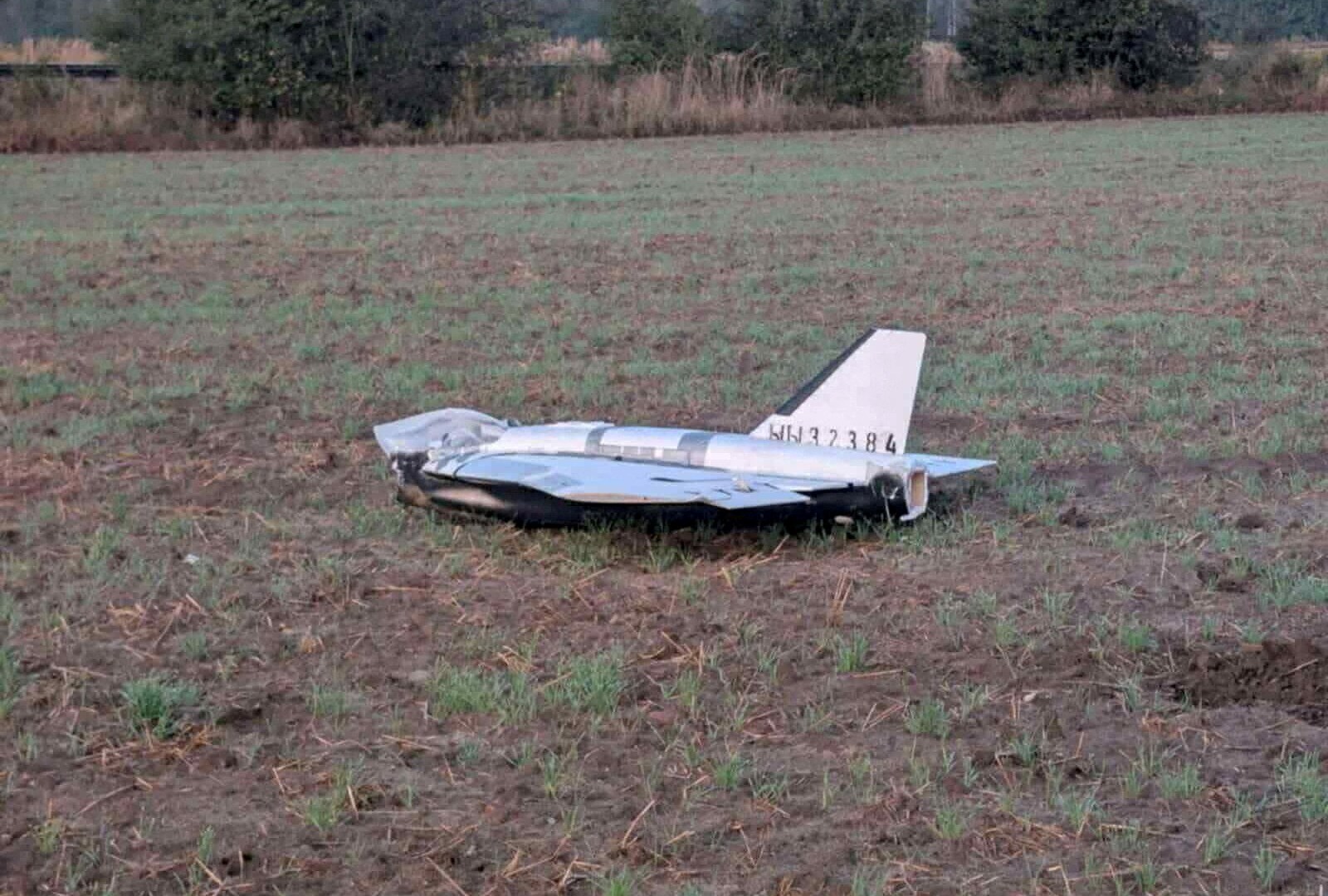
This power appeared unshakable until recently. On September 10, during another massive Russian aerial attack on Ukraine, more than 20 Russian drones crossed into neighbouring Poland. The NATO member had to scramble multimillion-euro military equipment – F-16 and F-35 fighter jets, military helicopters and Patriot surface-to-air missile systems – in order to shoot down potential threats. Several drones were shot down, including three Shaheds and several cheaply made foam dummies.
That interception operation was not only costly, but it also busted the myth of Western military might. Trillions of dollars in investment in the military industrial complex could not protect NATO borders from two dozen inexpensive drones.
In the following days, unidentified drones shut down airports in Norway, Denmark and Germany, costing airlines millions of euros; in Belgium, drones were also spotted near a military base.
The European media is full of stories about unidentifiable drones, air defences, and speculation over possible directions of a Russian strike. Romania? Poland? The Baltic States? Along the entire eastern border of the European Union, there is no place where the population feels truly safe.
It is hard to imagine the scale of chaos should Russian forces actually go on the offensive. How many countries would act under NATO’s Article 5, which allows for collective action against a military threat against a single member, and how swiftly? By then, where would the Russian forces be?
The central question remains: can the North Atlantic alliance and its modern military technology stop such an advance?
The war in Ukraine has demonstrated that the answer is no. Russian forces display a persistence in combat possible only under dictatorial regimes, where soldiers are indoctrinated and fear their own command more than the enemy.
Modern methods of warfare against armies modelled on World Wars I and II are not nearly as effective as generals once claimed. One just has to look at the front line in Ukraine and the constantly evolving military strategies.
Faced with a formidable military power with seemingly unlimited budget and unconstrained military reach, the Ukrainians had to adapt quickly. They began deploying drones against Russian armour, but the enemy did not remain idle against these attacks. It started constructing improvised metal cages over tank turrets to absorb explosions.
Precision strikes with Army Tactical Missile Systems (ATACMS) cluster munitions taught them to disperse ammunition in small points, avoiding concentrations of troops and equipment.
Drones on both sides monitor the front line, but it is scorched earth: no movement of tanks or infantry can be seen. Russian advances proceed covertly, mostly at night, with two- or three-man teams crossing bombardment zones, gradually assembling for surprise attacks. Troops on both sides are dug deep underground; what is visible is only the casualty count — several thousand each week.
Is Europe prepared for this type of war? Are NATO soldiers capable of surviving for weeks in foxholes and ruins, without communicating, to avoid detection and destruction?
A survey conducted by Gallup last year suggests the answer is no. In Poland, 45 percent of respondents said they would voluntarily defend their country if war threatened. In Spain, the figure was 29 percent; in Germany, only 23 percent; in Italy, a meagre 14 percent; the EU average was 32 percent.
More than three years into the war with Russia, Ukraine itself is suffering from severe shortages of personnel. Forced conscription has become increasingly unpopular, and draft evasion is widespread, according to Ukrainian media and Western observers. Even with Western weapons and funding, the shortage of soldiers limits Ukraine’s ability to hold the line or conduct meaningful offensives.
Currently, the active personnel of NATO’s European allies number around 1.47 million; that includes the United Kingdom. That seems considerable, until it is compared with Ukraine, where an 800,000-strong army has been facing a 600,000-strong Russian force over a 1,000-kilometre (621-mile) front for more than three years, gradually retreating.
Then there is also the difficult question of how many countries would actually send troops to the eastern front, and in what numbers. Would the NATO member states on the eastern flank be left to fend for themselves, only supplied with arms by their Western allies? And would that lead to tensions within the alliance, and its possible paralysis or even breakup?
Europe has only two options to feel even partially secure: either continue to spend trillions of euros rapidly expanding its own military capabilities, or try to put an end to the Russian aggression by providing full financial and military support to Ukraine.
Ukrainian President Volodymyr Zelenskyy has stated that his nation requires $60bn annually to fend off Russian aggression. It is a heavy burden for the West, especially in these challenging times. Yet it is negligible compared with the price Ukraine is paying — in money, military and civilian lives, lost territory, and destroyed infrastructure.
While Europe hesitates with calculators in hand, Ukraine fights. Every day the war continues, the risk of it spreading westward increases.
The time for swift decisions is now.
The views expressed in this article are the author’s own and do not necessarily reflect Al Jazeera’s editorial stance.
