

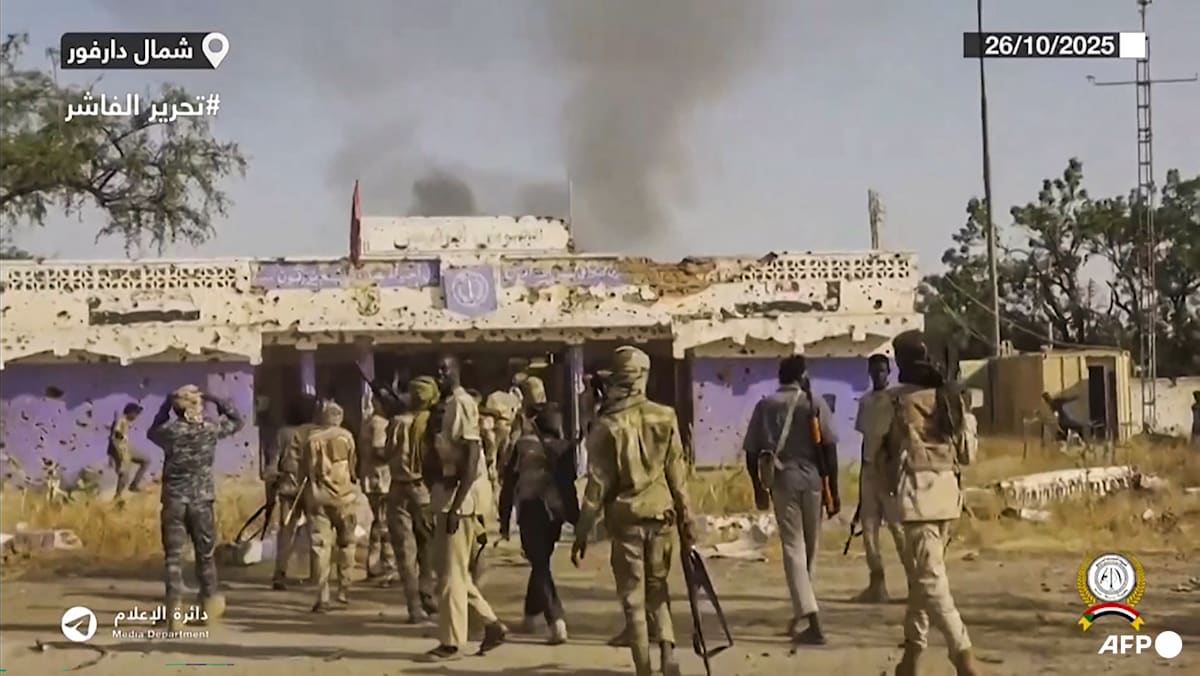
Pro-democracy activists, meanwhile, said El-Fasher residents had endured “the worst forms of violence and ethnic cleansing” since the RSF claimed control.
A video released by local activists and authenticated by AFP shows a fighter known for executing civilians in RSF-controlled areas shooting a group of unarmed civilians sitting on the ground at point-blank range.
The paramilitaries have a track record of atrocities, having killed as many as 15,000 civilians from non-Arab groups in the West Darfur capital of El-Geneina.
The army, which has been fighting the RSF since April 2023, has also been accused of war crimes.
“HARDER TO UNWIND”
More than a year and a half of siege warfare made El-Fasher one of the grimmest places in a war that the UN has labelled among the world’s worst humanitarian crises.
Displacement camps outside the city were officially declared to be in famine, while inside it, people turned to animal fodder for food.
The UN warned before the city’s fall that 260,000 people remained trapped there without aid, half of them children.
The African Union’s chairman Mahmoud Ali Youssouf on Tuesday expressed “deep concern over the escalating violence and reported atrocities”, and condemned “alleged war crimes and ethnically targeted killings of civilians”.
The Sudanese army chief, General Abdel Fattah al-Burhan, said on Monday that his forces had withdrawn from El-Fasher “to a safer location”, acknowledging the loss of the strategic city.
He pledged to fight “until this land is purified”, but analysts said that Sudan was now effectively partitioned along an east-west axis, with the RSF having already set up a parallel government.
Alan Boswell, project director for the Horn of Africa at the International Crisis Group, told AFP: “The longer this war drags on, this division will likely only grow more concrete and harder to unwind.”
