

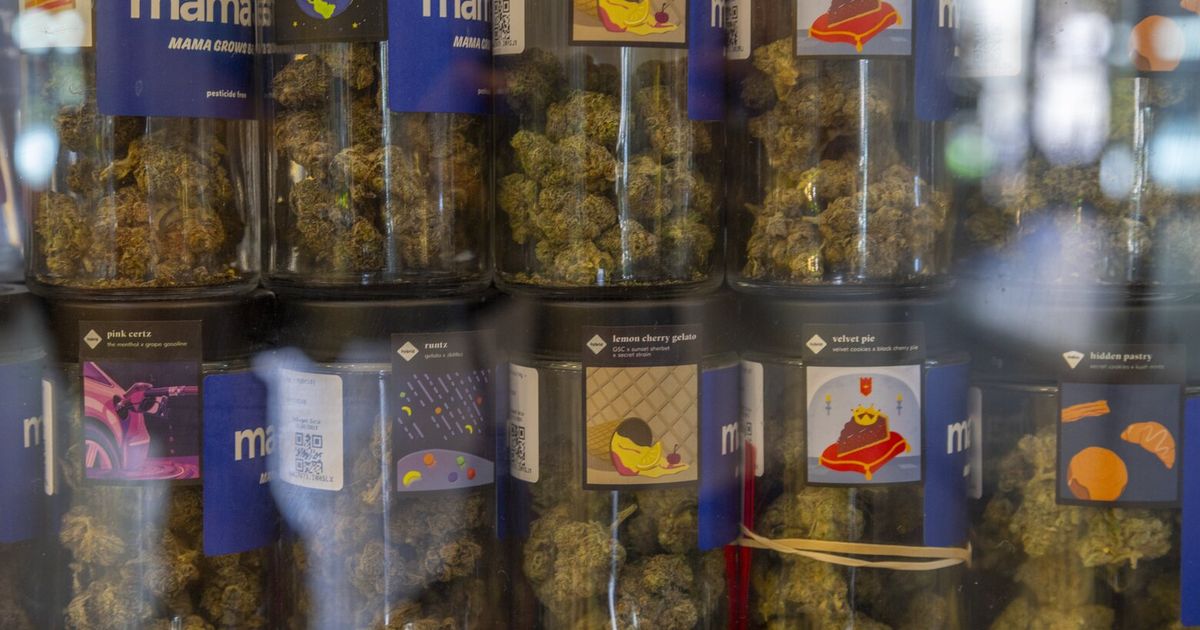
The numbers tell a harrowing story of the impact of cannabis on Washingtonians’ mental health.
Data compiled by a legislative institute in Olympia show rates of depression, anxiety, bipolar and psychosis for those between the ages of 21-64 trended sharply upward after a cannabis retailer opened within a 10-minute drive.
Those living near multiple retailers suffered the greatest impacts, according to Washington State Institute for Public Policy, a nonpartisan public research group.
Though many people use cannabis without ill effects, for some, the results can be severe. Lawmakers must take these findings seriously as part of continued regulation of the state’s powerful cannabis industry.
In 2012, Washington voters approved Initiative 502 legalizing the possession, use and commercial sales of cannabis for adults. The law also directed WSIPP to periodically develop costs-benefits analyses related to public health, safety, substance use and economic impacts.
Two months ago, WSIPP published a report that used data from Medicaid enrollees. It found a clear connection between living near a cannabis retailer and higher rates of cannabis use disorder.
This affliction is defined as a behavioral health condition from continued cannabis use where the user is unable to stop even if it’s causing health and other problems, according to the U.S. Centers for Disease Control and Prevention.
WSIPP states that cannabis use disorder is “robustly tied to depression, anxiety, and other mental health disorders.”
Examining health data before and after the opening of a cannabis retailer in specific geographic locations, WSIPP found that Medicaid enrollees aged 12-20 — an age group under the legal age for cannabis use — who lived within a 10-minute drive of a pot shop were predicted to have 13% higher likelihood of receiving a CUD diagnosis compared to those who did not.
That translates to about 2,900 more cases annually.
Among the study population aged 21-64, living near a cannabis retailer predicts a 7% higher likelihood of receiving a CUD diagnosis — about 12,500 more cases annually.
Given that the study only examined Medicaid enrollees, the findings may underdiagnose outcomes, wrote WSIPP.
These kinds of human impacts should not be ignored. If empathy isn’t enough of a motivation for lawmakers, they ought to consider the fiscal costs on the state’s already strained health system.
As the WSIPP concludes: “Overall, this evidence suggests that increased CUD can pose a public health problem and a burden on health care systems, especially because there are currently no medications approved for the treatment of CUD.”
Unsurprisingly, cannabis use in Washington jumped substantially since legalization, with 30% of adults reporting recent use in 2021, up from 18% in 2011.
There are currently 482 active cannabis licenses across the state, according to the Liquor and Cannabis Board. The Municipal Research and Services Center reports that 81 cities maintain prohibitions on cannabis sales. Earlier this fall, Lynnwood became the latest municipality to lift its ban.
A cannabis marketing study released in May determined that sales in 2023 were just under $1.25 billion.
This is a huge market. So far, attempts to regulate even a single aspect — high potency cannabis products — have proved fruitless.
State Rep. Lauren Davis, D-Shoreline, founding director of the Washington Recovery Alliance and leading advocate for cannabis reform in Olympia, noted that the Legislature responded to fentanyl and gun violence with a bevy of bills.
“But when study after study documents the severe damage to human physical and psychiatric health associated with legal cannabis, the Legislature is silent,” she wrote to the editorial board. “I hope this study might finally strike a chord, but if past is prologue, I’m not optimistic.”
Lawmakers ought to stand up and say they are either unperturbed by the obvious community impacts of cannabis or they are willing to engage in the hard work of confronting an emerging public health disaster.
The legislative session begins Jan. 12.
