

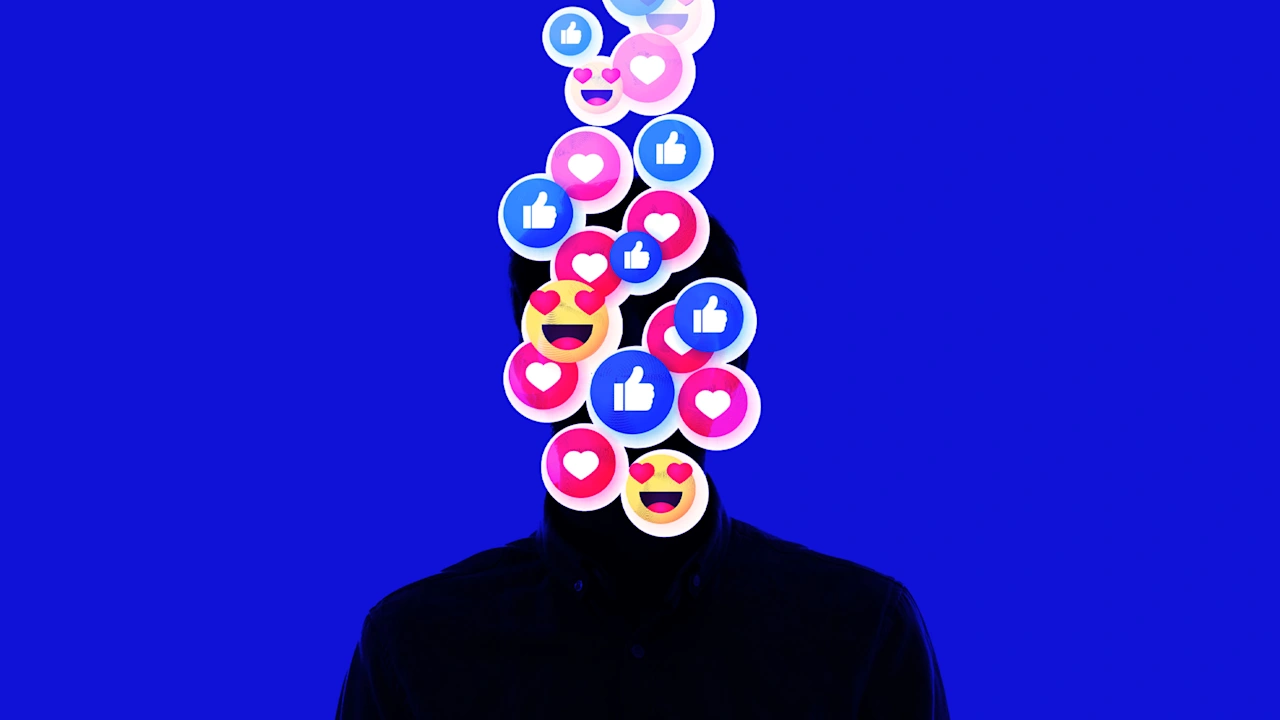
When work was drying up for freelance writer Megan Carnegie, she found herself compulsively hopping between apps and social media. “LinkedIn, WhatsApp, emails—and it was just terrible for my focus,” she says. “I was anxious about getting work.”
On a whim, Carnegie (who’s also contributed to Fast Company) popped into a store selling secondhand computer equipment and bought an old Nokia burner phone. During the workday, she would use the burner for calls, and in the evening, switch back to her smartphone. With no access to apps and one fewer way to access the internet, her urgency and anxiety dissolved. “I just loved the quiet,” she says.
The effects of social media on mental health have been a popular topic of conversation in 2025. Social psychologist Jonathan Haidt’s best-selling book, The Anxious Generation, describes the effects on adolescents, including being a significant contributor to anxiety and depression among young adults.
What’s less-frequently studied is how it affects people at work. But a new report begins to demonstrate how what we see online can bleed into our professional lives.
The new study out of Rutgers University, published in the Journal of Organizational Behavior, found that what you see on social media while at work can shape your mood, motivation—even how you treat your coworkers.
Social media’s effect on your work
Researchers surveyed 133 workers twice a day for two weeks. They asked them to describe the most “salient,” or memorable, post they saw that day, then describe how they felt and how productive they were at work. Later, the survey was repeated with 141 new participants, this time including their coworkers, who would also rate the subjects’ behavior and productivity.
The researchers segmented posts into four categories: attractive (thirst traps), family (kids’ first day at school), contentious (politics or rage bait), and accomplished (job promotions). They then measured how these content types affected employees’ self-assurance, anxiety, productivity, and social withdrawal.
They found that while posts about family or friends tend to boost confidence, political rants spike anxiety and make people withdraw. Posts about accomplishments can either spur you or kill your drive, depending on your personality. Those with competitive natures are prone to feeling motivated by achievement-related content, while those who aren’t particularly competitive are more likely to feel demotivated.
The results indicate that some workers might benefit from limiting their social media use at work. But for those whose job involves regularly scrolling social feeds, breaking the habit can prove difficult.
The LinkedIn star who barely scrolls, and the PR person who just can’t help it
Alison Taylor is an author and professor at New York University’s Stern School of Business who writes about corporate ethics. Despite being named a LinkedIn “superuser” by the Financial Times thanks to her more than 60,000 followers, she spends very little time on the platform.
“I wake up, I have coffee, I write the post, I don’t worry about it being perfect, I correct typos later,” she says.
Taylor knows better than to feed the trolls, but she loves a good argument, and can’t help but respond to some followers who needle her. While she might come back throughout the day to comment, she goes in and gets out quickly. It’s not worth the distraction.
As for those whose job involves spending time on social media—like PR reps, marketers, and social media managers—the stress can be inescapable. Some 77% of people who work in social media are burned out, says a reader survey by Rachel Karten, who writes the popular Link in Bio Substack newsletter.
Nicholas Budler, who works in public relations for enterprise tech companies, scopes opportunities for his clients all day.
“The LinkedIn doomscroll has only gotten more endless for me. And it’s open at work 9-to-5,” he says, noting that when engagement is high, it feels good. But when it’s not, he questions whether social media is worth his time at all.
“I think you get a bit stressed in general to have social media open at work,” Budler says. While he used to do a lot of social media strategy for clients, he does less and less these days, saying, “I consider it brain rot.”
Doomscrolling can carry Budler down “a deep, dark rabbit hole of looking through people’s job updates and news. And a lot of that news is not good, right? Especially in media, there are a lot of layoffs,” he says. Those leave him anxious.
Cutting back on ingrained habits
The anxiety and malaise social media can cause is a common problem: In one small survey by the Ohio State University Wexner Medical Center, 45% of adults reported being stressed at least once a week because of social media, and 16% reported being stressed every day. Frequent social media use has already been linked to increased irritability in adults, as well as worsened depression.
Some researchers have even submitted the idea of “meta-stress,” that is, stressing about the stress generated by social media.
That’s made worse by the fact that most adults in the U.S. use social media: 68% use Facebook, 83% use YouTube, and 47% use Instagram, according to the Pew Research Center. Yet there’s money to be made in keeping people away from these platforms.
Apps like Freedom, AppBlock, and SelfControl block access to certain apps for periods of time. Some can’t be disabled until a set timer expires. Many workers told Fast Company that they rely on these apps to keep them from doomscrolling.
But even those tools may not be enough to cut back on deeply ingrained habits. Budler is a prolific social media user in his personal life, with accounts on Instagram, the running app Strava, reading platform Goodreads, and TikTok, the latter of which he says is most addictive. His latest screen-time report on his phone recorded just over 20 hours on his phone in the past week, with 9 of those hours on social media.
Rebecca Greenbaum, a coauthor of the Rutgers study, isn’t against social media. “I think it can be a fun break. It can be a useful break. It can add interestingness to a person’s day,” she says.
But to avoid the mindless, automatic scroll, treat it like the smoke break of the 1980s, she says. Get up from your desk, go elsewhere, and devote a limited amount of time.
It’s a strategy that works for Megan Carnegie. “I’m trying to be more intentional about how I use those platforms. The burner has been a good exercise in that. Now I’m a bit less anxious about work.”
