

 SpaceX
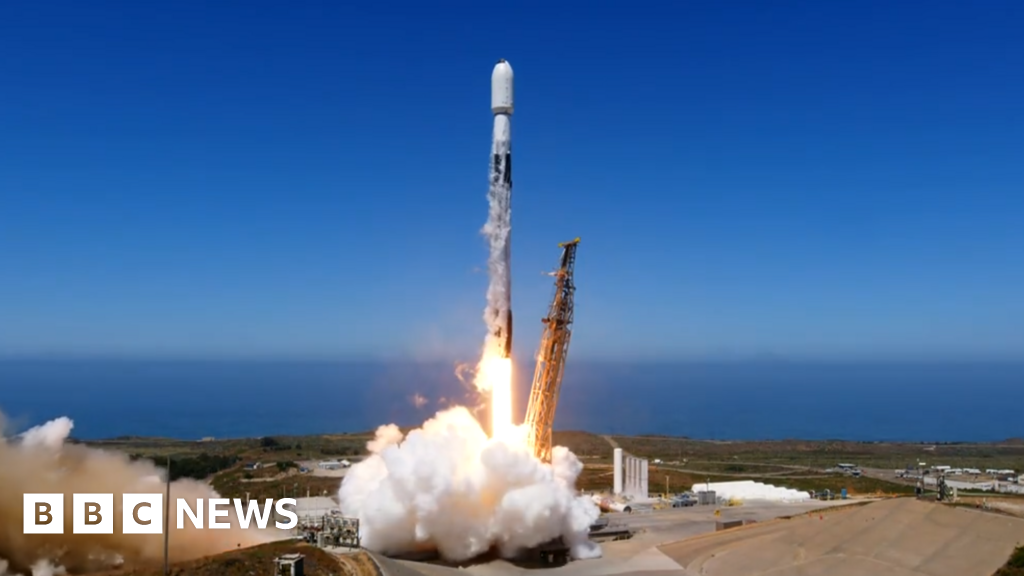
One by one, the satellites – each of them encrusted with a hodge-podge of solar panels and other gizmos – detached from their mothership.
They had blasted off from Earth just an hour earlier, on 16 August. The 116 satellites onboard the launch vehicle were mostly designed and built by Western nations and businesses – but one of them was different.
It was the first such spacecraft ever developed by the African country of Senegal.
A small CubeSat called GaindeSAT-1A, it will provide earth observation and telecommunications services. Senegal’s president called it a big step towards “technological sovereignty”.
The cost of launching a satellite has fallen significantly in recent years, says Kwaku Sumah, founder and managing director at Spacehubs Africa, a space consultancy.
“That reduction in cost has opened the market up,” he adds. “These smaller nations… now have the opportunity to get involved.”

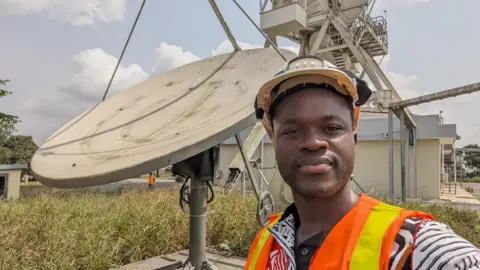 Kwaku Sumah
To date, a total of 17 African countries have put more than 60 satellites into orbit and, along with Senegal, both Djibouti and Zimbabwe have also watched their first satellites become operational during the past 12 months. Dozens more African satellites are expected to go into orbit in the coming years.
And yet, the continent currently has no space launch facilities of its own.
Plus, powerful countries elsewhere in the world are arguably using nascent African space programmes as a means of building relationships and asserting their geopolitical dominance more broadly.
Can more African nations chart their own way into orbit – and beyond?
“It’s important for African countries to have their own satellites,” says Mr Sumah. He argues that it means better control over the technology and easier access to satellite data.
This information could help Africans monitor crops, detect threats posed by extreme weather such as floods, or improve telecommunications in remote areas, he adds.
But boldly going to space is still seen as “something for the elite” in Africa, says Jessie Ndaba, co-founder and managing director at Astrofica Technologies, a space tech firm in South Africa that designs satellites. Business at her firm remains “very slow” overall, she adds.
Given the massive threat posed to the continent by climate change, space tech should be used to monitor food and resources, she suggests. An African space race to reach the moon or Mars, in contrast, wouldn’t be helpful: “We’ve got to look at the challenges that we have in Africa and find ways of solving those.”
For Sarah Kimani, of the Kenyan Meteorological Department, satellites have proved invaluable in helping her and her colleagues track dangerous weather conditions. She recalls using earth observation data provided by Eumetsat, a European satellite agency, to monitor a major dust storm in March. “We were able to tell the direction of this dust storm,” she says.
Later this year, she and her colleagues will begin receiving data from the latest generation of Eumetsat spacecraft, which will provide wildfire and lightning monitoring tools among other benefits. “It will help us improve our early warning systems,” adds Ms Kimani, noting that the collaboration with Eumetsat has been “very efficient and effective”.
Climate change brings meteorological threats that can emerge rapidly – from major storms to extreme drought. “The intensity of these hazards… is changing,” says Ms Kimani, noting that satellite data that could be updated as frequently as every five minutes, or less, would help meteorologists track such phenomena.
She also argues that Kenya – which put its first operational earth observation satellite into orbit last year – would benefit from having more of its own meteorological spacecraft in the future. As would other African countries in general. “Only Africa understands her own needs,” says Ms Kimani.
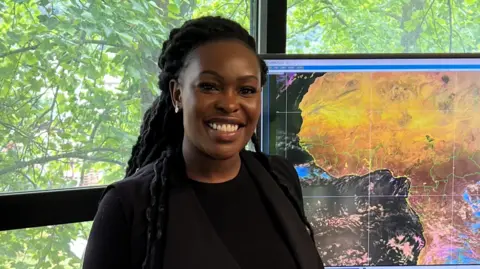 Sarah Kimani
Currently, many African nations with young space programmes are dependent on foreign technology and experts, says Temidayo Oniosun, managing director of Space in Africa, a market research and consulting company.
Some countries have sent students and engineers abroad to pick up space tech know-how. “The problem is, when these guys come back, there is no laboratory, no facility for them,” says Mr Oniosun.
Senegal’s new satellite was built by Senegalese technicians. While not wanting to detract from their significant achievement, it is worth noting that development of the satellite was made possible through a partnership with a French university, and that the spacecraft was launched on a SpaceX Falcon 9 rocket from California.
 Getty Images
Europe, China and the US have all involved themselves in numerous African space programmes. This has helped boost African technology into orbit, for sure, but it has also served as a “critical diplomatic tool”, says Mr Oniosun. It makes him “a little worried”, he admits.
Observers have suggested that African space programmes are not just about getting African nations into space – they are also, to some extent, arenas where some of the world’s most powerful countries compete with one another.
Mr Sumah is positive about the situation. “We can… play these different powers against each other to get the best deals,” he says.
Officials in both the US and China have considered the “strategic” implications of involving themselves in African space endeavours, says Julie Klinger, at the University of Delaware.
“That does bring with it an intensifying need for updating global treaties and strategies around maintaining a peaceful and manageable space environment,” she adds.
But there are opportunities, too. Dr Klinger notes that space launches from equatorial regions – which may not require as much fuel – could mean that African space ports have an important role to play in the coming decades.
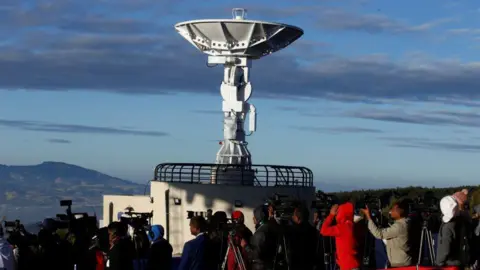
The Luigi Broglio Space Center, an old Italian-built space port including a sea platform off the coast of Kenya, could be brought back into service one day, for example. The last launches there took place in the 1980s.
Ultimately, we can expect to see rising activity in space from African nations. “We’ve got close to 80 satellites that are currently in development,” says Mr Oniosun, “I think the future of the industry is very bright.”
