

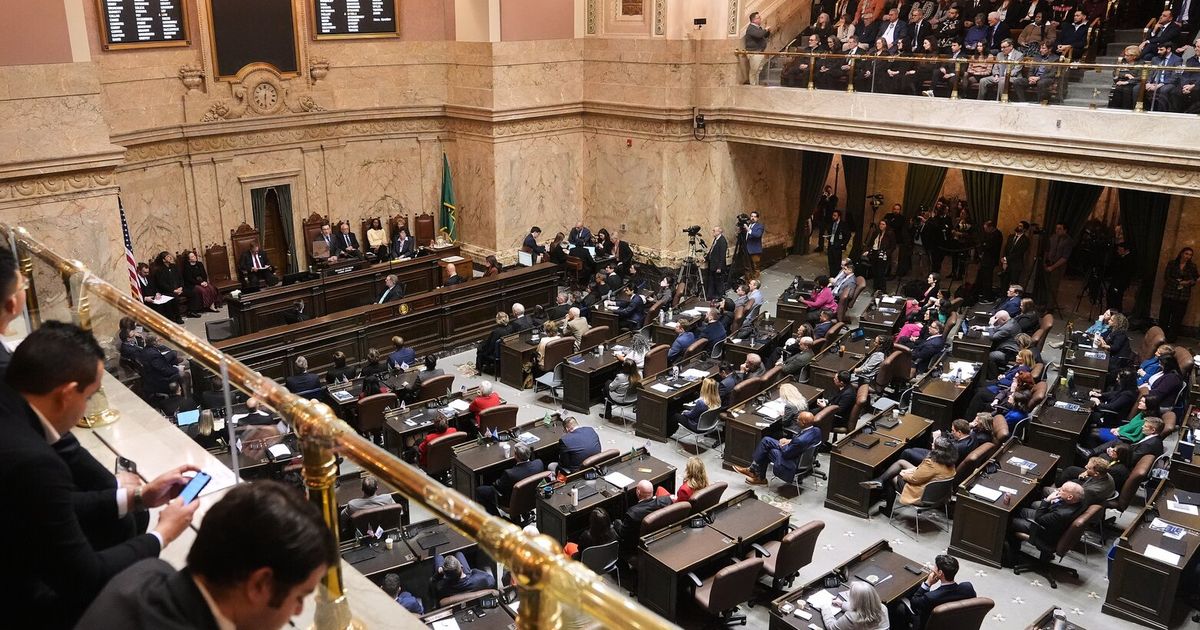
Washington needs an income tax. But we need to do it with our residents, not to them. Public trust in government has eroded, and there is understandable skepticism about whether anyone is accountable for results. We have a budget deficit that has loomed for years. As lawmakers reconcile their spending priorities, constituents see how services are threatened and fear what they will endure in light of our fiscal challenges and the demand for an equitable tax system.
Right now, the Legislature is considering an income tax, which represents a restructure of how we fund services; we should trust our constituents enough to include them in a complete tax reform conversation. The only way a rebalance and restart of Washington’s tax system will be successful is if there’s a two-way conversation that includes everyone affected.
We should not rush through a hastily considered concept that corresponds with sound bites rather than sound economics. Instead, all 149 state legislators should engage their communities this summer in a thorough discussion of tax policy for the long-term economic stability of our state and out of respect for everyone we serve.
An income tax is necessary to create a balanced tax code, and I have introduced legislation to start comprehensive tax reform. My proposal will require a public vote to amend the state Constitution, so no income tax can be authorized — even by future legislatures — for anyone earning less than $1 million. It would also cut sales taxes for all. We must ensure our tax code recognizes the modern service economy of Washington while attracting investment and strengthening our ability to compete globally. Moreover, tax reform would enable us to relieve some of the chaos of a Legislature pressed to find solutions when so far, the only options are to cut programs that people need and value.
Rather than adopting legislation that has not been thoroughly assessed, we should work to design equitable, administratively sound tax policy. Being elected to office means representing our constituents and includes the responsibility to understand concerns and answer questions about any new tax plan. Nationwide, there’s been heartburn over the idea of any elected official acting as if they were “anointed.” As representatives in state government and in partnership with everyone who put us there, we must be deliberate about what we build and how it will work.
Significant reform like this requires in-depth public engagement. We know this policy will be deeply unpopular with some residents. After years of gingerly approaching an income tax before backing away, elected leaders should collaborate transparently and with as much data as we can collect, then earnestly seek comprehensive public input. There are legal and constitutional considerations that have to be reckoned with. We need time to ensure legal compliance and reduce the risk of taxpayer-funded litigation.
We also need complementary revenue reforms. We should take the time needed to develop a sound approach so we can coordinate an income tax rollout alongside reductions in regressive sales taxes, relief for businesses and property tax modernization.
The complexity of our tax system demands careful design. To be effective and fair, it requires detailed economic modeling on revenue, labor supply and regional competitiveness. And we need to create clear guidance and invest in administrative systems to ensure compliance, reduced enforcement costs and predictable revenue streams.
We must insist on protections for low-income Washingtonians. A longer transition allows for designing generous standard deductions and exemptions, a phased-in schedule so adaptations can be made as policy goes into effect, analysis of scenarios that impact a range of taxpayers and concrete protections in our state’s Constitution.
The people of Washington should be centered in policymaking, not the state’s bank account. Rushing an income tax into law without thorough analysis risks harming those the reform aims to support. I urge my colleagues to support tax policy that has been rigorously evaluated — not during this legislative session, but next. We can chart a path toward a more stable state economy built on responsible tax reform, not litigation.
All that complexity demands that an income tax be developed with enough time and consideration that the outcome is a balanced, modern tax system for everyone we serve.
