

Out here in the workaday world, we hear a lot about the kinds of kids who are locked up at Washington’s toughest youth prison, the Green Hill School, and the supposed best way to address its chronic overcrowding: Build more youth prisons.
The state is busily doing that. It’s spent $25 million to turn a wing of the adult-sized Stafford Creek Correctional Facility into a unit for 46 young inmates and earmarked another $3 million to study sites for an additional prison that would hold more young men under age 25.
Never mind that this could be an enormous waste of money. Firstly, because outcomes from the Green Hill model have been atrocious — chiefly, class action lawsuits over conditions there. Secondly, because violent crime rates among juveniles are steadily declining.
In a budget season so grim that lawmakers are looking to cut billions of dollars in services, it’s worth asking if putting $28 million toward more youth prisons, on top of $49 million we’re already spending annually on Green Hill, is a smart move.
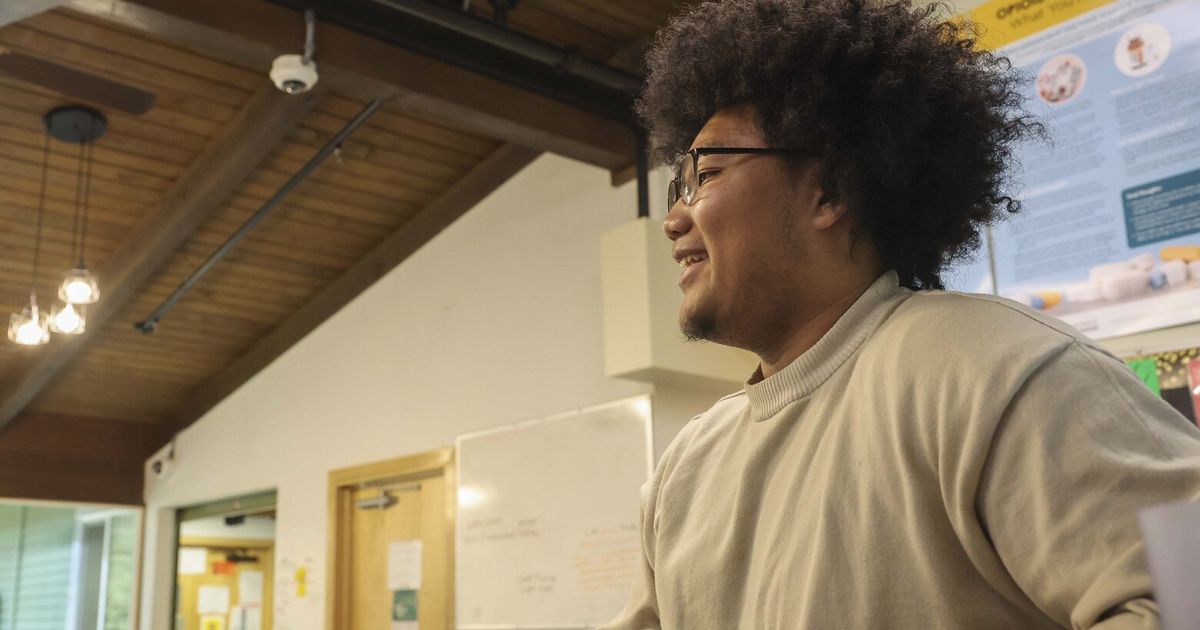
My skepticism comes from talking to young people like Moses Mutel, 22, who arrived at Green Hill after pleading guilty to involvement in a series of drive-by shootings one night in Tacoma, when he was 16.
No one was killed by Mutel or the two other guys tearing through the city with him in a stolen car. But one of his older co-defendants did plead guilty to shooting a homeless man, who survived.
Until high school, Mutel had been the pride of his family, a solid student who played violin and loved basketball. But life took some turns — his parents split up, his mother got sick with cancer, his older brother went away to college — and by ninth grade Mutel was drifting. His grades slipped. He could no longer play on the basketball team. Eventually, he stopped going to school altogether. What was the point, Mutel thought. He was so far behind, he’d never catch up.
This is standard stuff, a pattern familiar to teachers and parents everywhere. A promising kid loses their way and makes one bad decision that leads to another, and in very short order has crossed a line they never even noticed.
Maybe some time away wouldn’t be so bad, Mutel’s mother thought, after he was sentenced to eight years in the juvenile prison system. Maybe it would help him get grounded, find some direction. That was the pitch from Washington state: Mutel would be entering Green Hill during a new, rehabilitation-focused era. He would get an education, therapy and job training.
“I didn’t think it would be the worst thing for him,” she said. “But it turned out to be.”
Her son had no prior criminal record, so the maximum-security youth prison was a shock — frightening, lonely and chaotic. Mutel could hear other kids screaming, threatening suicide from their locked cells. The reality of spending years there crushed him.
He’d arrived in the spring of 2022. Within two years, the prison’s population had spiked to overflowing. Meanwhile, staff kept resigning, calling out sick, or getting arrested for bringing in contraband and having illicit relationships with inmates.
As a result, the youth prison became a pressure cooker, where more than 200 young men, ages 17 to 24, were confined to their cells up to 20 hours a day. Sometimes, they weren’t even allowed out to use a bathroom. For months, Mutel said, no one asked about his goals or education plans. Not quite the therapeutic environment his mother had been promised.
During one of these lockdowns in 2024, Mutel was accused of custodial assault. As the state tells it, a guard opened the youth’s door for a bathroom break, Mutel shoved past to get out and then knocked a water bottle off a shelf, which hit another guard in the leg. This resulted in new charges — adult charges — now that Mutel had turned 18. If convicted, he could have another two years tacked onto his sentence, to be served in state prison.
Back in Tacoma, Mutel’s mom tensed every time the phone rang. It felt like living at Green Hill was only pushing her boy deeper into a system geared not toward his rehabilitation, but destruction.
“This is state-sanctioned child abuse,” she said. “It’s a literal school-to-prison pipeline. I don’t know how we’re expecting success from this model.”
She hired a private attorney to fight Mutel’s new charges in court, which took two years.
By then, her son had learned about Washington’s network of Juvenile Rehabilitation group homes. These minimum-security facilities are run by the same youth prison system, but each is a fraction the size of Green Hill and far cheaper to run.
The one in King County has a weight room with a pool table downstairs, and a large living room with a television upstairs. Its 14 residents wear their own clothes, rather than prison khakis. They eat together at a big square table, go to school or work during the day, and sleep in bedrooms with posters on the walls, like a college student might have.
Mutel managed to get himself transferred there last fall.
The change was immediate. Now, he had a counselor who focused on his goals and another who worked with him on managing emotions. Six months later, Mutel is about to complete an associate degree and will start on his bachelor’s at UW Bothell in a few weeks. He plans to study law, economics and public policy.
Washington has eight of these group homes scattered across the state, and most are not at capacity. When full, they can hold 116 young men, all told, which looks like a good way to alleviate overcrowding at Green Hill without spending tens of millions more on new facilities.
Not all inmates are eligible, of course, and not every home has operated without incident. There have been escapes from some sites and contraband at others. But it’s long past time to stop using blunt instruments — like a massive youth prison — to inspire the nuanced, profound changes we want to see.
Sitting in the schoolhouse at his new residence, Mutel thought back to the guys he’d known at Green Hill. Most of them were just teenagers in a bad situation, he realized now. And many did not have parents like his mom, who could fight for them.
“They’re kids,” he said, “And there’s no way kids should be subjected to some of the stuff going on in there. There’s nothing good coming out of that.”
It probably won’t surprise readers of this column to hear that Mutel plans to become a lawyer someday. What kind, he is unsure. But definitely not a defense attorney or prosecutor.
He doesn’t want to touch the criminal justice system ever again.
