

Wait and see.
That seems to be the most appropriate response to Mayor Katie Wilson’s announcement last week that she was pausing expansion of the city’s surveillance cameras operated by the Seattle Police Department.
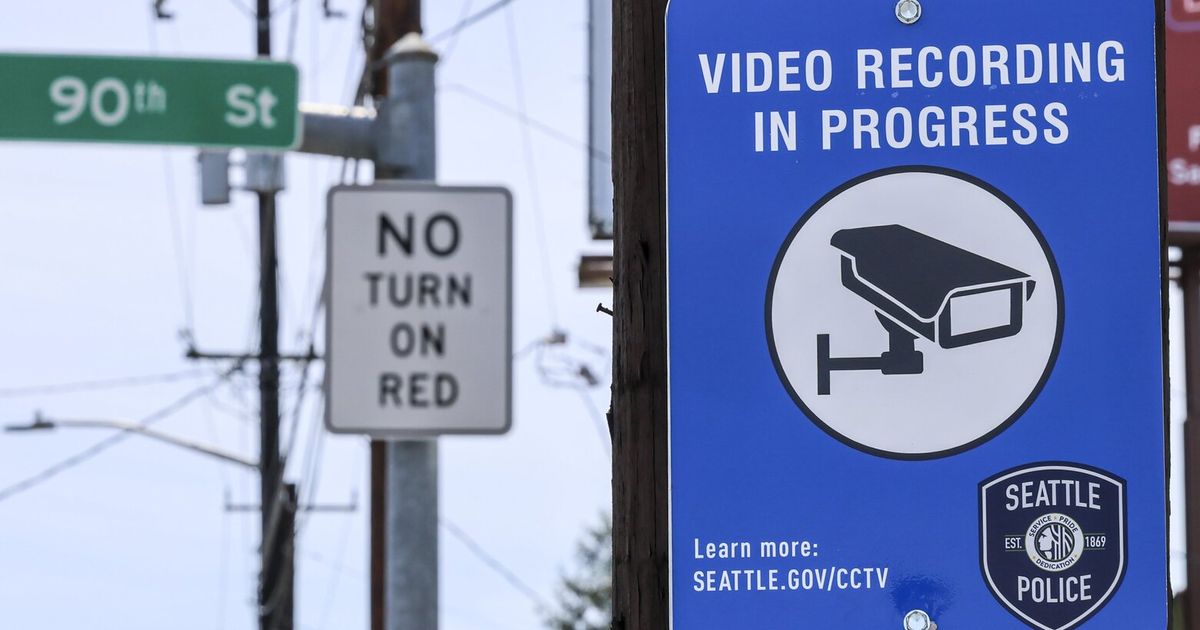
Cameras are currently operational along Aurora Avenue North, in the Chinatown International District and downtown. In September, the Seattle City Council voted to expand closed-circuit television surveillance to the Capitol Hill nightlife area, the Stadium District and the Garfield High School neighborhood.
Wilson ordered a privacy and data audit before moving forward. The cameras generated concern by civil liberties advocates and others that they could be used by the Trump administration in immigration enforcement or to interfere with reproductive rights or gender-affirming care.
To give the mayor credit, she did not order a shutdown of the entire Real Time Crime Center, which launched last May and monitors the cameras. Earlier this year, Chief Shon Barnes said RTCC staff assisted in making arrests in 10 homicide cases, even though the 62 cameras only cover 1% of the city.
The city’s Office of Inspector General — which oversees the management, practices and policies of SPD — already has a contract with the University of Pennsylvania to evaluate crime occurrences, investigative outcomes, police operations and community perceptions of the RTCC.
At a council briefing on March 24, Public Safety Chair Bob Kettle said he welcomes Wilson’s review but any privacy and data governance audit must wrap up before the World Cup comes to Seattle in June. The Times editorial board agrees that time is of the essence.
The audit should focus on privacy policies, and legal loopholes and ramifications.
The contractor selected by the Mayor’s Office to do the work, the Policing Project at the NYU School of Law, seems to want to reinvent the wheel.
“Our work necessarily would require engaging with a wide range of stakeholders,” stated a news release by the Policing Project announcing what it called a civil rights and civil liberties audit of the RTCC. “We believe that the best outcomes come from taking differing perspectives seriously — from community members to advocates to city officials to law enforcement itself — as part of developing responsible use approaches.”
Hasn’t the Seattle City Council already considered all these angles, going all the way back to the 2018 Surveillance Ordinance?
Kettle is also right to be concerned about Wilson’s decision to install cameras in the Stadium District but not turn them on unless there was a “credible threat that warrants such action.” Once the threat subsides, Wilson said, the cameras will be turned off.
“It’s not best practice to have the system and just have it turned off and say, ‘Hey, if we get a credible threat, we’re just going to turn it on quickly,’ ” said Kettle in chambers.
“Let’s think about 1996 and the Summer Olympics in Atlanta. Was there a credible threat warning that there was going to be a bombing at that Olympics? No, there wasn’t. How do you define a credible threat warning? I’m concerned about that.”
Wilson is planning a meeting at Town Hall on Friday to hear community concerns about surveillance technology.
Expect a one-sided affair. The council heard more than three hours of testimony on Sept. 9 before voting to expand the system, most of it from critics.
A privacy audit of surveillance cameras could resolve community fears or create a merry-go-round of Seattle-style politics as usual.
The city will have to wait and see.
