

Pity the 1919 Chicago White Sox. They had to work with a group of real people to perpetrate the greatest sporting scandal in American history, deliberately losing the World Series to the Cincinnati Reds for money.
If only they had lived in 2026. Nothing so risky would be required. Sports betting apps provide thousands of opportunities to game the system, down to the outcome of an individual pitch or field goal. Moreover, this can be done pseudonymously, if not entirely legally, using cryptocurrency on some platforms.
We inhabit a veritable golden age of monetizing insider information (and not just in sports). Next time you are at T-Mobile Park watching a Mariners game, remember the real action is online.
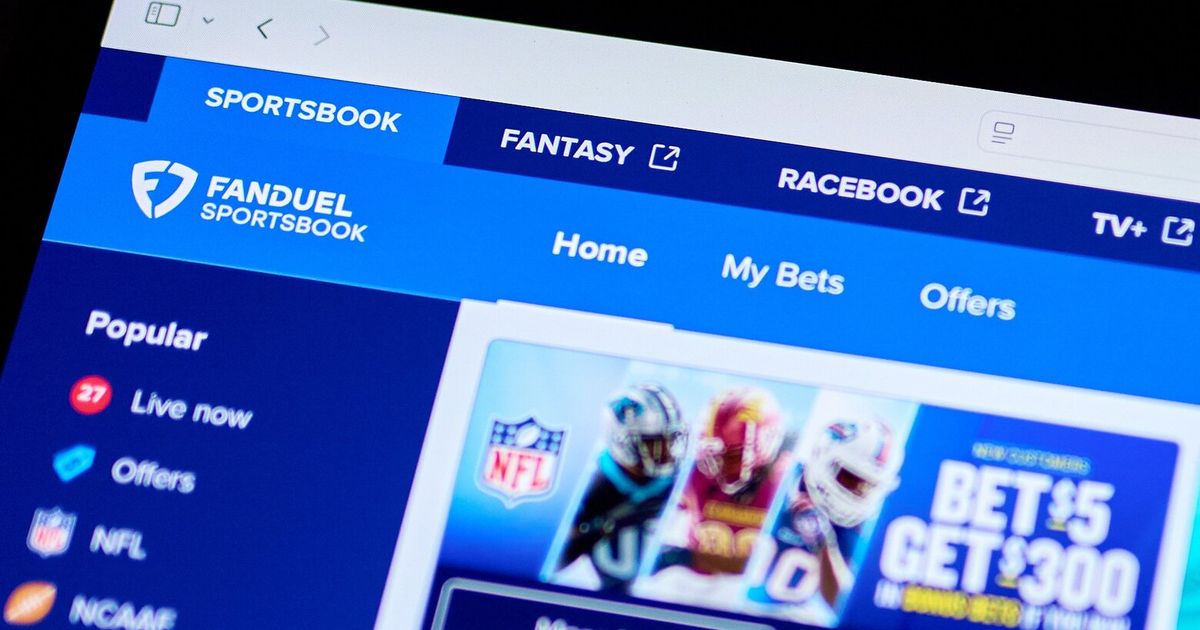
Gambling, frequently operating under the euphemism “fan engagement,” has become so fundamental to professional sports the two can hardly be disentangled. Indeed, one wonders who is sponsoring whom. FanDuel and BetMGM are listed as official sponsors on Major League Baseball’s website, and individual teams have further betting sponsorships. An entire section of the NBA Bet website lists its many gaming partners.
So-called prediction market companies like Kalshi and Polymarket are big players in sports betting. They have unlocked a lucrative new segment — residents in states where online sports betting is illegal (like Washington). They structure themselves as commodity exchanges, making their money through transactional fees rather than acting as the “house” in traditional gambling. However, if you were to look at a Mariners game on DraftKings vs. one on Polymarket, there is little difference aside from the fact that the latter structures bets in the form of a question, as on “Jeopardy!”
To tap into this huge new market — California and Texas, the two biggest states, also ban online sports betting — the companies are regulated by the federal Commodities Futures Trading Commission, purportedly giving them access nationwide. The CFTC, no doubt helped by the fact that the Trump family is involved with both Kalshi and Polymarket via Donald Trump Jr., has gone along with it, though states continue to litigate this.
Professional sports are jumping on this “prediction market” bandwagon. MLB announced an exclusive agreement with Polymarket in March. Interestingly, MLB also revealed a memorandum of understanding with the CFTC to reassure the public that this deal comes with “comprehensive integrity commitments,” with integrity evidently meaning no insider gambling/cheating.
Speaking of integrity, MLB issued a stunning news release last November under the headline, “MLB in collaboration with major sportsbook partners announces new limits on pitch-level markets.” In essence, these are live bets, done with an app, on whether the next pitch will be a ball or strike. These are pitcher props; player props let you bet on how many hits, RBIs, home runs or stolen bases a specific player will have.
Moving forward there will be a $200 cap on these “pitch-level markets” and they will be excluded from parlays (bets made in combination with others, a very popular product with high payouts). This is “intended to mitigate integrity risks.” The language here, which is not exclusive to MLB, is highly Orwellian. On one hand, MLB encourages you to bet constantly across multiple platforms. On the other hand, it is monklike in its adherence to the “integrity” of the game. How monklike can one be when total sports betting hit $167 billion in 2025, generating estimated sportsbook revenues of $17 billion, a 22.8% annual increase?
Washington has sued Kalshi, alleging it is operating an illegal betting scheme. State Attorney General Nick Brown cited one of its ads that claimed someone living in Washington “found a way to bet on the NFL.” Other states are also suing. Meanwhile, the betting goes on. That it may all end in January 2029 with a new administration suggests this is short-term profit maximization.
Professional sports leaders are playing a high-risk game; one might assume, given so many opportunities to make money, that scandals are lurking. These might replicate the damage done to baseball back in 1919. Is it worth it?
