

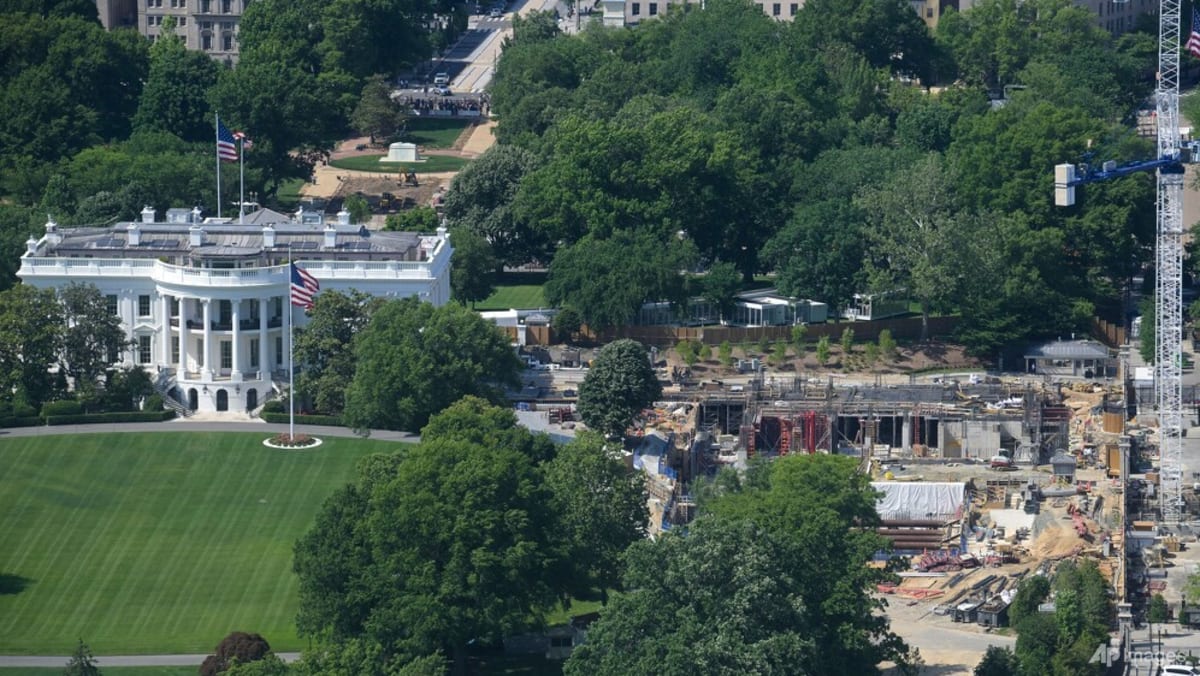
If Republicans do not succeed, they may be unable to include the ballroom-related funding in a US$72 billion spending package they plan to bring to a vote on the Senate floor, with passage expected on a party-line vote with Democrats opposed. The bulk of the legislation is devoted to immigration enforcement.
Republicans have been invoking complex budget rules to try to secure passage without any Democratic support. Democrats have opposed funding for Trump’s signature immigration crackdown absent reforms they have sought since federal immigration agents killed US citizens in separate incidents in Minnesota in January.
Republicans have said federal funding for ballroom security is needed to ensure presidential safety, citing an April incident in which an alleged gunman is accused of storming a black-tie media gala in Washington that Trump attended.
The administration has said the ballroom will modernise infrastructure, bolster security and ease strain on the White House, which often relies on temporary outdoor structures to host large events. Trump has said the ballroom will be completed around September 2028, near the end of his second term in office.
Democrats, hoping to win control of Congress in November’s midterm elections, are seizing on Republican support of the ballroom to portray Trump’s party as out of touch with the cost-of-living concerns of Americans at a time of rising energy costs driven by the Iran war he and Israel launched in February.
Trump last year ordered the demolition of the White House’s East Wing – constructed in 1902 during Theodore Roosevelt’s presidency and expanded four decades later during Franklin Roosevelt’s presidency – to make way for his ballroom.
The National Trust for Historic Preservation, a nonprofit organisation, filed a lawsuit challenging the project, arguing that neither the president nor the National Park Service, which manages the White House grounds, possessed the authority to tear down the historic structure or erect a major new facility without explicit congressional approval.
A US appeals court in April allowed construction to continue after the judge handling the National Trust lawsuit issued an order halting the project.
