

Microsoft’s support of Washington’s journalism fellowship program, which I wrote about last week, is welcome but raises delicate questions.
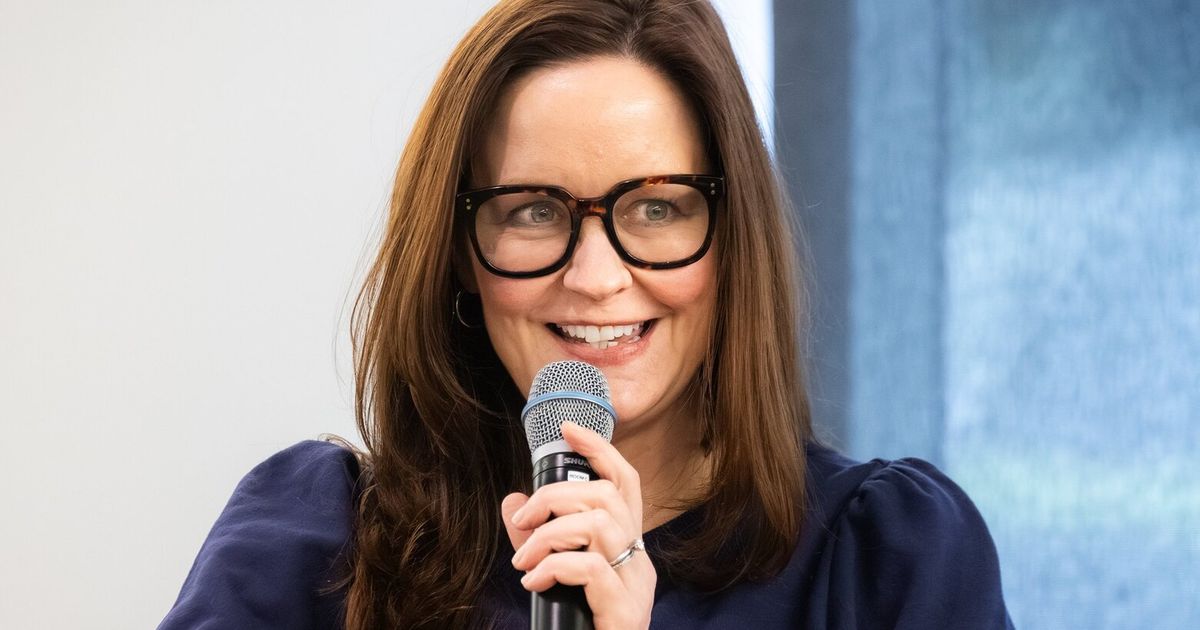
I posed a few of them to Teresa Hutson, corporate vice president and general counsel of Microsoft’s Technology and Services Group.
Hutson, who previously worked on things like protecting elections, now leads a team helping Microsoft “advance AI innovation responsibly,” providing legal and regulatory support.
One place to start is with news organizations, which are using AI internally while reporting on growing concerns about the technology.
Of course Microsoft has multiple objectives. Like every company, small or large, it wants people to appreciate what it’s doing and grow the business.
Journalists shouldn’t let any vendor or donor skew their coverage. But they should learn what they can from knowledgeable sources, while being cautious of ulterior motives and getting spun.
Hutson acknowledged those concerns about AI when she announced the donation on Monday, during a journalism conference hosted at Microsoft’s Redmond headquarters.
“People are worried about AI in their jobs, AI and their kids, AI data centers in their communities, AI’s use with energy and water,” she said. “We really need journalists and newsrooms to understand the technology, because we need you to hold the sector, our sector, my sector, to a high standard.”
Hutson encourages journalists to report on these controversies, which they’ll do better if they know more about the technology. It’s next-level P.R. but it’s also realistic and true.
“We need you to understand the technology and use the technology, so you can … tell the stories in your community,” she said. “What should you worry about with AI in your community, and what should you do to advance your own protections within your community?”
Microsoft is hoping that its $500,000 donation to the Washington news fellowship program enables such reporting in Chelan, Douglas and Grant counties, where it operates data centers.
The donation will support reporting positions in those counties and the overall fellowship program, which Washington State University and the nonprofit Report for America are expanding to reach all 39 counties in the state.
Microsoft won’t have any say over stories selected and written by news fellows, who will be hired, edited and managed by local news organizations.
In an interview during the conference, Hutson said she’d also like to see standards that build trust in news organizations’ work done with AI.
That could include “signals” to make clear that reporting was done by humans and followed journalism standards.
“That’s a really important thing that a company like Microsoft can’t do by itself,” she said. “All we can do is sort of show you what the tools do, and then give some examples of other places where transparency has helped build trust in the underlying work. Because that’s really all we want, is not to supplant journalism (with AI) but if, you know, you can use it to translate, so more people can read the news in different languages, that’s a good thing.”
Should there be a standard for labeling AI news content?
Hutson said that’s a challenge that extends beyond industry “because it ends up becoming a content moderation question instead of ‘how do you determine the factualness of a statement.’ “
A briefing Monday described how it’s relatively easy to watermark images, to establish their provenance, but there aren’t yet good tools to do that with text. That’s needed to help determine whether a speaker or writer is trustworthy. It’s also unclear the role companies should play in this verification, Hutson said.
Here are excerpts from the rest of our conversation, edited for length:
Q: What kind of guardrails do you want to see around the fellowship grant and how will you feel if reporters write something negative about Microsoft?
A: We’re funding the positions not the reporting. Just as we philanthropically support The Seattle Times, we don’t try and influence Seattle Times reporting, so I think this is the same sort of thing. This is a tricky one — how does a big company support without making it appear that it’s trying to seek a reporting outcome — and we’re not.
Q: It’s also delicate because you’re being sued by The New York Times right now, along with OpenAI, for alleged copyright infringement. How does that affect Microsoft’s support of journalism?
A: As you could expect, I’m not going to comment on the litigation. But that suit’s been going on for a while and we’ve maintained our support of journalism and reporters over that time.
Q: Where has Microsoft come down on some of the journalism legislation in Washington and Oregon?
A: We have supported various legislation that does help, for tax revenue, to support local news.
Q: Lawyers tend to appreciate this issue, and the press and its constitutional role.
A: Exactly, freedom of speech and civic engagement. I really do believe we need the local news to hold everybody local to account, whether that’s government accountability, spending accountability, corporate accountability.
Q: That’s great.
A: That’s a deeply held view of mine so it feels pretty cool to be able to be a part of this company.
Note: Thursday’s printed version of my column left a few words out of Hutson’s title. Her full, correct title is used above.
