

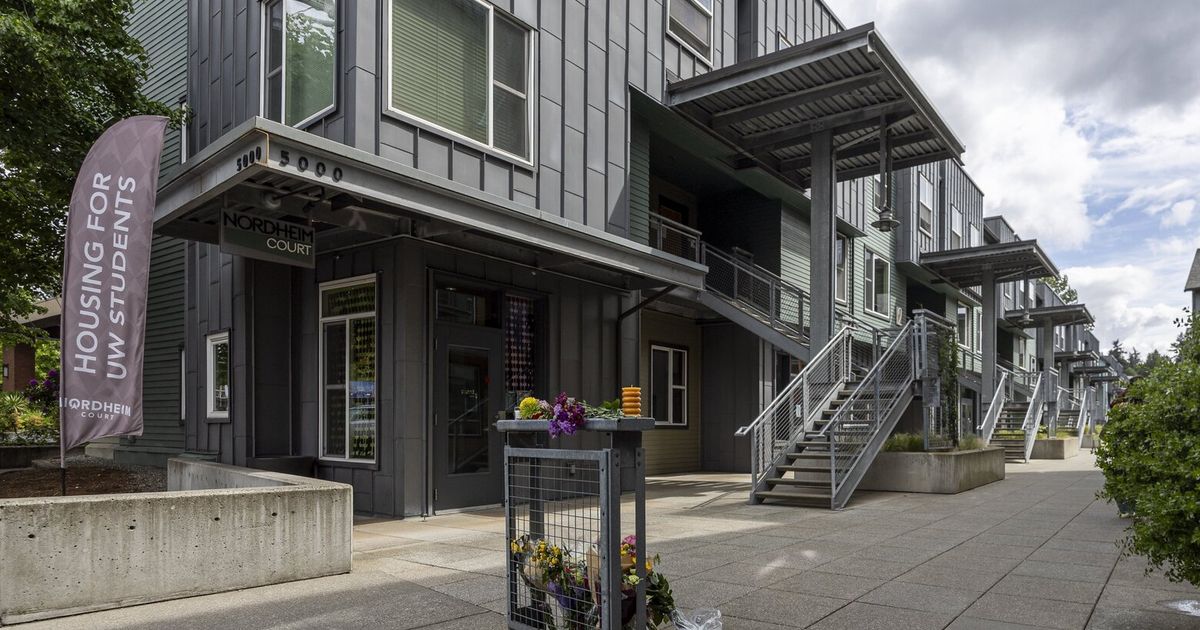
I am a part of the University of Washington faculty and an alum. The murder of 19-year-old student Juniper Blessing in the laundry room of her apartment complex has left me feeling anxious and scared. I know I’m not alone. Across our campus community, students, parents, faculty and staff are reeling; they’re in shock and searching for answers.
One answer appeared to arrive last week. On May 14, I got an alert at 7:51 a.m. that the primary suspect had been arrested after turning himself in to the Bellevue police. He has since been charged.
What was notable is that I could literally see the face of the suspect in my mind’s eye because I had studied the images released by the Seattle Police Department the night before. The surveillance footage was extraordinarily clear. I zoomed in, scrutinized his face and did a reverse image search hoping I could identify him. I felt outraged. I wanted to solve the crime.
As a researcher of communication and information technologies, my impulse unsettles me. That kind of surveillance — and its counterparts, subsequent public shaming or doxxing — is possible thanks to the ubiquity of digital technologies and cameras in our communities. The penetration of these tools incentivize people to follow and track each other from the privacy of their personal devices.
In times of public fear, internet vigilantism can seem to give us a sense of agency; even comfort. Consider how many people were searching the internet to identify Luigi Mangione, who was accused of killing Brian Thompson, the CEO of UnitedHealthcare, in 2024.
Agency isn’t the same as safety. Researchers in my field, including many UW scholars affiliated with the Society + Technology at UW initiative that I convene, have raised concerns about racial profiling, bias and overpolicing because of surveillance technologies in the United States. Not to mention, technology doesn’t have to be inaccurate to cause harm — the wide circulation of images can politicize an issue or foster a culture of suspicion around people who resemble a legitimate, publicly circulated image. While the images of the suspect accused in Blessing’s murder were neither grainy nor unclear, there’s still reason for concern that some people, young Black men in particular, could be at an increased risk of being unfairly profiled as violent because of widespread visual sharing.
I want to recognize that criticism of surveillance technologies could sound insensitive at this fragile time: A young person is dead. There’s some comfort in knowing the alleged murderer has been apprehended thanks to camera footage.
But here’s the rub. I also lived through campus violence — and advances in surveillance technologies haven’t meant we’re safer in our homes near UW’s campus.
In 2001, when I was a 19-year-old undergraduate, I lived in campus housing managed by a third party, not unlike Nordheim Court, where Blessing lived. One afternoon at the beginning of the school year, someone slipped into our building through a side door, hid in a stairwell for hours and then brutally attacked one of our friends. She survived because another friend intervened. The attacker fled. Though a police report was filed, no one was ever charged. As far as I know, the perpetrator is still at large.
I don’t recall ever seeing the incident written up in the news or addressed by the UW community. When I look back, I can’t help but wonder: If we had had more surveillance systems in place, would the outcome have been different?
This desire worries me. The omnipresence of smart cameras and connected devices does not, it appears, stop crimes. Surveillance didn’t save Blessing’s life any more than it helped my friend decades ago. Rather, in Seattle, violent crime is higher than it was 30 years ago. Not to mention, The UW Daily reported that residents in the Nordheim Court building where Blessing lived say the building leadership team did not address complaints about maintenance problems and security. If that’s the case, those were missed opportunities for housing authorities to triangulate and problem-solve, to create a safer living environment. Instead, while technologies have changed since I was a student, the fear for safety — especially for people who identify as women or non-gender-conforming — persists.
When I look up, I can’t help but wonder: When we’re engrossed in our shiny tech objects, are we less likely to keep each other safe? To ensure the locks are fixed and there’s a process in place for scanning the surveillance camera data for patterns or break-ins?
The fear that gripped me in 2000 is still palpable in my body. I know that an infrastructure of surveillance can be a pathway for justice for victims, but we must be careful not to confuse footage and internet vigilantism for the harder work of preventing violence in the first place — and do better to establish safeguards, fix locks, be responsive to complaints and anticipate harms. These measures are not shiny, but the critical, ongoing processes that will better serve our collective safety.
Editor’s note: The Seattle Times closes comments on stories about crime victims. If you would like to share your thoughts, submit a letter to be considered for publication in our Opinion section.
