

If you have been stuck behind a concrete mixer on Denny Way, or watched another apartment block inch upward in Ballard, you already understand Seattle’s housing problem. What you may not know is that a faster, cheaper and cleaner way to build those apartments already exists and that Washington’s own forests are sitting right there waiting to provide it.
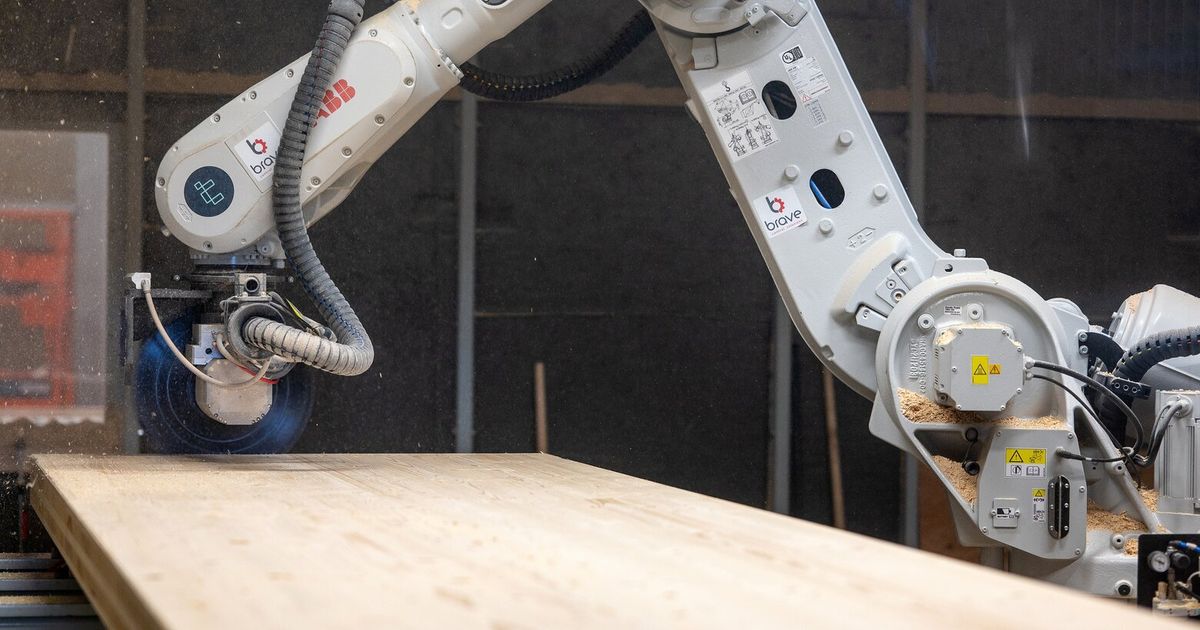
The building materials used are called mass timber, which is basically an engineered wood product consisting of wood sheets that have been glued together under high pressure to produce panels and beams of comparable strength-to-weight ratio when compared to steel and concrete. Cross-laminated timber is one such example of mass timber. This is not two-by-fours that are used in constructing a ranch-style house in the suburbs. Precut CLT panels simply need assembling at the building site. Mid-rise buildings do not cause the same chaos during construction. It is more like snapping together giant Lego pieces. Research by Woodworks has found that mass timber buildings are completed an average of 25% faster than equivalent concrete structures. Every week of delay costs money that landlords eventually pass to tenants. So, speed matters.
The climate case is even more compelling. Cement production alone accounts for roughly 8% of global CO₂ emissions, more than all the world’s passenger vehicles combined, according to the International Energy Agency. Steel adds several more percentage points on top of that. Mass timber goes the other direction: It stores carbon inside a building’s structural frame for the life of the structure, and life cycle assessments published in the Journal of Cleaner Production have documented net carbon storage advantages for mass timber buildings over comparable concrete and steel designs.
The fire objection comes up every time, so let’s settle it. “Wooden high-rise” sounds like a matchbox. But thick CLT panels outperform unprotected steel in fire: While steel rapidly loses its structural strength under extreme fire temperatures, mass timber’s exterior chars slowly, forming a dense insulating layer that protects the structural core and maintains predictable performance. This is not an industry talking point, it is documented in fire resistance standards published by the American Wood Council and confirmed by National Fire Protection Association research on mass timber assemblies.
And it does not mean cutting old-growth forests. CLT is typically manufactured from smaller-diameter, younger trees, exactly the kind of material produced by the forest-thinning operations that the USDA Forest Service and Washington’s Department of Natural Resources have been funding to reduce wildfire risk across the state. Building with mass timber can help pay for wildfire prevention. Someone in Olympia should have thought of this years ago.
In rural communities like Darrington, where timber mills have been closing for decades, a CLT supply chain would mean real jobs: mill operators, machinists and engineers processing timber from forests just outside town. Seattle’s housing crisis and rural Washington’s economic stagnation are not separate problems. Mass timber is one solution that addresses both at once.
Washington State has recognized this. Its 2021 State Building Code adoption aligned with the International Building Code’s expanded mass timber provisions, clearing the way for multifamily mass timber construction up to 18 stories. That is genuine progress. But at the local level, the gap between what the code permits and what gets built remains wide. Projects face slow permit reviews, staff unfamiliar with wood engineering and no financial incentive structure that rewards faster approvals. Developers who want to build in wood face permit delays, unfamiliar reviewers and no financial upside for trying something new. Concrete just moves faster. So, builders use concrete.
Seattle gave the world Boeing, Amazon and Microsoft. It cannot figure out how to build an apartment building out of wood. The next crane you see going up over a city block should be lifting CLT panels harvested from Washington forests, assembled by workers from timber towns that have been waiting decades for the economy to come back. The code changes are done. The forests are there. The workers are waiting. The only missing ingredient is a city willing to use them.
