

In early May, the Canadian federal government released a discussion paper proposing ways to accelerate approval of major industrial projects in the name of strengthening Canada’s economy and sovereignty. Buried within the paper is a proposal to override section 73(3)(c) of the Species at Risk Act, commonly known as the “jeopardy clause.” This provision prohibits the federal government from authorizing activities that are likely to jeopardize the survival or recovery of endangered species. In practical terms, it is the legal safeguard that prevents projects from pushing wildlife closer to extinction.
The proposal is strikingly similar to efforts in the United States to weaken the Endangered Species Act when protected species stand in the way of industrial development. President Donald Trump has repeatedly sought to reduce the influence of endangered species protections on federal decision-making. Canada is now considering a comparable path.
According to sources in Ottawa, it appears the government of Canada is poised to push through this monumental change to SARA in short order, buried in an omnibus bill.
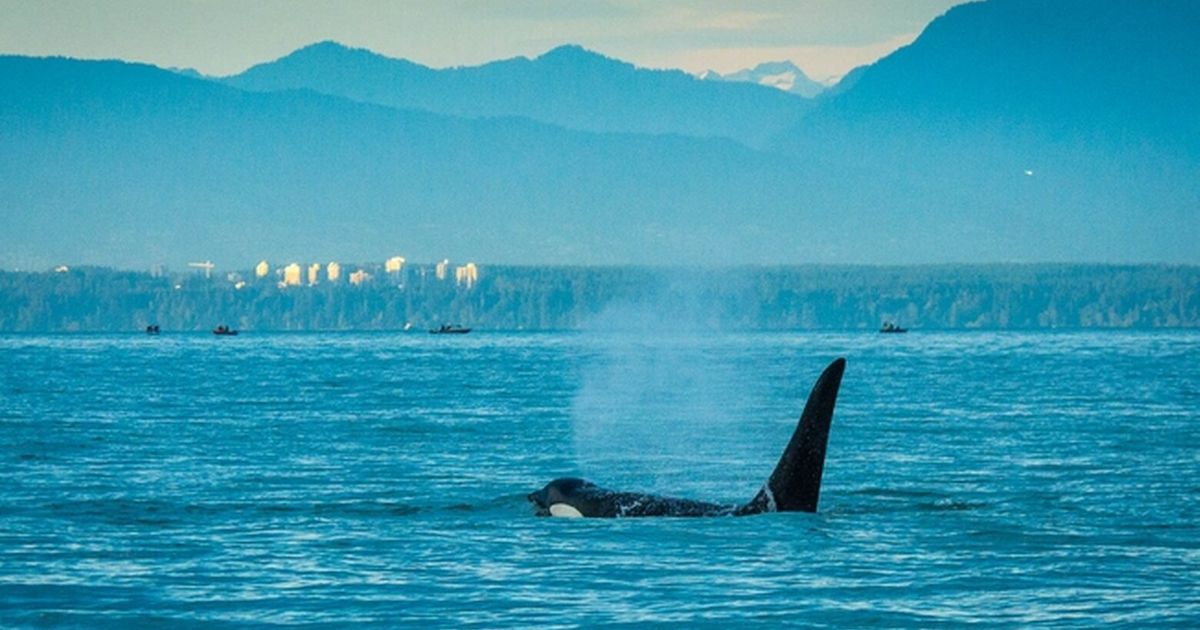
Among the species most affected would be southern resident killer whales. These iconic whales inhabit the coastal waters of British Columbia and the U.S. Pacific Northwest. Only 74 individuals remain. Scientists, including those at Raincoast Conservation Foundation, have documented the population’s failure to recover under measures that have not kept pace with the increasing threats the whales face.
The federal government acknowledged the seriousness of the situation in its 2024 imminent threat assessment, concluding that unless threats are reduced, the whales’ survival and recovery may become unlikely — or even impossible. Their recovery depends on abundant Chinook salmon, quieter waters and a cleaner marine environment.
Yet the opposite is occurring.
Clear Seas, an independent information source for governments and industry, projects that vessel traffic on Canada’s Pacific Coast will increase by approximately 60% over the next 15 years, with much of this growth from tankers and container ships in the Salish Sea.
Shipping traffic associated with the Trans Mountain Expansion Project has already increased underwater noise and disturbance in the whales’ critical habitat. Underwater noise interferes with their ability to detect, pursue and capture salmon. Not only have we failed to improve conditions for recovery; we are making the habitat these whales depend on increasingly inhospitable.
Section 73(3)(c) is one of the few legal provisions that currently requires federal decision-makers to confront this reality. If a project would jeopardize the whales’ survival or recovery, it should not proceed. Weakening this standard would remove a crucial safeguard precisely when the need for it is greatest.
We support efforts to strengthen Canada’s economy and sovereignty. But economic development should not come at the expense of the laws that protect our most endangered wildlife. Nor is it clear that weakening environmental safeguards will speed approvals. Lowering standards and overriding due process are more likely to erode public confidence, intensify opposition and increase legal uncertainty.
This debate is about more than a single project or a single species. It is about what kind of country Canada wants to be. Canadians take pride in our natural heritage, in the wildlife that shares our coasts and forests, and in the local economies that depend on healthy ecosystems.
We do not have to choose between a strong economy and a living planet. Real leadership builds economic opportunity with nature, not against it. We stand with millions of Canadians for whom these whales are not an obstacle to prosperity, but a measure of it.
