

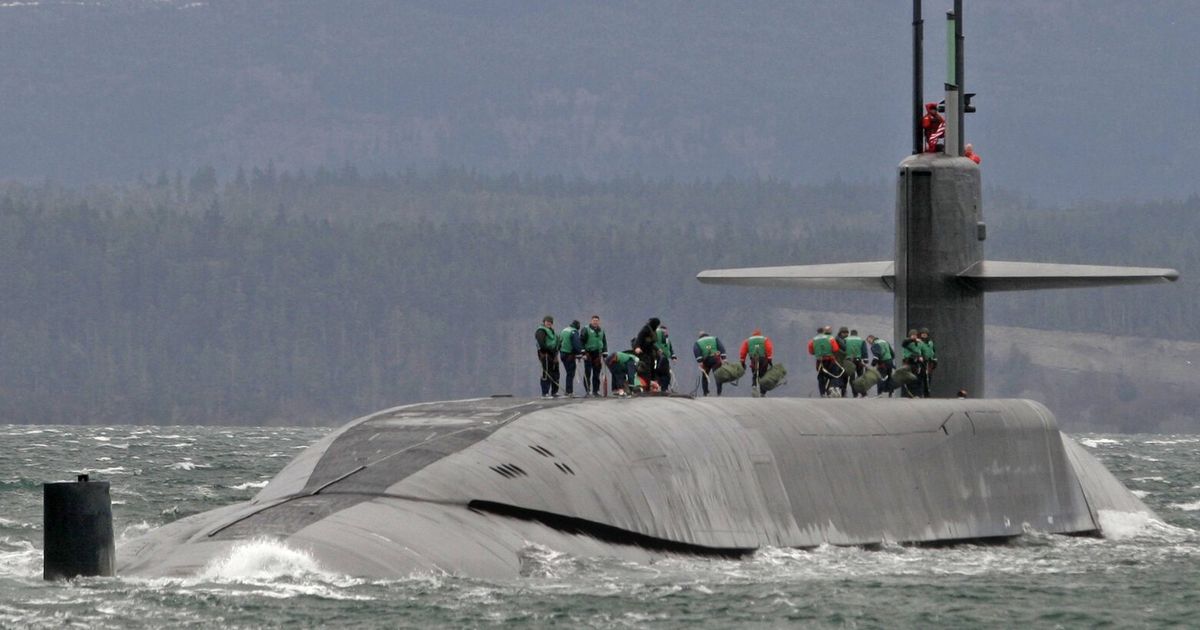
The U.S. submarine force is known as the silent service for a reason. For decades, the majority of the nation’s nuclear missile-armed sub fleet has quietly sailed to the Pacific Ocean from its Hood Canal home port near Poulsbo. Rarely can the public give feedback on the program, considered by the U.S. military to be the Navy’s most important mission. Now is one of those rare times.
The Navy will invest tens of millions of dollars at Naval Base Kitsap-Bangor to prepare for the arrival of up to eight new ballistic missile submarines, as the existing fleet begins to be retired.
As such, anyone can say their piece on the Navy’s environmental assessment to bring what’s called the new Columbia-class sub to Bangor. But they must do it with haste: the comment period ends June 25.
Today, little fanfare and media coverage is devoted to the trillion-dollar modernization of what’s called the nation’s nuclear triad. That comprises land based missiles, bombs and the submarines’ Trident missiles, the latter of which can lurk under the waves and strike back with devastating force if the president ever orders it.The Navy plans to keep the subs of the triad’s “survivable leg” at Bangor, also home to one of the nation’s top deployed stockpiles of nuclear weapons.
The current environmental assessment is limited to about $155 million in spending to upgrade piers and facilities at Bangor. But it still gives anyone the unusual chance to voice their concerns about the future of the program on Hood Canal.
Given the gravity of the overall mission, the Navy’s review gives too little time for public input. The longtime activist group Ground Zero Center for Nonviolent Action, which borders Bangor and advocates for a nuclear weapon-free world, recently called for more time.
“Citizens should have more time to review a 50 year program … for the submarines based at Bangor,” the group said in a release.
It might be considered ironic that the late Washington Sen. Henry “Scoop” Jackson, the man most responsible for bringing the current Ohio-class submarines to home port in Hood Canal, also sponsored the National Environmental Policy Act of 1970 that created the public review currently underway at Bangor. To Jackson, both environmental stewardship and Washington’s geographic location as a strategic port were mutually beneficial. (Jackson is the only person with one of the ballistic missile subs named after him; the rest are named for U.S. states.)
How should the Navy best protect the lands and saltwater inlets and estuaries near its base? And what of this massively consequential military mission that starts and ends in the waters of the Salish Sea? Every Washingtonian — every American — can have a say. A chance to talk about it is happening now — but it won’t be around for long.
To submit a comment online, go to st.news/sub
Mail comments to: Naval Facilities Engineering Systems Command, Atlantic, Attn: Columbia-Class EA Project Manager, Code EV22JS, 6506 Hampton Blvd., Norfolk, VA 23508. Comments must be submitted or postmarked by June 25.
