

The buzz word in last year’s local election was “affordability.”
But when it comes to taxes, the burden is only becoming heavier.
Earlier this month, Seattle Mayor Katie Wilson proposed a renewal of the Seattle Transit Measure that would double the 10-year sales tax from 0.15% to 0.3%, costing the median two-person Seattle household about $58 annually.
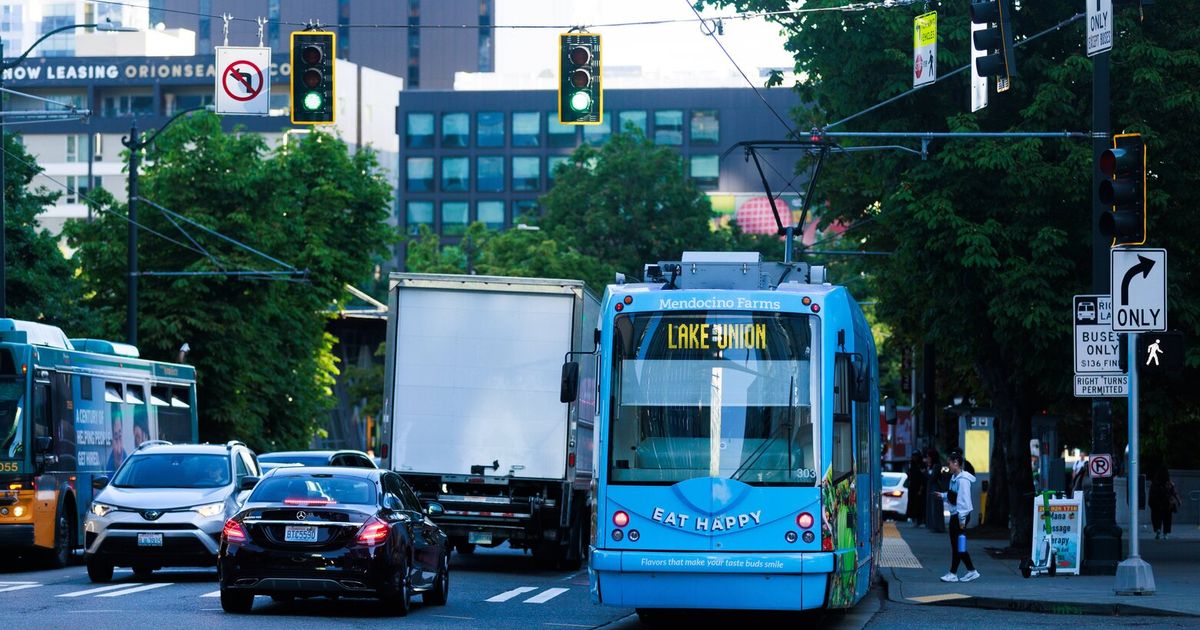
The bulk of the $138 million raised each year would be spent on increased bus service and Seattle Streetcar operations. Around $6 million would support the design and delivery of Sound Transit’s West Seattle Link Extension, Ballard Link Extension, and Graham Street Station and city permitting staff.
Within Seattle, the mayor’s proposal would boost state and local sales taxes from a total of 10.55% to 10.7%, reported The Times.
At the current rate of 10.55%, a household with the median income of $123,860 pays about $2,414 in total sales tax to multiple jurisdictions.
In times of great demand for services, government is right to ask its citizens for more resources. The Seattle City Council, which is currently debating whether to put Wilson’s proposal on the ballot, must consider whether we are indeed living in such a time.
King County Metro reported average weekday ridership of 284,310 last year, down from prepandemic levels of 382,536 in 2019.
The Seattle Department of Transportation reported in 2024 that combined streetcar ridership was 80% of prepandemic levels.
Metro’s fares are rarely enforced and cover less than 10% of operating costs.
Meanwhile, the Metropolitan King County Council voted earlier this month to impose a new countywide 0.1% sales tax to pay for road improvements.
The drip, drip, drip of sales taxes flies in the face of any sense of urgency to make this place more affordable.
This is an expensive city. In a briefing on affordability to the Seattle City Council earlier this month, staffers reported that from 2019-2026 transportation costs increased by 46%, food increased 40% and housing costs grew by 39%.
Those with less income pay a higher percentage of their income in sales tax than do households with greater wealth, according to an analysis by the Institute on Taxation and Economic Policy.
But it doesn’t end with sales taxes.
The Seattle City Council is also weighing an increase in residents’ electricity bills of 9.5% in each of the next two years — roughly $10 a month more for most customers.
In August, voters will decide on a $480 million library property tax renewal. The City Council inflated the measure from Wilson’s initial proposal, which called for $410 million — almost twice as much as the expiring $219 million levy.
For all the talk of affordability, has anything of substance become less expensive in the last year? Even a slice of pizza?
Seattle residents are both generous with taxes and shackled by high costs. The trick for elected officials is to navigate between these polar opposites and chart a course that doesn’t end up making the affordability problem even worse.
