

On the Eastside of Seattle, the $1.5 million median home price has become shorthand for a profound housing crisis. But the affordability challenge does not stop at the city limits — or King County. Throughout Washington, families are being priced out of the communities they serve. Teachers, nurses, first responders and service workers increasingly cannot afford to live near their jobs. Seniors on fixed incomes and single parents are stretched beyond their means.
This crisis is not new. However, earlier this year, Washington lawmakers made news when they passed House Bill 1859. This measure enables affordable housing development on land owned by faith-based organizations across the state — a win-win for congregations and communities. The bill builds on innovative local policies like Bellevue’s Affordable Housing Strategy, which opened the door for churches to develop affordable homes on properties long restricted to single-family use.
This is not a marginal tweak. It is a structural shift, and it stands to benefit communities across Washington.
Across the state, faith communities often have underutilized land in high-opportunity neighborhoods near transit, schools and parks. Faith communities bring an additional bonus to the table: they are the “patient seller,” which brings ever greater alignment between churches and nonprofits as they put the financing resources together. For decades, zoning rules effectively locked faith-owned land away from meeting urgent housing needs. Yet faith communities as landholders possess the most actionable land resource for affordable housing development. HB 1859 removes that barrier statewide, empowering congregations to partner with experienced nonprofit developers and transform surplus land into housing opportunities for more people.
In Bellevue, where the typical rent recently hovered around $2,790 per month and many households are rent-burdened, a new housing playbook has emerged, offering a glimpse of what’s possible. The city’s innovative Affordable Housing Strategy Action C-1 is opening the door to the development of affordable housing on church-owned land in neighborhoods once restricted to single-family homes. It’s a model that goes beyond traditional development plans to unlock opportunities on underused land through creative partnerships and policy tools. And it’s the model for HB 1859.
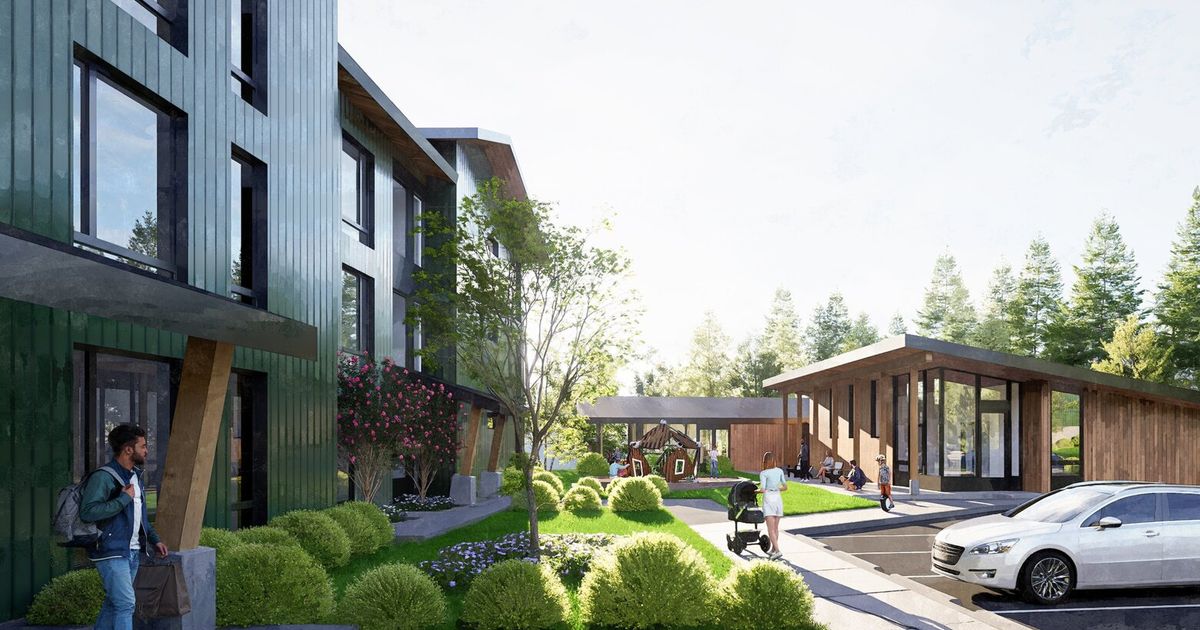
One example is St. Andrew’s Lutheran Church. Congregants have moved forward on a housing development partnership and plans for a family-focused affordable housing project on church property. Similarly, St. Peter’s United Methodist Church is advancing a project that will deliver approximately 100 affordable homes while preserving the church’s mission.
These are not isolated efforts, and according to a recently released report, they represent a replicable model. The Affordable Housing Development Potential in Bellevue and the Eastside Cities report mapped more than 200 religiously owned parcels across Eastside King County that were eligible for density bonuses and redevelopment. The findings are striking: Underutilized faith-owned land could support approximately 9,000 affordable housing units.
That is not theoretical capacity — it is real land, in real neighborhoods, under real ownership structures already committed to community benefit.
When paired with a smarter permitting standard, innovative financing tools, density incentives and mission-driven development partners, HB 1859 is more than a win-win; it’s a windfall and a win. Cash-strapped churches can access equity, and nonprofits have the land they need to advance affordable housing. It also allows us to create the communities we want, where all people can live, learn, work and play, and no one is priced out of the place they call home.
The land is there. The partners are ready. The policy framework is taking shape. Now, the task is to deliver.
