

“A BETTER FUTURE”
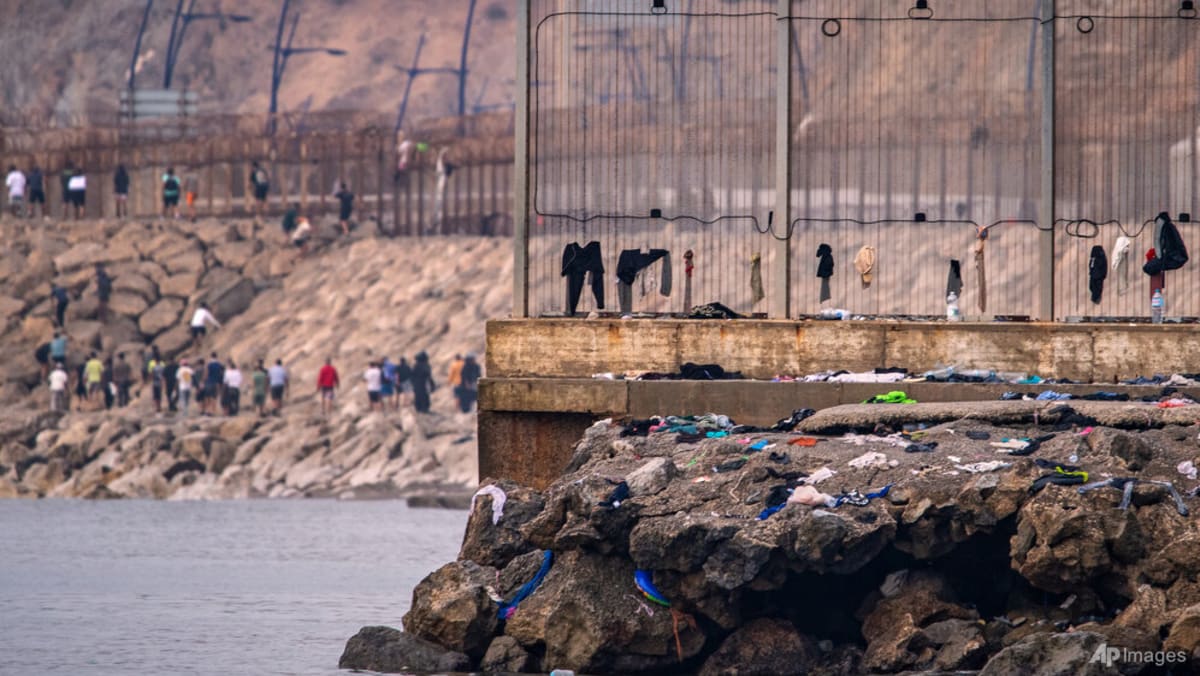
In Morocco, Soufian, 42, told AFP that he had been planning to make a swim from his coastal town of Martil, located less than 40km from Ceuta, when a friend told him that the border was open.
“It didn’t take long – just five minutes or less, maybe three – since it was right at the border.”
He explained he was motivated by the potential to visit his mother, who is ill and lives in Madrid.
“Even though there’s no food, nothing at all, I’ll endure anything to see my mother,” Soufian said, adding he makes just 10 euros (US$12) a day working 12-hour shifts as a security guard.
As for the others who crossed, he said, “everyone wants to move up, wants a good future – something that doesn’t exist in Morocco”.
What sparked the sudden massive flow of migrants remains unclear.
Morocco’s authorities have not yet issued an official statement on the development.
A Moroccan source close to the border operations told AFP on condition of anonymity Saturday that those being returned by Spain were being transported home directly by bus or via the railway station in Tangier, 70km away.
The Fnideq border crossing is now “completely secure”, the source added, as are the hills overlooking it, from which hundreds of people, mostly young men, had thrown stones at security forces on Friday.
Ceuta, a territory of 18.5 square kilometres, and the nearby enclave of Melilla are Europe’s only two land borders with Africa.
Previous migrant surges have occurred during tensions between Spain and Morocco, including in 2021 which led more than 10,000 migrants to enter Ceuta in just two days.
