

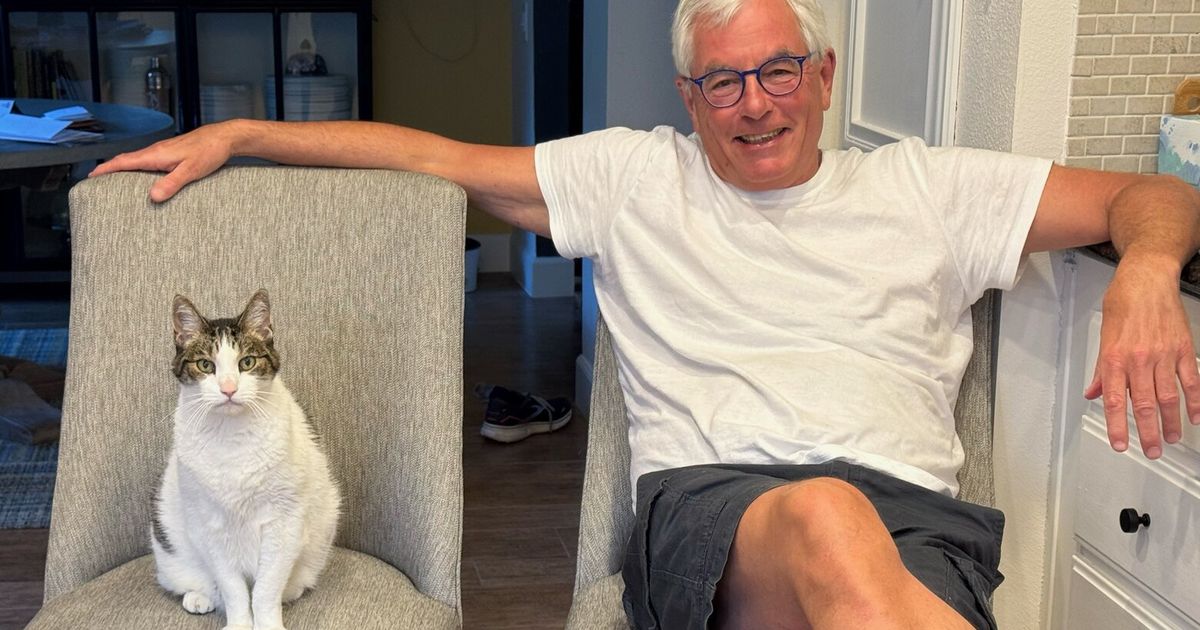
At age 15, Bubbles the cat is clearly a senior citizen in the world of felines. I’m not sure how old that is in people years, but it’s up there. Recently, our cat sitter noticed some worms when Bubbles threw up. He was also a tad lethargic and not his usual perky self. We decided to take him to his vet, Dr. H., for a look under the proverbial hood. My wife called and was given an appointment two days later.
When we arrived with a slightly anxious cat, we were warmly greeted at the front desk and immediately shown into an exam room. Two minutes later, the veterinary assistant entered and checked Bubbles in. She was so thorough with her questions and responses, that I briefly thought she was Dr. H. herself. After a short wait, Dr. H. came in, greeted us and then sat down on the floor and did an efficient and thorough exam, while she pumped my wife for details about Bubbles. She then suggested a treatment plan, including a send-out stool test, some deworming medication and some subcutaneous fluids. She volunteered how much each step in the plan was going to cost ($70 for the test, $30 for the fluids) along with a follow-up plan if needed. Shortly after she left, the vet tech came in and administered the medication and the fluids before we left.
On the drive home, I was struck by the contrast between a trip to the vet and a trip to the doctor. For starters, there was the phone call that was answered by a real person after a couple of rings. There were no AI voices telling us to press 1, 2 or 3 followed by a long wait on hold. Bubbles was able to get an appointment quickly just a couple of days away. We weren’t told that the doctor was not taking any new patients, nor that the next available appointment was four months out. I spoke with someone recently who said the soonest they could see a human specialist was 15 months down the road!
On top of that, there were no long waits at the pharmacy and no surprise bills. There was no need to go somewhere else to get some labs done. It was literally one-stop shopping done expertly and efficiently with a very human touch.
Now, I ask you: Does that sound like anything you may have experienced in a medical clinic? Full disclosure: I am a retired family physician, and have spent the past 10 years practicing in a very busy urgent care clinic. Before that, I was a veterinarian, but that was in another life and another century.
Many times, at an urgent care visit, a patient would come in and announce that they had called their clinic to get an appointment only to be told, “go to urgent care.” Sometimes people would rattle off the names of two or three places they had tried to be seen before coming to me. I always found that a bit funny. It would be like asking someone to the prom and listing everyone who said “no” before I got to them. At our clinic, wait times would be listed in hours on the website, not minutes. As for the cost of tests and visits, that’s a conundrum wrapped up in a puzzle.
There is something drastically wrong with how healthcare is delivered these days. It has become much less personal, and more difficult to access. In my case, in the clinic where I practiced, I was not a doctor, nor a physician, but simply a “provider,” nothing more. Someone to deliver the goods.
Don’t get me wrong. The care we delivered at our urgent care clinic was top-notch. If I were to find myself in need of a visit, I would not hesitate to go back to that very same clinic. But I’d make darn sure to bring my insurance card, photo ID and a book for the wait. I just wish they would give me a treat on the way out the door.
