

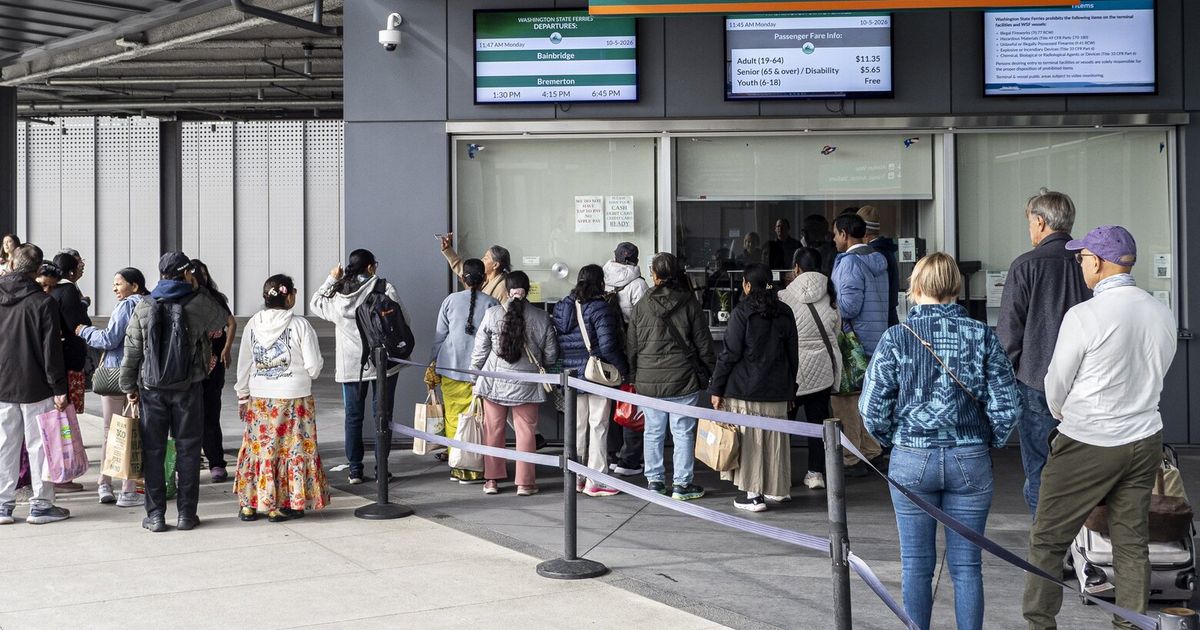
On Monday, thousands across Puget Sound showed up for their ferry and found it tied to the dock. Twenty-three engine room workers had called out sick, every qualified replacement turned down the shift and at one point 13 of the state’s 18 operating ferries sat idle.
Washington State Ferries’ social media explanation came with a salary attached. Staff chief engineers, the agency wrote, “have a base salary of $157,000, and can make more than $350,000 a year with overtime.”
But the staff chief is a vessel’s most senior chief engineer, the third-highest-paid job on board. The assistant engineers, oilers and wipers make far less. A new wiper starts at $31.57 an hour.
Engineers work seven 12-hour days in a row, then get seven off. Shifts can end in the middle of the night with an hour’s drive ahead. Every week on is 84 hours, with about 104 hours a year of mandatory overtime built in. That’s what the base pays for. Getting anywhere near $350,000 means working well over 100 of their 182 days off. By that logic, a Washington minimum-wage worker on that same schedule would make more than $70,000. Nobody would call that overpaid. They’d call it no days off.
Engineers work those extra days because the state hasn’t hired enough of them, and a ferry can’t sail without a full engine crew. Every one of those shifts is paid at time and a half. The shortage isn’t saving the state money. It’s costing more. WSF says every boat starts the day staffed at Coast Guard minimums. That’s true only because worn-out people keep saying yes to overtime, which the engineers’ union warned this week isn’t safe.
Engineers earn good money by local standards. That’s not the issue. A Coast Guard unlimited-horsepower engineer’s license is good on any U.S.-flagged ship. Washington State Ferries pays below industry, and worst in the engine room: chief engineers earn about 17% less than its captains. In a June survey, more than 60% of engine room workers said they were likely to retire or leave. The ferries run on their goodwill.
The state says there’s no budget. Going into the 2027-29 contracts, it offered no raises. Neutral arbitrators found that unfair for most ferry workers and awarded some employees raises of up to 4.5% a year. The engine room got nothing. With Seattle-area prices up 4.9% over the past year, that’s a pay cut. And those raises still need state funding approval, which has been denied before. Squeezing crews, maintenance and new boats pushes the bill down the road, the way Boeing’s cost-cutting did.
In 1999, Initiative 695 repealed the car-tab tax that paid for about 70% of the ferry system’s capital budget and nearly a third of its operating budget. For years the cuts landed on the fleet. Now they’re landing on the crews.
The root problem is how Washington raises money. As of 2024, the Institute on Taxation and Economic Policy ranked our tax system the second most regressive in the country. The poorest fifth of households paid 13.8% of their income in state and local taxes; the top 1% paid 4.1%. A new 9.9% tax on wage income over $1 million is a start, but it faces a challenge from Initiative 645, which proposes repealing it.
If you care about the ferries, call your legislators before January’s session. Tell them to fund the crews’ raises and fix the tax system that keeps coming up short.
Washington created its ferry system in 1951 as a stopgap until bridges were built. In 1992, Vashon islanders turned out by the thousands against a proposed bridge because they wanted to stay small. That’s their right, but it has a price, and taxpayers statewide are paying it. If the state won’t pay to run ferries properly, it should build the bridges or ask the counties that chose ferries to share the cost. What it can’t do is keep running ferries on the cheap and explaining canceled sailings.
