

One can only imagine the physical beauty and abundance of life that Capt. George Vancouver witnessed as he sailed his ships along the Strait of Juan de Fuca 234 years ago. His journal entry at the time describes a country that “exhibited everything that beauteous nature could be expected to draw into one point of view.”
It was Vancouver who gave the name “Protection” to the small island set at the mouth of Discovery Bay — a name which today seems both timely and providential. At that time, Vancouver must have imagined that its nearly 400 acres could protect vessels anchored there from prevailing winds.
The area had been occupied and stewarded by Indigenous people for thousands of years, people whose reverence for the life and land guided their use and sustainability of the extraordinary natural resources here. Today, descendants of the original inhabitants manage some of these lands in an extraordinary partnership with the U.S. Fish and Wildlife Service.
However, that could change under a proposal to transfer Protection Island and Dungeness National Wildlife Refuge lands, now part of the Washington Maritime U.S. Fish and Wildlife Refuge Complex, to the Bureau of Indian Affairs, to be held for the Jamestown S’Klallam Tribe and later transferred to tribal ownership. This would remove federal oversight and public ownership of about 900 acres.
As longtime observers of the natural world, we and a cadre of researchers believe the environmental ramifications of transferring Protection Island and Dungeness National Wildlife Refuge would be significant.
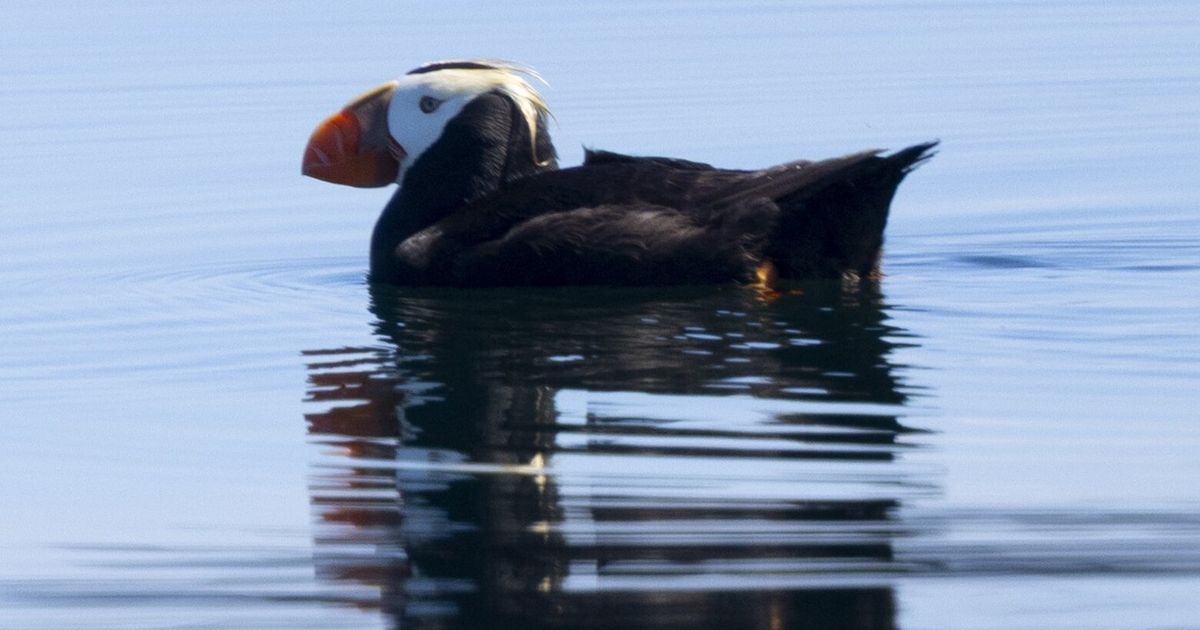
This area is exceptional for the habitat it provides members of a unique family of marine birds, the Alcidae, which includes rhinoceros auklets, tufted puffins and pigeon guillemots. These seabirds need to incubate their eggs and raise young in burrows in an undisturbed setting. Nothing like this exists for these species elsewhere in the Salish Sea. These lands are part of a larger ecological system that provides essential habitat for not just birds but seals, sea lions, elephant seals and the marine life that sustains them.
When Tony Angell and Ken Balcomb collaborated on the book “Marine Birds and Mammals of Puget Sound” in 1980, they referenced state and federal surveys of marine birds and mammals here. Over the past 45 years since the book’s publication, the numbers of these animals have, with only a few exceptions, noticeably and measurably diminished.
In his 1993 “Shorebirds of the Pacific Northwest,” Dennis Paulson documents the importance of sandy intertidal habitats for shorebirds, a habitat prevalent on the Dungeness refuge, which is heavily used by migrating shorebirds in large numbers spring and fall. Relatively few protected expanses of sandy intertidal beaches occur in the Salish Sea, giving more importance to this refuge, largely off-limits to visitors.
The writers recognize the tribe, its culture, its sovereignty and its legitimate interests. In fact, we are heartened that the tribe is working with the U.S. Fish and Wildlife Service as co-managers for both Dungeness and Protection Island refuges, a partnership that serves as a model of cooperation. Changing ownership, changing control, would destroy that partnership and remove the public oversight and federal enforcement that today protects numerous sensitive wildlife species from harm and exploitation.
The federal refuge system exists for a specific purpose: to protect wildlife and the habitats on which wildlife depends. Protection Island and Dungeness are especially valuable, because they provide undisturbed habitat with the right conditions for nesting seabirds, haul-out areas for resting and pupping pinnipeds, and habitat and food for a great diversity of seabirds, waterfowl and shorebirds in an increasingly developed region.
The importance of these refuges extends well beyond their boundaries. Many of the birds that depend on these places migrate up and down the Pacific Coast, so species from Alaska to Mexico depend on our waters. Populations of seals and sea lions all along our coast are affected by what happens here. And all of these animals depend on the surrounding marine ecosystem, including the abundance of fish and invertebrates that provide the foundation of the food web.
Protection and Dungeness are public wildlife treasures. They belong to a national system established specifically to preserve places like these for wildlife and for future generations. Once management is transferred outside that system, the protections and purposes that have guided these refuges could change. Any increased human use of the natural resources provided by these refuges would surely have a negative effect on wildlife.
The decision before Congress therefore should not be framed as a choice between the tribe and conservation. It should be framed as a question of how best to protect these extraordinary places and the wildlife that depends upon them. Based on our decades of experience, we believe keeping the Washington Maritime U.S. Fish and Wildlife Complex intact, including Protection Island and Dungeness refuges, gives the most protection and oversight to these critical habitats. These places have served wildlife well under the National Wildlife Refuge System.
The wildlife cannot speak for itself. We can — and we should.
