

In the latest sign of hope for the beleaguered local-news business, tens of millions of dollars are now available to help grow and strengthen promising news organizations.
This is a welcome addition to the collection of tools needed to sustain an industry that’s essential to democracy and communities’ civic health.
The $21 million “Local News Impact Investment Fund” launched last week with backing from the Knight and MacArthur foundations. Other philanthropies are expected to join, adding millions more.
It will offer loans in the range of $500,000 to $2 million, or more, with generous terms to help news organizations expand or invest in their operations.
Loans could be used to help outlets grow with acquisitions, expand to serve new areas or invest in new tools and technology, said Amalie Nash, vice president of journalism at the Knight Foundation.
“It’s really about the patient, flexible capital that can help them build sustainable business models,” she said.
Knight and the MacArthur Foundation were already the largest donors to local journalism. In 2023 they led creation of the $500 million Press Forward grant program.
The loan fund, operated by Boston nonprofit Social Finance, is “entirely a different lever for us,” said Silvia Rivera, director of MacArthur’s local news program.
The timing is right, for several reasons.
One is that the local news industry needs to be recognized as still viable, and not a complete charity case.
Yes, nearly three newspapers a week close, the industry is painfully downsized, and the fight for people’s attention and subscription dollars is fierce.
But local news is still a decent business that will survive, given the right conditions, benevolent ownership and a mix of support from communities, philanthropy and government.
Timing is also good because opportunities are opening for civic stewards or local groups to acquire and sustain their newspapers, which continue to provide most local reporting, from retiring publishers or debt-burdened chains. Enabling these transitions will help prevent further newspaper closures.
I wrote last month about how the McClatchy newspaper chain could sell or get broken apart, putting important, regional dailies in play. It happened last summer in Georgia, where two McClatchy papers were acquired by local foundations and the National Trust for Local News.
The Minnesota Star Tribune’s owner is mulling an exit, possibly shifting the paper to a local nonprofit. The family that owns The Toledo Blade will close the paper next month unless a buyer is found. That family was also going to close the Pittsburgh Post-Gazette until a nonprofit bought it in April.
Positive outcomes in such situations are more likely if attractive financing is available. Financing also complements rising philanthropic support for news and tax credits and other programs that a handful of states are providing to save and grow newsroom jobs.
News organizations are evolving. Newspapers are reinventing themselves, experimenting with new production systems and investing in digital products. Some are holding their ground by maintaining quality and good service.
Online news ventures, both for-profit and nonprofit, are finding traction in some regions and could expand and reach new markets with infusions of capital.
New business models are taking hold. Nonprofits are having success operating dailies in Philadelphia and Salt Lake City and clusters of newspapers in Maine, Colorado and Vermont.
More than 90% of local news businesses remain for-profit enterprises, including more than 5,000 surviving newspapers, but they also are evolving. The Seattle Times and many regional dailies now use a hybrid model, drawing on philanthropic support to increase coverage of topics like education.
A new generation of publishers, like New Jersey-based CherryRoad, is sustaining community newspapers in dozens of rural and suburban areas with investments in software and production technology.
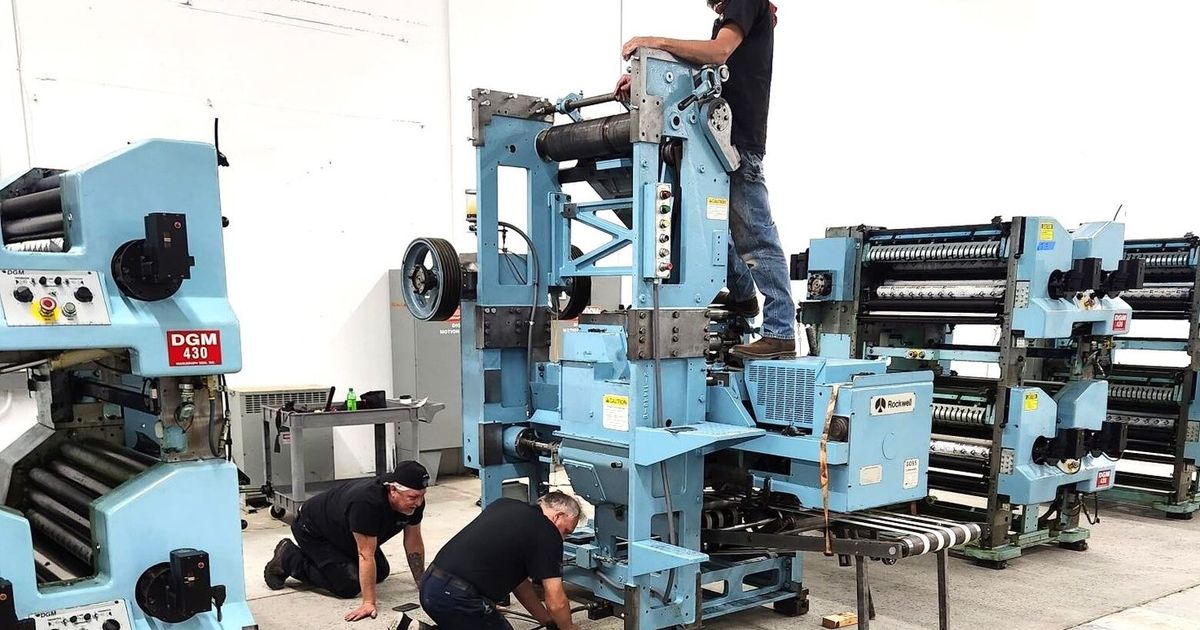
One project that could have benefited from the fund is a printing plant that the National Trust built in Denver in 2024. It was needed after USA Today closed a press used by numerous papers in the region.
That said, it’s still a tough business and these are risky investments. That’s why big newspaper chains pay exorbitant interest rates to financiers that backed their acquisitions. They operate with small newsrooms and big debt payments, so Wall Street gets more and places where they publish get less.
Social Finance wouldn’t specify the return it expects from the fund. But it could be minimal, since supporting local news organizations is a higher priority than making money from them, fund managers told me.
“We operate from an impact first perspective, where impact is the primary objective, and financial return is our secondary objective,” said Vinesh Kapil, director of impact investments. “That said, one of the objectives of our fund is to prove that the local news space is actually an investable field … we want to show other investors that this is indeed a space that they can make investments, and there are businesses that can be supported through investing.”
The loans aren’t donations. Social Finance wants to cover its expenses and get money back, so it can be redeployed to support additional news organizations, said Stephen Vicinelli, managing director of impact investments.
“Whether that comes back with a 1% return, a 2% return or a 0% return, that objective stands, that the capital can be recycled into another opportunity to prove investability,” he said.
Grants will continue to be the primary way the Knight Foundation supports local news, but they can only go so far, Nash said.
“There definitely just isn’t enough philanthropy dedicated to journalism to meet all the needs in the field,” she said.
The loan fund, initially reported by Axios, will help outlets that “reached a certain level of maturity” and can pay back the investment in their growth, she said.
For-profit news outlets, especially, “have had a hard time accessing things like grants because they tend to go a little bit more toward nonprofits and that sort of thing, and so this is another vehicle they could access,” Nash said.
I should qualify my statement above.
The timing is right for this fund to make a big difference. But imagine if this sort of support were available earlier in the industry’s disruption, before 75% of America’s newsroom jobs were lost, more than half its counties became news deserts and 58% of adults turned to social media for “news.”
The country would be in a different place and elections would be less fraught. But maybe things will start turning around soon.
