

For almost four decades, since the advent of the Moral Majority in 1979, “religion in politics” has been synonymous with white Christian nationalism and culture war. This week, however, as the most expensive election cycle (reportedly $13 billion) came to an end, it became clear that the American public has finally questioned the morality of the Christian right and the candidates they supported, most damningly President Donald Trump.
In poll after poll, the current Christian-right-supported Trump administration was faulted more for corruption than for failed economic policies.
American candidates for the midterms who happen to be Christian, Muslim, Jewish or without a declared faith reminded voters of the principle of separation of church and state. Seminarian Texas Sen.-elect James Talarico, who broke a 32-year dry spell for Democrats, had opposed, as a state legislator, Republican fake religiosity when the right sought to force-feed Judeo-Christian teaching, the Ten Commandments, in public schools.
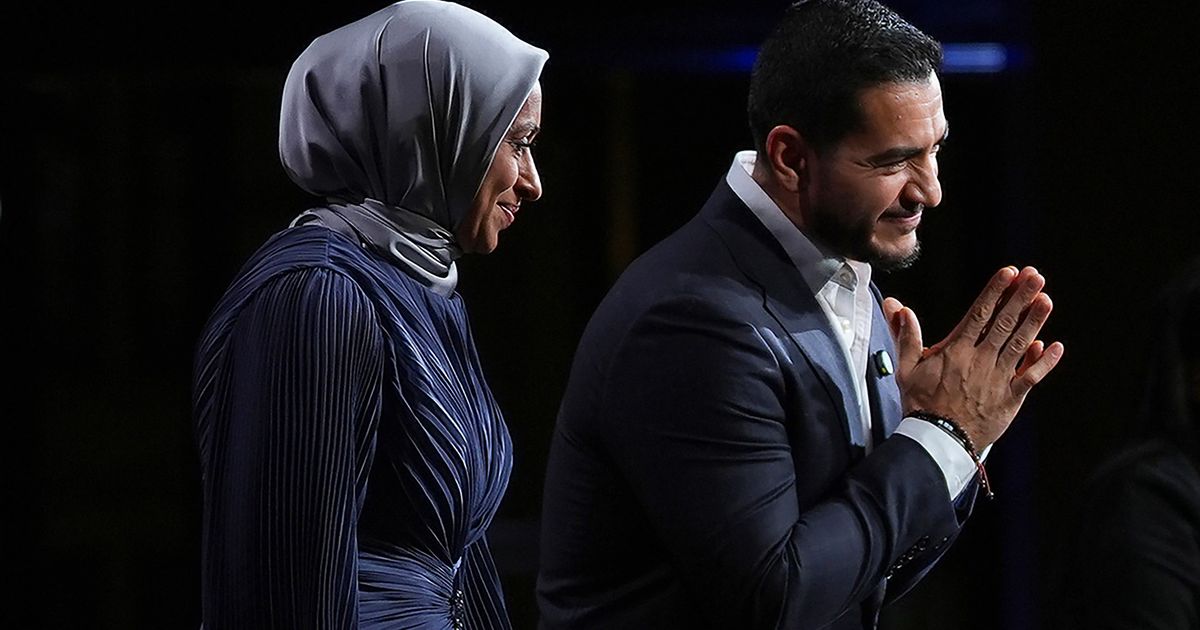
In Michigan, and under pressure because of his faith, Muslim Senate candidate Abdul El-Sayed reminded people of what President John F. Kennedy said when people wondered whether he, as a Catholic in the White House, would take orders from the pope. Kennedy said that he is an American running to be elected as president of the U.S. who happens to be Catholic. El-Sayed, who will be the first American Muslim to enter the U.S. Senate, said that he too is an American running to represent Michigan in the Senate who happens to be Muslim.
In Kansas, Adam Hamilton, a theologian and the founding senior pastor of Church of the Resurrection in the Kansas City area, defeated incumbent Republican Sen. Roger Marshall. He is the first Democrat to win a Senate seat in Kansas in 94 years, since 1932. He has publicly stated that he believes in the First Amendment and the separation of church and state. He said that if elected to the U.S. Senate, his role would be “to uphold the Constitution and fight for all Kansans, not to act as a pastor to the Senate or impose religious rules on the government.”
This is playing out in local races as well. In New York City last year, Zohran Mamdani won a landslide victory in the mayoral primary and the general election by rejecting religious examination of political candidates. He said that “I can’t tell you I support, whether it be Israel or Saudi Arabia or anywhere else,” a state that explicitly privileges one religion over another, advocating instead for state neutrality and equal rights for all people regardless of faith.
Those politicians’ positions reminded their constituencies of what the Constitution says about the interaction of religion and politics. Article VI, Clause 3 establishes that “no religious test can be required as a qualification for any federal or state public office.”
Beyond American politics, right-wing evangelicals, once a monopoly of white Western countries, have also experienced profound global leadership change. The Rev. Botrus Mansour, a Palestinian Baptist citizen of Israel, was chosen in Seoul last year as the secretary-general of the 650-million-strong World Evangelical Alliance. The Rev. Charlie Costa, a Lebanese Baptist, was elected as the chair of the European Baptist Federation and Ruba Rihani Abbasi from Jordan was elected first vice president of Baptist World Alliance Women.
While insisting on separating religion from politics, all of the above have not balked at addressing moral issues. In Texas, Talarico quoted the Bible in his victory speech, insisting that Christians are called to love God and love their neighbors.
Michigan’s El-Sayed has shared that his faith emphasizes principles such as speaking the truth — even when it is against oneself — and taking care of the vulnerable, which aligns with his advocacy for public health, universal healthcare (such as Medicare for All) and addressing economic inequality. He insists that his Islamic faith guides his commitment to serving God and helping his neighbors. In campaign ads and public appearances, El-Sayed describes himself as a “man of faith” who prays daily, viewing his religious background as a core driver for public service.
Mamdani, perhaps the most popular American Democrat today, approaches the intersection of religion and politics by linking his Islamic faith to progressive social justice, pluralism and universal citizenship rights rather than a theocratic system. Mamdani has articulated a clear division of labor between religion and the state: Faith provides the moral compass to care for the vulnerable, while government provides the material resources to execute that care. Rather than governing exclusively through a singular religious lens, Mamdani uses an interfaith framework. His administration has incorporated Buddhist, Sikh, Hindu, Jewish, Christian and Muslim leaders into advisory committees to coordinate grassroots social services, housing initiatives and community safety.
As the former executive pastor of the largest United Methodist Church in America, Hamilton says that he prays daily and keeps a copy of the New Testament in his back pocket. He makes no apology for his Christian faith. A registered Republican until this year, he grounds his centrist policy positions in the teachings of Jesus, particularly in the gospels, emphasizing biblical mandates to care for the poor, feed the hungry, clothe the naked and welcome immigrants.
In contrast to Moral Majority followers since 1979 and all similar right-wing white Christian movements, Hamilton has publicly opposed Christian nationalism. He has said that true biblical values center on justice, fairness, community service and bridging political divides rather than partisan or exclusive claims to divine favor.
The U.S. midterm elections may have brought the public end of the right-wing moral majority movement, but they have not walked away from the need for morality, decency and religiously based ethics in politics.
