

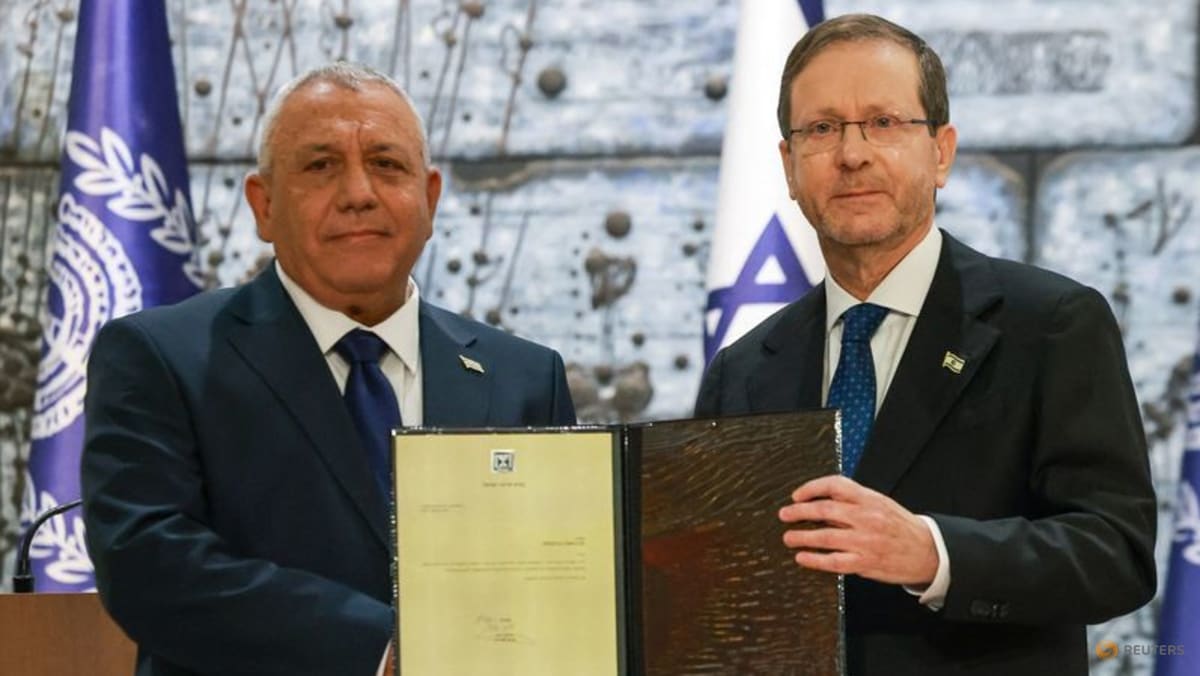
Eisenkot’s Yashar party emerged as the second-largest party with 21 seats, while his coalition, spanning four centre-left to right-wing Jewish-led parties, won just 48 seats. Two parties representing Israel’s Arab minority won an unprecedented 19 seats.
Netanyahu called for a unity government of all Zionist parties to preserve a Jewish state, while giving no indication whether he would was prepared to serve under Eisekenkot’s leadership.
“This is the will of the people and the need of the hour,” he said in a statement, ruling out a coalition government with Arabs, who make up 21 per cent of Israel’s population.
Potentially making Eisenkot’s job tougher is the position of one opposition leader, Avigdor Lieberman of the Israel Our Home party, who has ruled out a unity government with Netanyahu or a minority government that has backing from Arab parties.
But Lieberman has softened his stance on sitting with ultra-Orthodox Jewish parties as long as they agree to support a law under which ultra-Orthodox men serve in the military.
“Given the current reality, in order to prevent further elections and bring an end to the Netanyahu era, there is no choice but to make difficult decisions and resolve issues where flexibility is possible and common ground can be found,” Lieberman said.
