

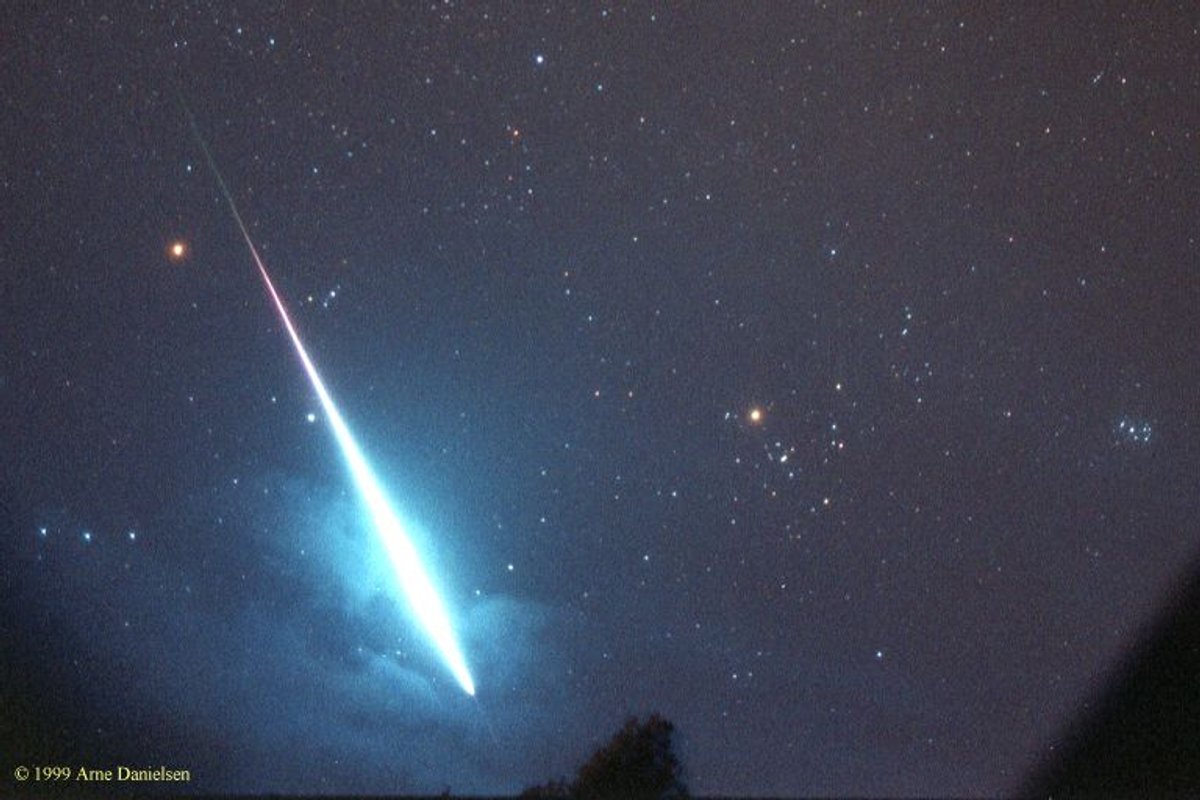
The Leonid meteor shower will hit its peak on Monday night and into early Tuesday, when it will brighten the sky with fireballs and colorful shooting stars.
The Leonids come from Comet 55P/Tempel-Tuttle. When the Earth crosses through Tempel-Tuttle’s trail of debris each year, the leftover space rocks can enter our atmosphere and fall as bright and sometimes blue and green meteors.
The height of this year’s show is expected to start around midnight tonight and to last until dawn, with around three meteors per hour in the darkest places. Stargazers on the East Coast are in luck this year because the shower will peak on a clear night—but with a nearly half-full moon, some of the fainter meteors may be difficult to spot.
On supporting science journalism
If you’re enjoying this article, consider supporting our award-winning journalism by subscribing. By purchasing a subscription you are helping to ensure the future of impactful stories about the discoveries and ideas shaping our world today.
Though the shower will see relatively few meteors per hour, the Leonids can lead to especially great stargazing because of their tendency to produce fireballs. These larger pieces of comet debris are brilliant, and they are more vivid and last longer than a typical shooting star. The shower will also include Earth-grazing meteors, which shoot past the horizon and are often particularly vibrant. The Leonids are known for being some of the fastest meteors, at 44 miles per second. Blink, and you might miss them.
Every so often, the Leonids’ parent comet, Tempel-Tuttle, produces so much debris that the shower becomes a meteor storm, marked by more than 1,000 meteors per hour. The last Leonid meteor storm was in 2002; the phenomenon tends to happen around every 33 years.
NASA advises sky-gazers to wear lots of layers, bring a sleeping bag and lie down on the ground with their feet pointed to the east for the best viewing experience. After around 30 minutes, when your eyes adjust, you can catch the bright streaks across the night sky from midnight until dawn.
Subscribe to Support Independent Journalism
Great science journalism requires human expertise, time, effort and creativity. And it costs money. That’s why I and the journalists here at Scientific American hope you’ll join our community.
When you subscribe, you are supporting staff and freelance journalists who are passionate about telling science stories that are true, important and compelling. Our editors and reporters are often experts in their fields, which means they understand the nuances of big discoveries and can untangle the breakthroughs from the hype. With a subscription, you are also supporting rigorous fact-checking to ensure the words we publish are precise and accurate. And you’re supporting original illustrations, graphics and photos that bring you closer to an advanced laboratory, an ice sheet in Antarctica or a space mission in orbit. You’re helping us craft other types of high-quality journalism as well: Our newsletters are carefully written, edited and curated by staffers you have or will come to know and love. Our Science Quickly podcast is based on original reporting, collaboration with editors and scientists and exacting production.
Subscriptions keep this engine running so we can continue to deliver thoughtful, rigorous and independent science journalism to you. In an era of viral misinformation, this work is crucial. If you value what we do, I hope you’ll consider joining us as a subscriber
