

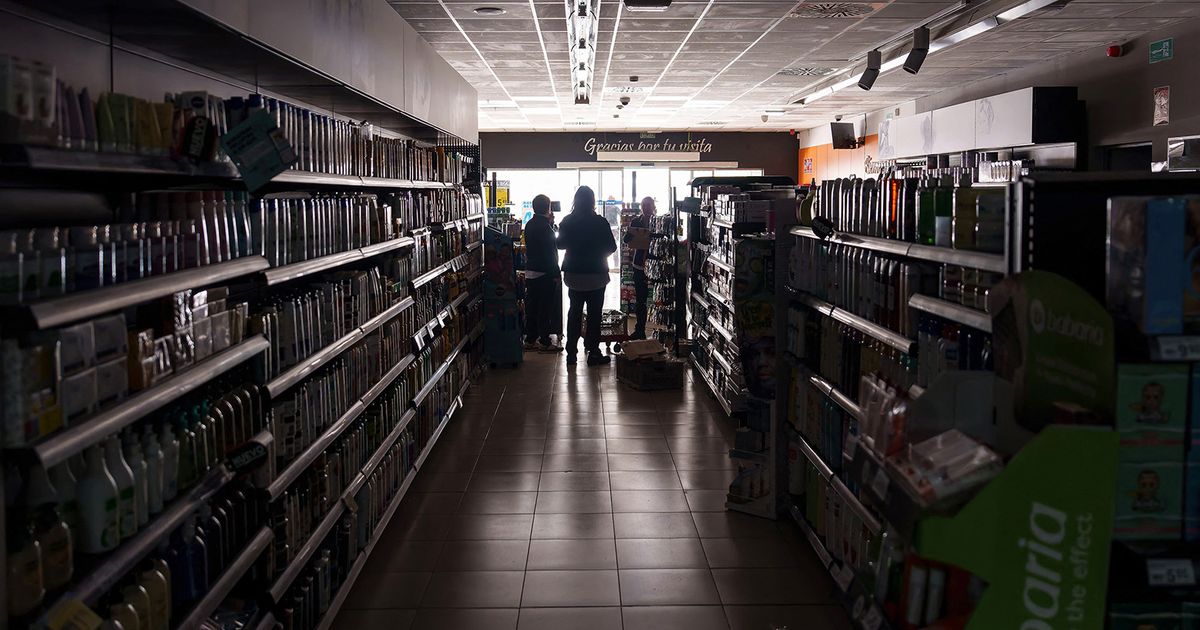
At 12:33 p.m. local time on a crystal blue Monday, the system that provides the power essential to the daily lives of 50 million-plus people collapsed. The lights went out from Lisbon to Barcelona; trains stopped, air traffic controllers went offline and hospital workers scrambled to keep patients alive. Two highly modern, eminently civilized nations were plunged into chaos.
While understandable, the immediate obsessive search for the cause — whether cyberattack, software error or rare atmospheric phenomenon — missed the point. In tightly coupled, highly complex systems like the European energy grid, the next catastrophe is not caused. It is triggered.
Over the past 2½ decades in the disaster business in New York City, I’ve watched weather systems, electrical grids, transit systems and terrorist networks overwhelm the best-laid plans. And I’ve come to understand what physicists and systems theorists have known for years: In complex systems, disaster is not the exception; it’s the destination.
Back in the 1990s, Danish physicist Per Bak proposed a theory he called self-organized criticality. His insight was that complex systems — whether electrical power systems, cities, economies or even ecosystems — inevitably organize themselves into fragile states. As connections grow and efficiency increases, the margin for error disappears. One small, almost trivial fault can suddenly cascade into a continent-wide collapse. Not because the fault is catastrophic — but because the system itself evolves into the crosshairs of catastrophe.
This is what happened in Spain and Portugal. And it will happen again.
In his landmark work “Normal Accidents,” sociologist Charles Perrow explained why. Systems like telecommunications networks or national power grids aren’t just complicated — they’re “tightly coupled,” meaning that one failure rapidly affects the next. The result is failure that is not only probable — but normal. Trying to find and eliminate every possible fault is a fool’s errand. You can’t debug your way out of systemic risk.
This concept might seem abstract unless you happen to be on the hook to solve the issues and unmet needs of the millions trapped in the blackout. The elderly patient whose ventilator shut down. The train passenger stuck underground. The nurse working by flashlight. The grocery store that lost everything in the dark.
We are used to thinking of disasters as external shocks — terrorist attacks, hurricanes, pandemics. But more and more, the disasters we face are emergent properties of the systems we’ve built. Lean, efficient, interconnected infrastructures may work beautifully on a good day. But they break spectacularly on a bad one.
Statistician Nassim Nicholas Taleb, in his influential work “The Black Swan,” calls the world where low-probability, high-impact events dominate “Extremistan.” In Extremistan, what seems improbable happens regularly. What seems stable collapses without warning. And what seems isolated is deeply, dangerously connected. I hate to break it to you, but we live in Extremistan now. So what should we be doing about it?
First, we must stop debating probabilities. Catastrophic failures are not rare. They are built in. The question is not if another system will collapse — but when and how many others will collapse with it.
Second, we must shift from an optimization to a resilience mindset. The critical infrastructure that sustains daily life — transportation, communications, water and wastewater, energy, food, health care — must be rendered able to absorb shocks and keep functioning, not just on paper but in practice. That means slack in the system. Redundancy. Cross-training. Manual overrides. And a professional emergency management class empowered to plan, rehearse and lead.
And finally, we must prepare for the moment of truth — that first hour when the system breaks, and the response begins. That hour is not a drill. It is life or death for the vulnerable, the elderly, those with access and functional needs, the isolated. And if we are not ready, it will be too late.
The Iberian blackout was not a one-off. It was not a fluke. It was a signal from the future, sent in the language of darkness. Our job is to listen — and act — before the next black swan comes.
