

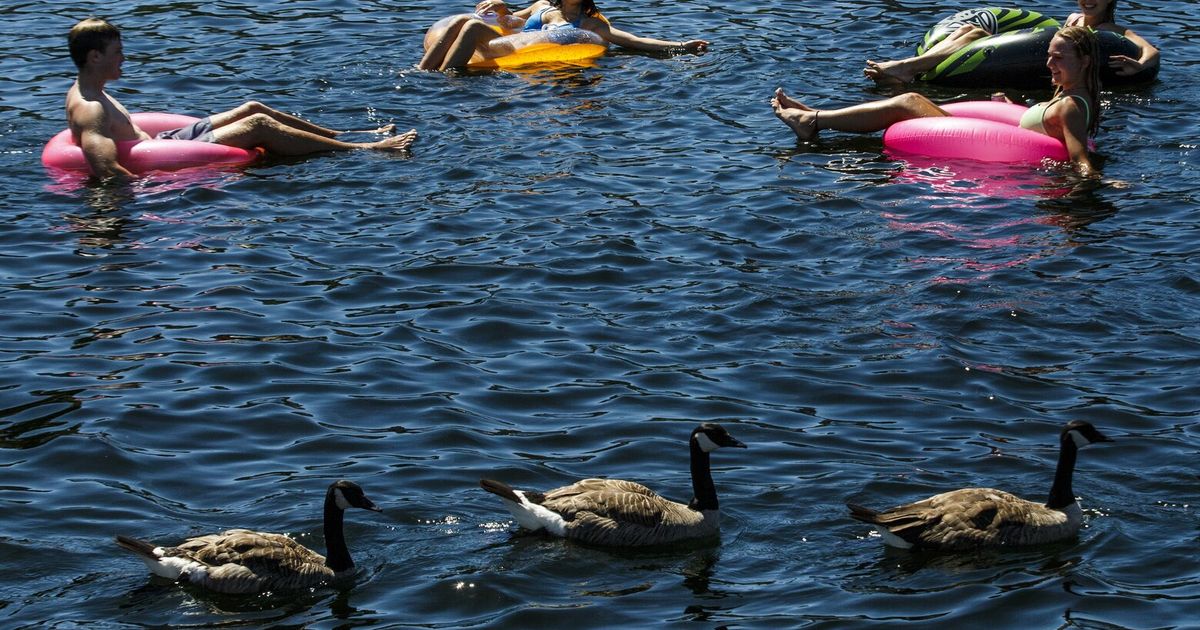
It’s been a dry, hot summer. Perfect time of year for a dip in Lake Washington.
Problem is, some of Seattle’s top swimming beaches have been routinely closed.
Madison Park, Magnuson, Pritchard Island — all posted with stay out of the water warnings by Public Health — Seattle & King County.
The likely culprit, say county officials, is poop. More specifically, high concentrations of bacteria from waterfowl droppings.
This is not a new phenomenon around here. Seattle Parks & Recreation is aware of the issue and is taking steps to lower the numbers of Canada geese in particular. That’s the good news. Simply put, the city can’t allow its best watering holes to become summerlong toxic stews.
Public Health interprets water quality test results and makes the decision about when to temporarily close a beach.
The testing is conducted weekly during the swim season. Some beaches have consistently better water quality than others, and there are many different variables. Each beach in each year can be different.
As of last week, Madison Park and Pritchard Island Beach have been closed for three weeks, open for nine. Magnuson has been closed for two weeks, open for 10. Earlier this week, all three were closed for swimming.
What a beach bummer.
Back in 2003, this newspaper ran a story with the headline: “Goose population drops 75 percent in Seattle parks.”
This was the result after federal wildlife agents destroyed more than 5,600 geese in Seattle when a federal judge ruled that the government could kill the birds in portable gas chambers set up on the back of trucks. Yikes.
These days, Seattle Parks and other entities around Lake Washington — this is far from a Seattle-only problem — participate in a federal Department of Agriculture program that sends agents out to count geese and douse their eggs in corn oil, which prevents their hatching.
In addition, lifeguards and maintenance crews work to clean up and dispose of goose poop on beaches, shorelines, and docks so that it does not enter the water and contaminate it.
All good efforts.
Canada geese are smart birds and soon get wise to scarecrows, flags, etc.
As noted by the Washington Department of Fish & Wildlife: “Because geese learn that real physical danger isn’t associated with harassment and scare devices, the birds will quickly learn to ignore them, no matter how effective these devices may be initially.”
The department recommends noisemakers, dogs, lasers, and “taste-aversion products and other chemical repellents.”
All of the above, please. Give Seattle swimmers back their beaches.
