

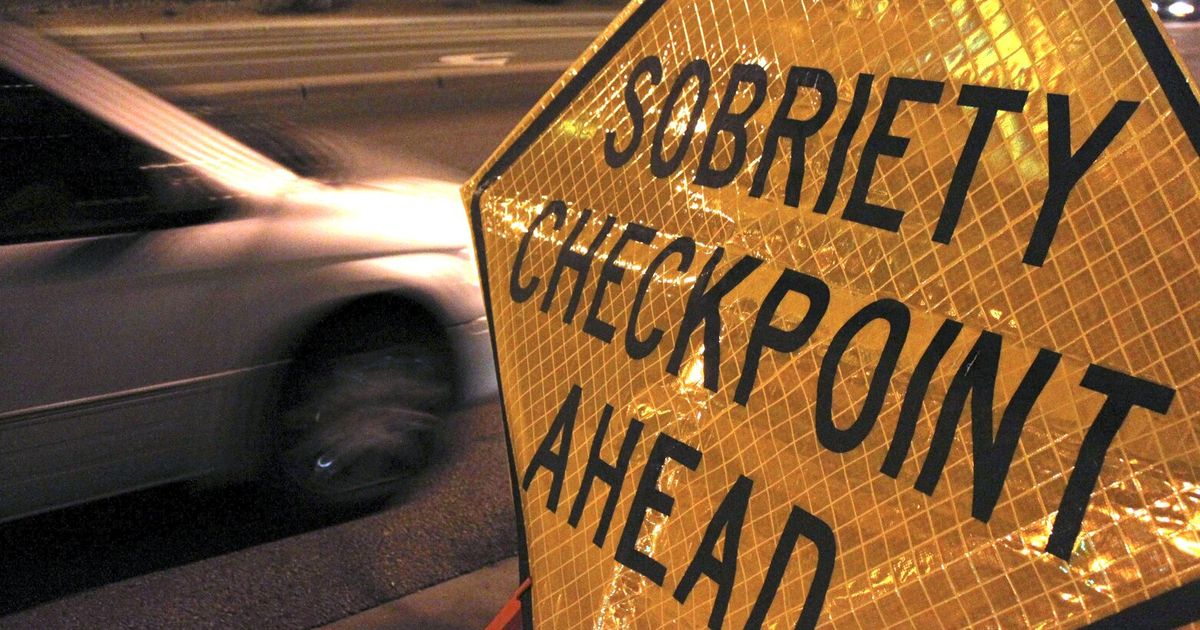
The Washington Traffic Safety Commission is floating sweeping measures to reduce impaired driving: re-establishing roadside sobriety checkpoints, lowering the legal blood alcohol concentration from 0.08 to 0.05, expanding roadside drug testing and tightening ignition-interlock enforcement.
The problem is real. Impaired driving is implicated in about half of Washington’s fatal crashes. The traffic commission estimates these steps could prevent a dozen deaths and hundreds of injuries each year. But while the impulse is understandable, several of the ideas are unwise, constitutionally suspect and disproportionate to the scale of the problem.
The commission points out that impaired driving deaths rose from 267 in 2019 to 344 in 2024. That’s a 29% increase, but in raw terms, it means 77 more deaths across a state of nearly 8 million people, a difference of less than one in 100,000. Every death is tragic, yet it’s worth remembering that Washington loses more than 1,200 residents each year to opioid overdoses and over 1,300 to suicide. Impaired-driving deaths are roughly comparable to the state’s homicide toll. That demands attention, but not extraordinary measures that sweep up millions of unimpaired drivers.
This is where proportionality matters. Saving the first 100 lives in a crisis carries enormous value. Saving the 344th through suspicionless stops and invasive testing offers far less return. Public policy is always about weighing benefits against costs, including the cost to civil liberties.
Sobriety checkpoints can reduce alcohol-involved crashes in some states. But in Washington, they are unconstitutional. In City of Seattle v. Mesiani (1988), the Washington Supreme Court ruled that suspicionless checkpoints violate Article I, Section 7 of the state Constitution, which affords greater protection of privacy than federal law.
Even if they were legal, WTSC’s own numbers are modest: perhaps 12 lives saved for $6 million spent each year. On paper, that looks cost-effective. In practice, it means stopping tens of thousands of innocent drivers to catch a handful. That is not safety, it is safety theater. It risks public trust while yielding only marginal gains.
The commission also proposes dropping the BAC threshold to 0.05. Over 100 countries use that limit, and impairment begins below 0.08. Utah, the only U.S. state to adopt 0.05, reported a 20% decline in fatal crashes after implementation.
But Utah is not Washington. A majority of Utahns are members of the Church of Jesus Christ of Latter-day Saints, which prohibits drinking. Its population is sparse and its culture markedly more abstinent. Seattle, Tacoma and Spokane are not Salt Lake City. Importing Utah’s law into Washington risks penalizing moderate social drinkers while delivering only modest safety gains. If lawmakers pursue this step, it should be with realistic expectations and clear public education, not as a cure-all.
Expanding roadside drug testing is another idea WTSC proffers, but here the legal barriers are even higher. Breath tests are allowed without a warrant after arrest. Blood tests are not. The U.S. Supreme Court has held that warrantless blood draws are too invasive, and Washington’s Constitution sets an even stricter standard.
In practice, officers can already obtain electronic warrants quickly in cases of suspected drug impairment, particularly for cannabis. That targeted approach is the right balance. Routine roadside blood draws, as practiced in Germany for instance, and suggested by the WTSC recommendations, are unconstitutional here.
One WTSC idea deserves stronger emphasis: ignition-interlock devices. These prevent a car from starting if the driver has been drinking, and studies show they reduce repeat offenses by 50% to 70% while installed. Washington already requires them for some offenders, but compliance is inconsistent. Require interlocks for all DUI offenders and ensure compliance. Expanding use and monitoring would deliver meaningful safety gains without infringing on anyone’s rights.
Another proven tool is high-visibility enforcement through saturation patrols. Concentrate resources in hot spots and pair them with strong deterrent messaging. Unlike checkpoints, these are lawful, targeted, and less intrusive. When paired with public messaging, they increase the perceived risk of being caught. That perception is what deters behavior.
Also, invest in prevention and alternatives. Strengthen treatment and diversion programs and expand safe transportation options through partnerships with bars, rideshare firms and transit.
This mix respects constitutional limits, balances costs with benefits and addresses root causes. Impaired driving is a serious problem, but WTSC’s proposals risk overreach.
The smarter path is obvious: ignition interlocks, targeted patrols and prevention. These steps save lives without eroding liberty. Washington can and should make its roads safer. Still, it must do so wisely, proportionally and in line with its constitutional traditions.
