

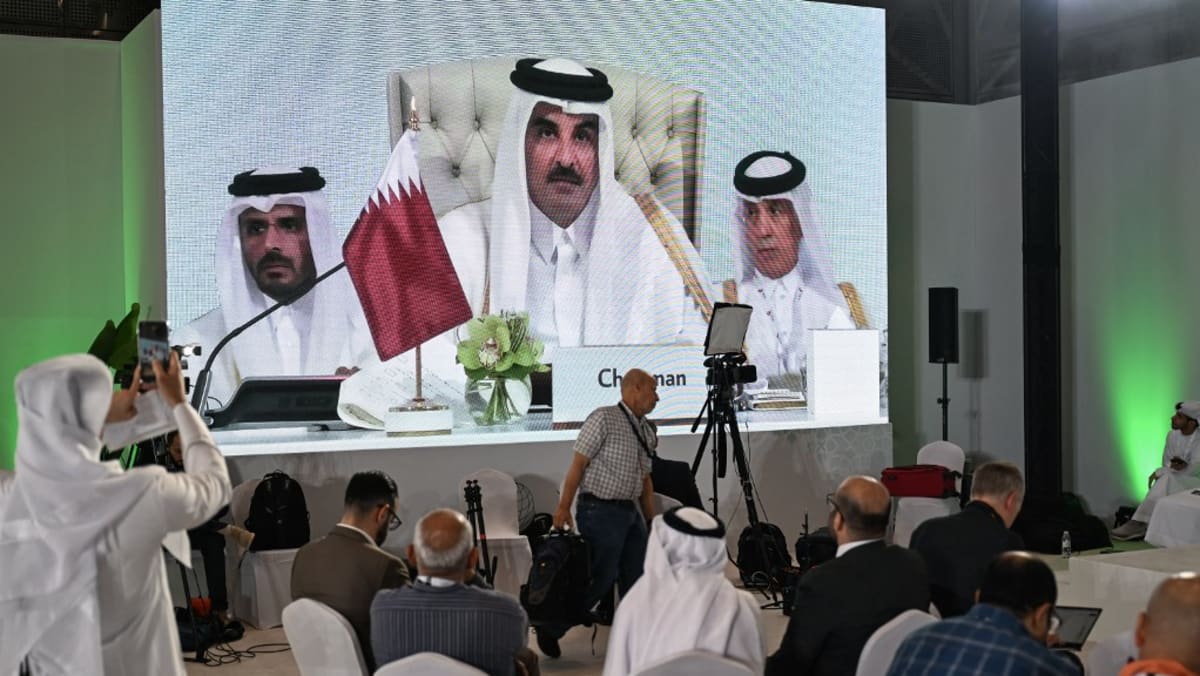
According to the draft statement, the nearly 60-country grouping in Doha will also emphasise “the concept of collective security … as well as the necessity of aligning together to face common challenges and threats”.
Crown Prince Mohammed bin Salman, Saudi Arabia’s de facto ruler, was among those present, as were Iranian President Masoud Pezeshkian, Iraqi Prime Minister Mohammed Shia al-Sudani, Turkish President Recep Tayyip Erdogan and Palestinian president Mahmud Abbas.
Jordan’s King Abdullah II and Pakistani Prime Minister Shehbaz Sharif also attended.
Separately, the United Nations Human Rights Council said it would host an urgent debate on Tuesday on Israel’s air strike in Qatar.
And an extraordinary meeting of the six-member Gulf Cooperation Council would also be held in Doha on Monday, according to Saudi state media.
Aziz Algashian, a Saudi-based researcher of international relations in the Middle East, said “many people are looking at actions, not just rhetoric” from the Arab-Islamic meeting in Doha.
“We’ve exhausted all forms of rhetoric. Now it’s just going to have to be actions – and we’ll see what those actions will be,” he said.
