

IEEE Spectrum’s most-read energy stories of 2024 centered on creative ways to produce, store and connect more carbon-free energy. Our readers wanted to know more about power beaming, new kinds of nuclear fusion, vertical solar farms, powerful ways to drill deeper into the Earth’s crust to harness geothermal energy, and grid hardware that connects renewable energy projects. Big Tech’s bold moves to secure nuclear energy for future data centers dominated international headlines in 2024, and readers liked Spectrum’s tech-focused coverage of the topic. Cheers to the top 10 energy stories of 2024.
Illustration: Tavis Coburn
Imagine a massive solar farm orbiting in space, collecting unfiltered, uninterrupted sunlight and beaming gigawatts of power down to Earth. The concept, called space-based solar power, is an idea so grand, yet so tantalizing, that engineers and government bodies have spent a great deal of time trying to figure out how to make it happen. After all, why shouldn’t we try to stick solar panels where the sun always shines? In May, Henri Barde, who recently retired from the European Space Agency (ESA), offered a laundry list of reasons to keep both our feet and our solar farms on the ground–for now.
 Jayme Thornton
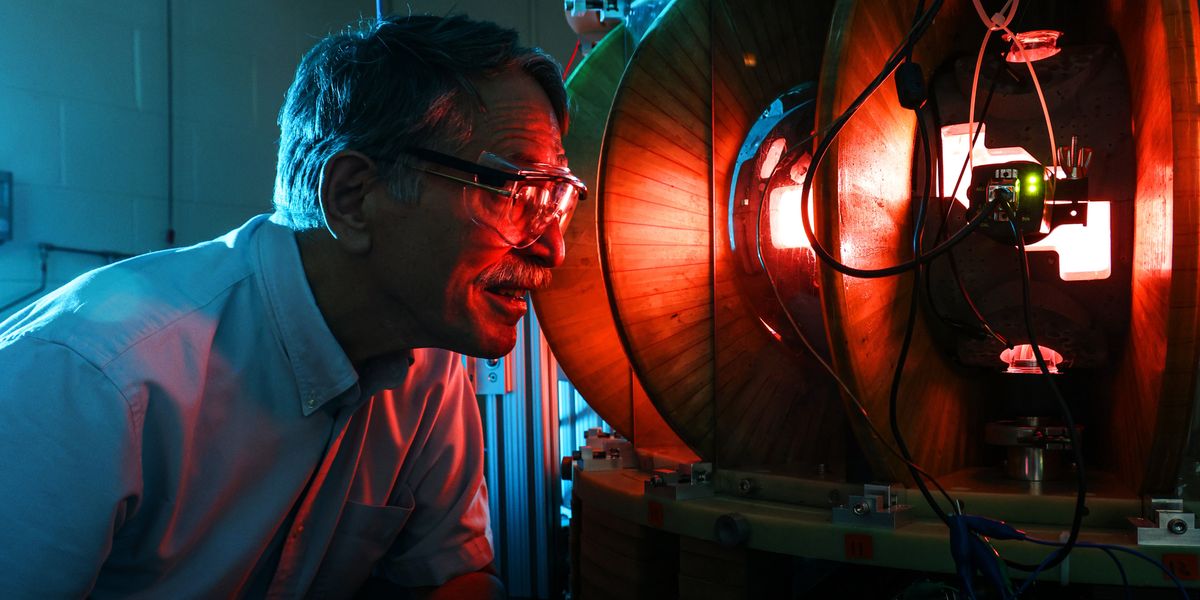
A stellarator is the kind of machine that looks as fantastical as it sounds. Its purpose is to replicate the physics of a star by fusing the nuclei of atoms, thereby generating limitless fusion energy. These machines are typically massive, tentacled contraptions that require billions of dollars and decades to construct. But researchers at the Princeton Plasma Physics Laboratory (PPPL) have managed to build one in less than a year for US $640,000. It sits on a table top and was constructed using 3D-printed and off-the-shelf parts. Spectrum contributing editor Tom Clynes visited PPPL to give us a deep dive into how the world’s most unassuming stellarator works, and how it has already inspired the formation of two fusion energy startups.
Quaise Energy
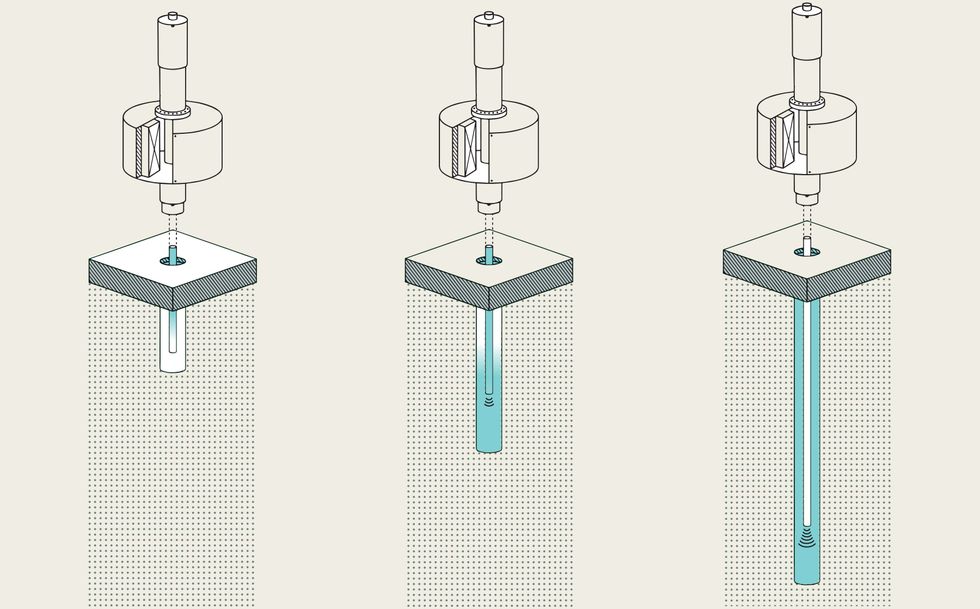
A huge amount of geothermal energy could be harnessed from the Earth’s crust if we could only drill deep enough. In March, Spectrum profiled an MIT spin-off company testing one potential solution: beaming powerful microwaves at rock to vaporize it using a machine called a gyrotron. The technology has been used in nuclear fusion experiments to heat and control plasma, and the MIT-spin-off, Quiase Energy, is adapting it to drill up to 20 kilometers into the Earth’s crust. Currently, the deepest existing man-made hole extends 12,262 meters below the surface of Siberia, and took nearly 20 years to drill.

iStock
What’s the best way to manage excess grid-scale energy from solar and wind farms? According to one study published in IEEE Transactions on Energy Management, the answer is hydrogen storage. It beat compressed air and four types of batteries in terms of scale, cost and suitability. The study suggests that if Germany expanded its use of hydrogen storage at renewable energy plants nationwide, it would lower costs by roughly 60 percent. Freelance contributor Michelle Hampson summarized the findings of the study in this reader favorite.

iStock
For over 15 years, renewable energy enthusiasts have awaited the arrival of perovskite solar cells, which are able to convert solar energy more efficiently than established technologies such as silicon-based photovoltaics, cadmium telluride, and copper indium gallium diselenide. Manufacturers have said for years that commercialization was just around the corner, but by March of 2024, no company had delivered. Part of the problem is that perovskite manufacturers aren’t using the same fabrication technologies as the small labs that developed them, reports Dexter Johnson, a contributing editor at Spectrum. Oxford PV in September announced the first shipment of perovskites, but widespread commercialization remains uncertain.
Tesla
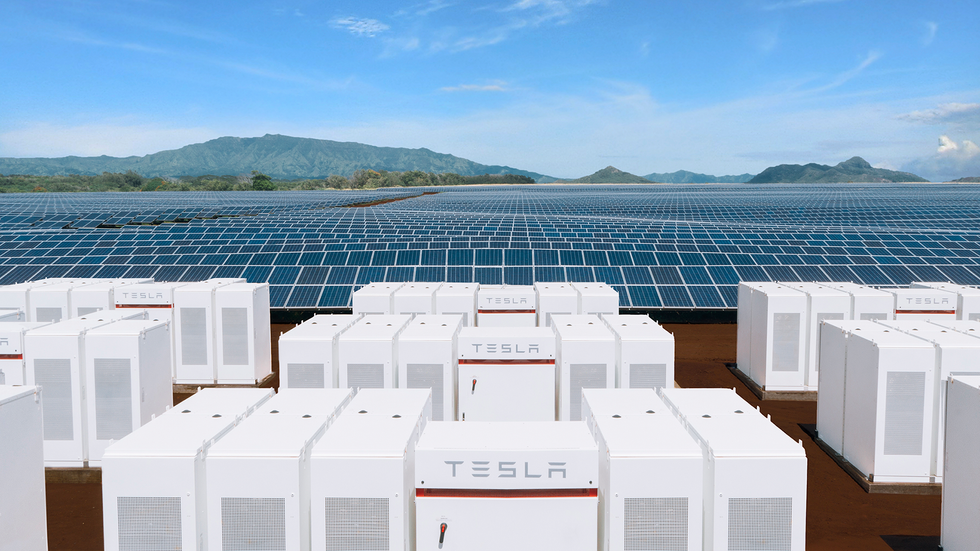
As more renewable energy generation and storage gets added to electrical grids, operators must increasingly turn to one critical piece of infrastructure: grid-forming inverters. These devices convert direct-current electricity to grid-compatible alternating current, and allow batteries, solar photovoltaics and wind turbines to connect to the grid. And on the island of Kauai in Hawaii, they prevented a disaster, writes Benjamin Kroposki and Andy Hoke at the U.S. National Renewable Energy Lab. Use of grid-forming inverters must increase if regions are going to achieve their renewable energy goals, the authors say.

NIF
In December 2022, Lawrence Livermore National Laboratory (LLNL) revealed that it had produced a fusion reaction that resulted in more energy than what was required to kick-start it. In February this year, a paper published in Physical Review Letters finally confirmed the LLNL’s claims. It also detailed the complex engineering and exquisite choreography of preparation that made this momentary fusion possible, and underscored the considerable work ahead. Spectrum contributing editor Edd Gent sums it up in this useful news analysis.

Kristen Mullen/AP
One of the biggest trends in energy in 2024 was Big Tech’s sudden nuclear power grab. Meta, Amazon, Google and Microsoft have all announced ambitious deals to secure nuclear power for their future AI operations and data centers. Amazon kicked off the bevy of public announcements in March when it bought a data center adjacent to a nuclear power plant in Pennsylvania with the expectation that it would be able to buy plenty of power directly from the plant, reports freelance contributor Andrew Moseman. But regulators later rejected Amazon’s proposal in a precedent-setting move. Spectrum will continue bringing readers coverage of this topic.

Next2Sun
One downside to solar farms is that they can take up otherwise fertile crop land. But German startup Next2Sun’s vertical solar panels function alongside crops. These bifacial modules collect sunlight from both sides of the panel, and are particularly effective in the morning and evening when the sun is low. Freelance contributor Rebecca Heilweil explains this simple take on agrivoltaics.
 The Age of Silicon Is Here…for Batteries
Group14
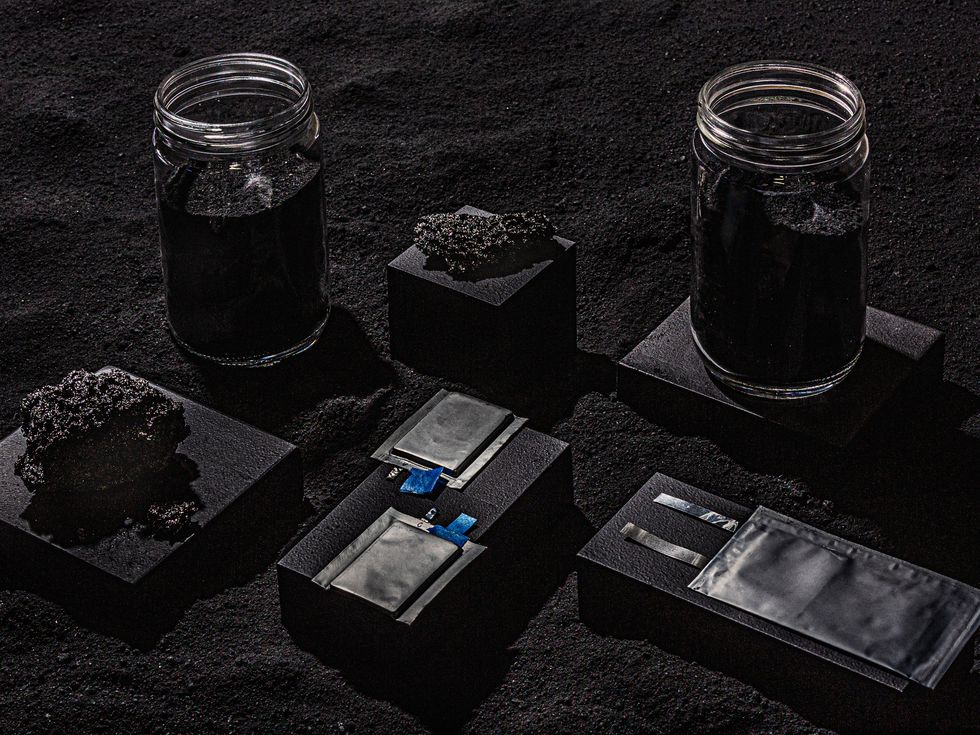
Researchers have vastly improved lithium-ion batteries over the last three decades, but mostly on the lithium-metal-oxide cathode side. Their graphite anodes, by contrast, have largely stayed the same, despite silicon being a promising alternative. This year, several carmakers and silicon anode startups teamed up to put silicon into battery cells, with the hope of making longer-range, faster-charging and more-affordable EVs. Prachi Patel‘s news story explains these carmakers’ approach to silicon batteries.
From Your Site Articles
Related Articles Around the Web
