

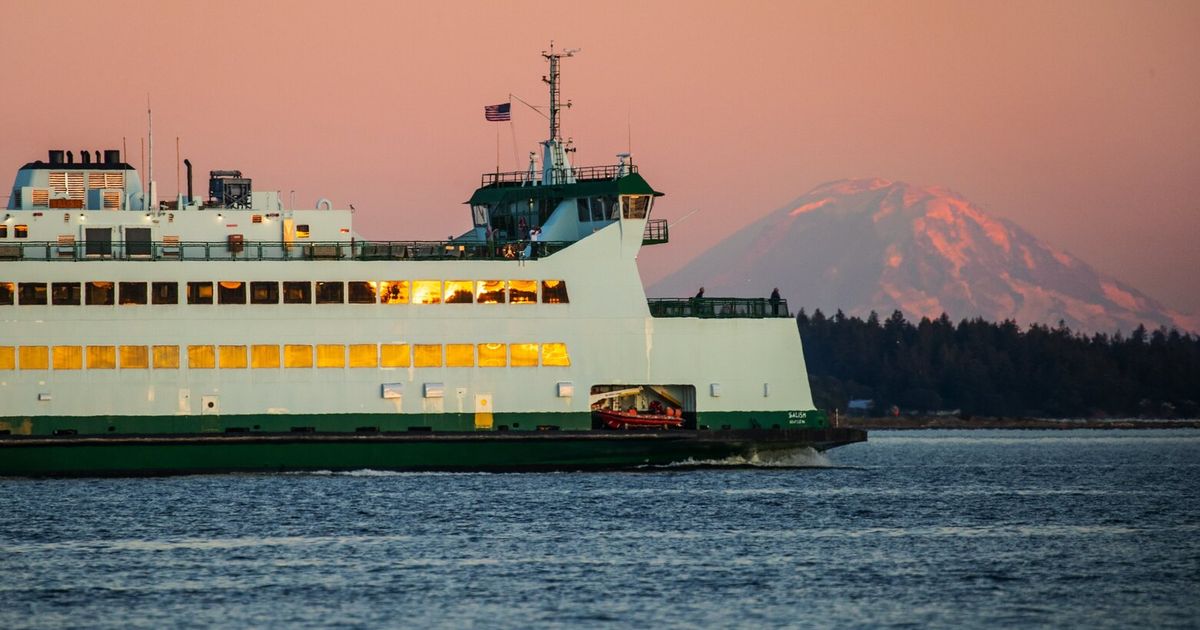
The Pacific Northwest has always been defined by its openness to the world. From the Peace Arch border crossing with its gates that should “never be closed” to our shipping, maritime and trade routes that tie us to our Asian friends across the Pacific, there is a certain openness in our hearts to cross-border engagement, foreign culture and commerce.
We are also defined by our distance from Washington, D.C. This distance from the imperial capital and our location in the upper northwest corner of the map, tucked behind the Rocky Mountains and Cascades, have resulted in a distinct identity in who we are and how we see ourselves — and perhaps a greater suspicion of foreign military adventures and certain foreign policy decisions driven by far-off politicians and bureaucrats in D.C.
Our location puts us at a disadvantage when it comes to those foreign policy and national security decisions. National media bias for the New York market is well-known, but we’re quite simply very far from the capital where decisions are made. Even for our sports teams, it’s an extra struggle dealing with cross-country flights and time changes, not to mention our exhausted senators and representatives flying back and forth between D.C. and Seattle-Tacoma International Airport (compare to a Delaware senator who simply jumps on an Amtrak train and zips over to the Capitol).
So we could use a little extra help, a little more oomph to ensure our voice is heard stronger and more clearly in faraway D.C., whether on trade, strong relations with our neighbors to the north, or continued regional economic competitiveness to create good jobs.
That’s why I and a group of former U.S. diplomats and civic leaders have come together to create Cascadia Foreign Policy, a new think tank exclusively focused on foreign policy issues that affect the Pacific Northwest.
At its core, CFP will look to create a foreign policy constituency in the Pacific Northwest so that our region speaks with a stronger, more unified voice.
Why? Because foreign policy decisions affect us whether we are paying attention or not. To borrow an old phrase: “You may not be interested in war (foreign policy), but it is interested in you.” Those foreign policy decisions are especially hitting the Pacific Northwest hard right now with attacks on our Canadian neighbors, escalatory tariffs on our Asian trading partners (Washington state is among the most trade-dependent states in the nation), and the dramatic and sudden shutdown of the U.S. Agency for International Development. This latest action has deeply affected numerous civil society, faith-based and international humanitarian organizations based in the Pacific Northwest.
Cascadia Foreign Policy will champion policies and research that reflect our region’s values: openness, innovation and thoughtful re-evaluation of national security priorities. We will amplify local voices advocating for restraint in military expenditures abroad and greater reinvestment in domestic well-being and community resilience at home. And we will produce original research that uniquely affect the PNW, ranging from Asia-Pacific ties to tech, trade and innovation.
When Cascadia’s ports handle 40% of all U.S. containerized cargo to Asia, when our tech companies depend on international talent, when our agricultural exports feed the world, we cannot afford to be passive observers of foreign policy made 3,000 miles away.
I served as a USAID diplomat in El Salvador for the last three years and value more than ever our fundamental freedoms as Americans and our voice as Pacific Northwesterners. We know that the Pacific Northwest isn’t just defined by its openness to the world, but by its competency, its leadership and its capacity to pioneer change. It’s time to lead.
