

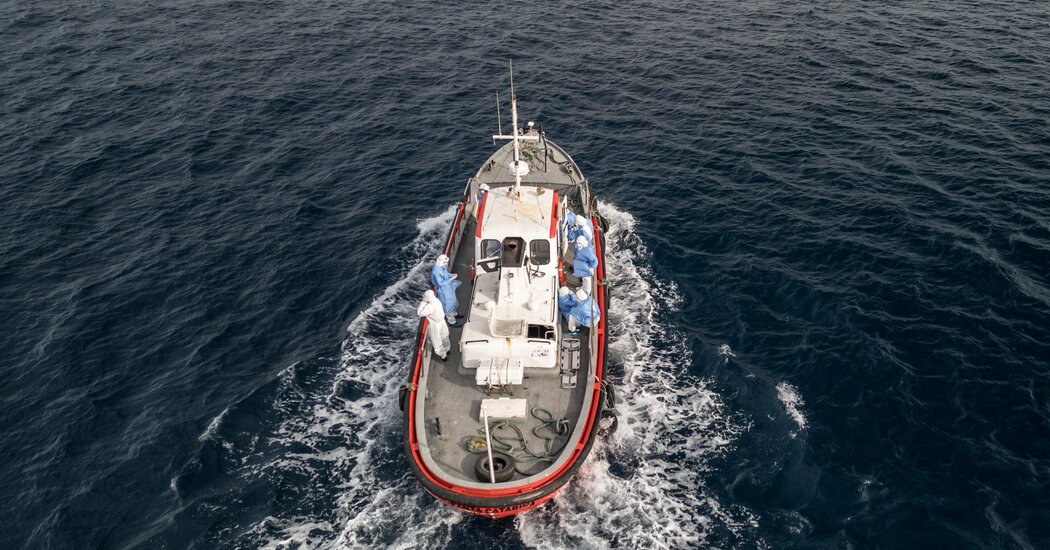
Of the roughly 150 passengers and crew members who boarded the MV Hondius, a luxury cruise ship, originally destined for Antarctica, three are now dead from a rare infectious disease: a strain of hantavirus known as Andes virus. Three more were evacuated to hospitals on Wednesday after developing symptoms like fever and shortness of breath. Some other passengers who may have been infected disembarked before the outbreak was recognized, raising fears among health officials that the virus, which can have a mortality rate up to 30 to 40 percent, could spread more widely.
The current outbreak is notable to me as an epidemiologist who studies infectious diseases because hantaviruses, a family of viruses spread by wild rodents that can cause lung and kidney diseases, don’t cause many outbreaks, despite being found all over the world. In fact, person-to-person transmission is exceedingly rare. If it is confirmed in this case, as I suspect it will be, it will make this event remarkable.
Despite the unsettling parallels to the early days of Covid-19, when cruise ships were among the first sites to be hit, the risks from this virus are quite different. Most hantaviruses infect only people who come into direct contact with infected rodent droppings, urine or saliva. Even the Andes virus, a strain that has been confirmed to pass between people, is a relatively poor spreader.
In previous outbreaks of hantavirus, person-to-person transmission has required sustained exposure, such as prolonged, close contact with a sick person, which is why the Andes virus strain, despite causing severe illness, is unlikely to cause an epidemic.
The close quarters of the people on the cruise may have given the hantavirus an unusual opportunity to spread through close contact in shared spaces. Based on what we currently know, only people who were aboard the cruise ship and their close contacts are at risk.
Still, it’s unwise to be too trusting when it comes to outbreaks. Viruses are wily. In the days and weeks ahead, there are a few developments I will be watching for that would change my level of concern.
Right now, all eight people with confirmed or suspected cases were passengers on the MV Hondius. If a case is found in someone who was not on board, I will grow more concerned about the potential for community spread. But even if more infections are found, the details will matter.
A new case with a direct connection to a passenger — for instance, the spouse of someone who was aboard — is explainable. Disease investigators can still hope to have a firm handle on chains of transmission. What would be more concerning is if an infection is found in someone with no obvious connection to the MV Hondius. Unlinked cases mean loose ends that investigators cannot see or manage.
It would also concern me if cases were found in health care workers. Previous outbreaks of viruses with characteristics similar to the Andes virus have taken root in hospitals. A 2015 outbreak of MERS in South Korea comes to mind, in which a sick person visited at least two hospitals and a clinic, inadvertently touching off chains of transmission that led to 186 confirmed cases and 38 deaths. Cases in health care settings signal an escalating situation.
Another wild card is viral evolution. As the many Covid variants have demonstrated, viruses are always changing and adapting, and sometimes those changes lead to an increased ability to pass from person to person. Scientists will be closely examining samples from sick passengers from the MV Hondius to assess whether a new variant that spreads more easily is in play.
These scenarios are possible, but remote. In all likelihood, this outbreak will quickly come under control. But beyond monitoring for new developments, I will also be watching the effectiveness of the response. The demands of the Covid pandemic and subsequent political backlash have depleted public health programs, leaving us less prepared to mount a strong response.
Whatever its final form, the hantavirus event is yet another exercise of our ability to stop outbreaks. The public should expect clear communication, transparency about what is known and unknown, thorough scientific investigation and operational excellence. Nailing those elements could turn this unusual cluster into a lasting contribution to the science of outbreak response. If investigators do their jobs well and share what they find, the world will be better prepared, not just for hantaviruses, but for whatever comes next.
