

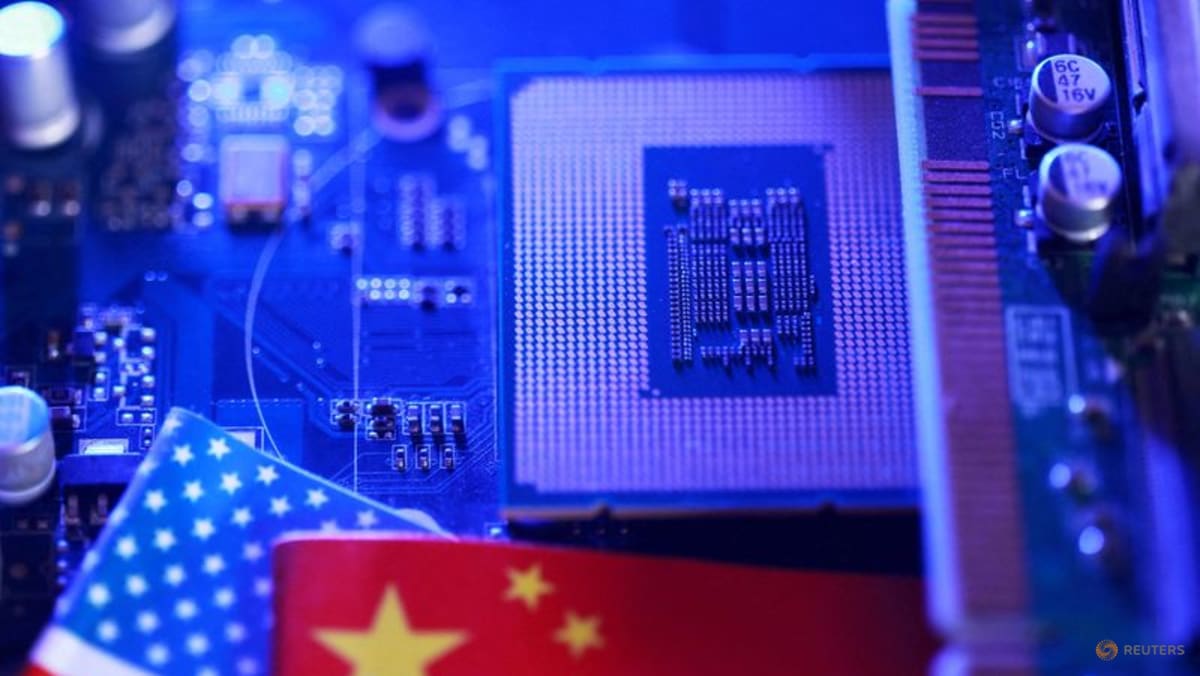
The US, citing national security concerns, is targeting China’s ability to make state-of-the-art chips because they are crucial to fields such as artificial intelligence and military modernisation.
The two economic superpowers are also vying to sell advanced technology, such as AI data centres, to other nations.
“These are the sales that made China increasingly competitive in the manufacture of a wide range of semiconductors, with profound implications for human rights and democratic values around the world,” the report said.
In an interview, Mark Dougherty, president of Tokyo Electron’s US unit, said the industry’s China sales have started to decline this year, in part due to new regulations and welcomed more coordination between the US and Japanese governments.
“I think it’s clear, from a US perspective, there’s an outcome that is still desired that has not yet been achieved,” Dougherty told Reuters.
Applied and Lam did not respond to a request for comment.
ASML and KLA said they could not comment until seeing the report in full. The committee said that the toolmakers cooperated with the committee on the report and were informed of its findings.
Three Chinese firms that have become major customers of toolmakers – SwaySure Technology Co, Shenzhen Pengxinxu Technology Co and SiEn (Qingdao) Integrated Circuits Co – are of particular security concern.
They were flagged last year by the congressional committee’s leaders, Chairman John Moolenaar, a Michigan Republican, and Ranking Member Raja Krishnamoorthi, an Illinois Democrat, in a letter to the Commerce Department alleging ties to a secret network aiding Huawei Technologies, and US officials barred exports to them in December.
The report recommended tighter coordination among allies and broader restrictions, including on components China could use to build its own chipmaking tools.
“China is attempting to rewrite the entire supply chain,” said Craig Singleton, a senior fellow at the Foundation for Defense of Democracies, a think tank.
“What used to be niche tool segments are now battlegrounds.”
