

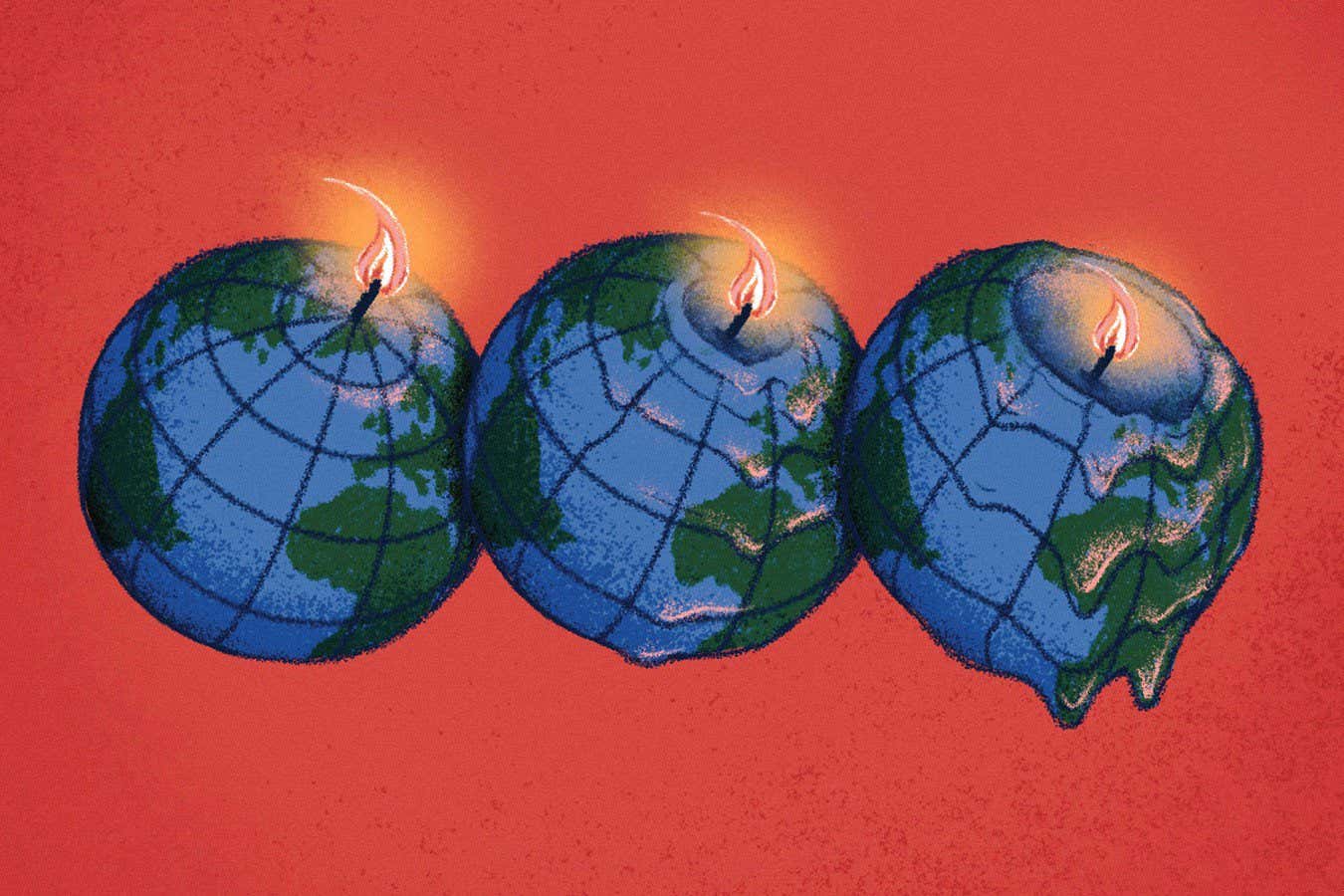
Heatwaves, flooding, storms and droughts driven by climate change are making life more difficult for people around the world. Societies will need to adapt to these changes, but governments, businesses and individuals won’t be able to afford to protect everywhere, nor will many people want to live with high levels of risk.
As I argue in my new book, Sink or Swim, we need to face up to a series of hard choices about how to best adapt to this new world. Such choices include where we can live safely, who makes those decisions and how we shift the global food system to meet everyone’s needs in times of scarcity.
Negotiators at COP30 in Brazil later this month will focus on mobilising finance to help low-income countries reduce their emissions and adapt to the impacts of climate change.
At the annual UN conference last year in Baku, Azerbaijan, governments agreed to mobilise at least $300 billion by 2035 and to aim for up to $1.3 trillion through public and private sources. But many high-income countries aren’t contributing their fair share, and UNEP estimates that the funding gap for adaptation in lower-income countries is $187 billion to $359 billion per year.
More money is essential, but even a big increase won’t be enough on its own to manage the risks the world faces. As I have seen in my own work on adaptation with governments and civil society, adaptation efforts have so far often been small-scale and incremental. Measures like early-warning systems, cooling spaces and flood barriers are important and can help – for now. But this approach will not be enough to adapt to the impacts we are facing, such as heatwaves, flooding, crop failures and potential ecosystem collapse, and we will need address the tough questions ahead.
One of these hard choices will be when and how to relocate communities away from low-lying coastlines. There are examples of planned relocation in many places, including China, Fiji, India, Japan, the Philippines and the US. But it is really hard to do well. Residents in Wales learned from the local media that the sea defences around their town wouldn’t be maintained in the future, but many more places in the UK are at risk.
Governments will need ways to choose which places to defend in the face of sea level rise and flooding, and which places will require retreat. In each of these sites, we will need consultations that allow communities to identify what is important to them and support from the government to facilitate those who have to move.
Another hard choice will be how to balance diversity and productivity in the food system to make sure there is both enough resilience to withstand shocks and also enough food to feed a growing global population. The food system is especially vulnerable to climate change, as there is so little diversity within it. Huge quantities of staple crops are grown in a few areas of the world and limited varieties dominate global consumption. A diverse system, with more redundancy built in, would be more resilient, but there are difficult decisions ahead in order to build this, and tradeoffs with efficiency and productivity.
Governments will need to invest in or subsidise more diverse food varieties and support local food systems, and establish a wider range of trading relationships. This would have higher short-term costs, but more long-term benefits when shocks hit.
Addressing difficult decisions like these, as well as in areas like migration, water use and biodiversity, will require high levels of public and private investment as well as trade-offs, compromises and short-term political costs.
But without facing up to what needs to be done, we risk consigning ourselves to the chaos of the climate crisis in perpetuity.
Susannah Fisher is author of Sink or Swim: How the world needs to adapt to a changing climate
Topics:
