

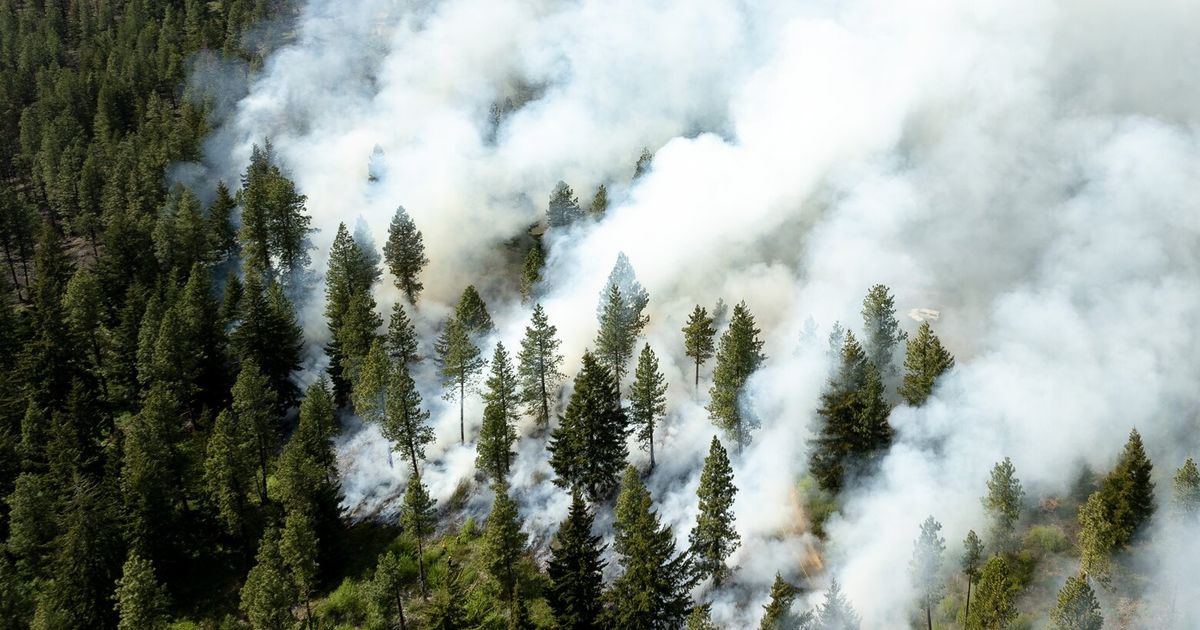
The Burdoin Fire near White Salmon forced thousands of residents to flee this summer, destroying at least 44 homes and other structures. But as firefighters attacked the blaze near the Columbia River, they observed pockets of flames crawling more slowly over areas where underbrush had been previously removed or burned away. That gave crews precious time to mobilize equipment and access hard-to-reach areas, likely saving homes.
That prior work was no accident. Agencies including the state’s Department of Natural Resources have used clearing, burning and other forest treatment work to make forests healthier and more resilient to the growing risk of megafires.
So it’s more than alarming Gov. Bob Ferguson and the state Legislature signed off on a budget that cut in half the funds for exactly this kind of work. In 2021, lawmakers committed to more than $60 million a year to prevent wildfire and more effectively attack fires when they happen. Lawmakers and the governor should quickly restore the funding. They have an appropriate source from which to do so: the state’s landmark climate law.
Here’s why. The carbon dioxide that is present today in Earth’s atmosphere is now more than 100 parts per million greater than it was in 1960. Those heat-trapping greenhouse gases are bringing prolonged and dangerous heat everywhere, including wooded areas.
The Climate Commitment Act, signed by Gov. Jay Inslee in 2021, has raised more than $3 billion through auctions where the state’s biggest carbon emitters compete to purchase emissions credits. Those proceeds are well spent protecting forests, the natural world’s best carbon sequesters. Because when forests burn, they also release the carbon they had locked away.
When DNR and other agencies manage clearing or burning fuels in the understory of forests, they help prevent the most catastrophic kind of fires that can leapfrog tree canopies. The agency has already successfully treated more than 900,000 acres in Central and Eastern Washington under a plan developed by previous DNR Commissioner Hilary Franz. More of that work, in jeopardy due to the budget cuts, must continue.
Wildfire smoke is also potentially deadly and can exacerbate cardiovascular and respiratory diseases. The British medical journal The Lancet estimated wildfire exposure led to 154,000 deaths worldwide in 2024.
Lawmakers did backfill some dollars this year from the Climate Commitment Act to help DNR with its forest health work. But it was nowhere near the original $125 million every two years as originally promised. Falling under the penny-wise-and-pound-foolish school of budgeting, the Legislature must concede this error and make good on fully funding this program.
The cuts put at risk DNR’s ability to make forests — and all Washingtonians — safer from and more resilient in the face of climate change. Lawmakers should right this wrong with haste when they reconvene in January.
