
Close Menu
    National News Brief
    Saturday, November 7
    • Home
    • Business
    • Lifestyle
    • Science
    • Technology
    • International
    • Arts & Entertainment
    • Sports
    National News Brief
    Home » Crash clock says satellites in orbit are three days from disaster

    Crash clock says satellites in orbit are three days from disaster

    Team_NationalNewsBriefBy Team_NationalNewsBriefDecember 16, 2025 Science No Comments3 Mins Read
    Share
    Facebook Twitter LinkedIn Pinterest Email


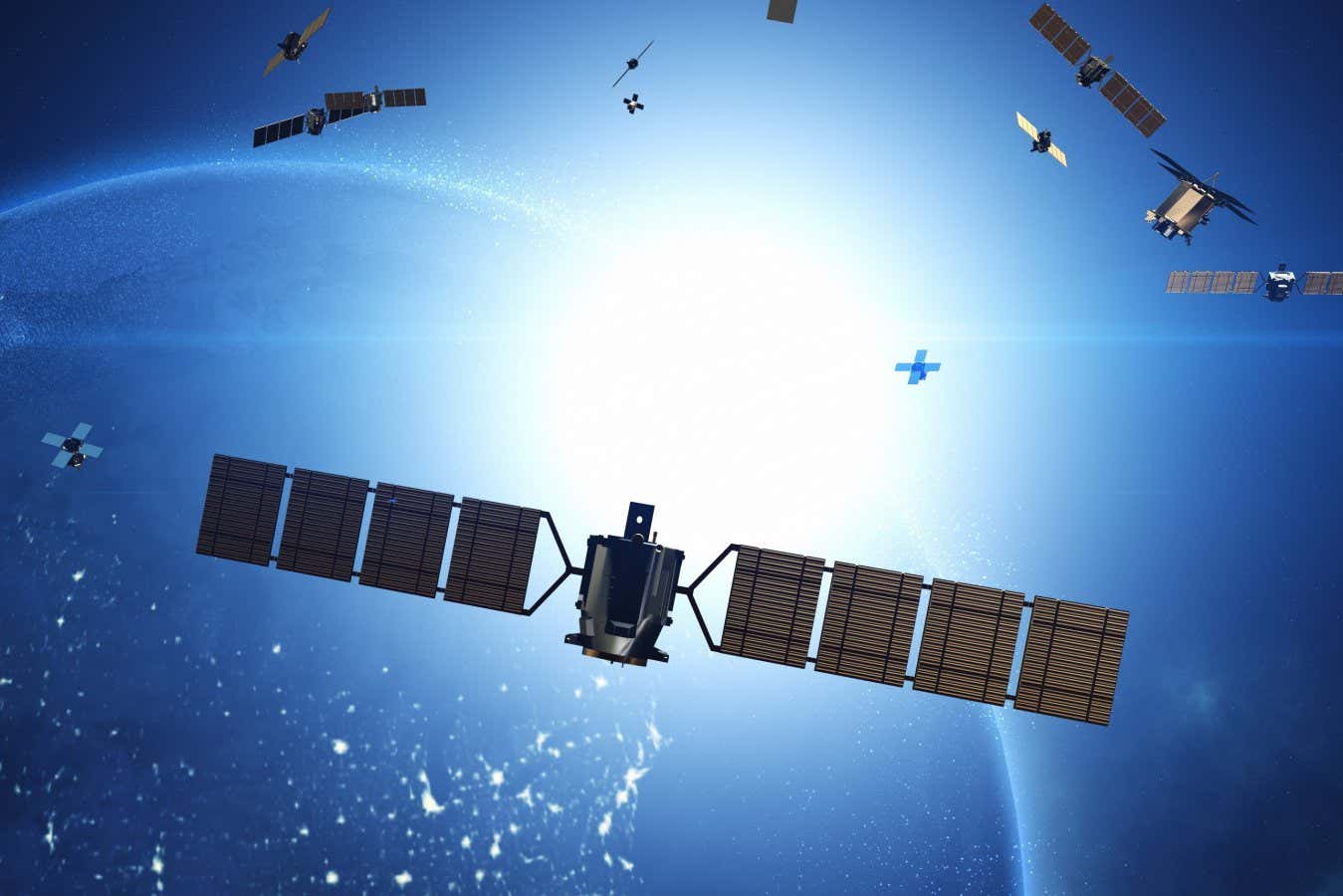
    An artist’s representation of satellites in orbit around Earth

    yucelyilmaz/Shutterstock

    A collision would occur in just 2.8 days if all satellites lost their ability to dodge each other, highlighting how crowded Earth’s orbit is becoming.

    In the past seven years, the number of satellites has more than tripled from 4000 to nearly 14,000. The main cause of this growth has been SpaceX’s Starlink constellation, which now numbers more than 9000 satellites in low Earth orbit between 340 and 550 kilometres above Earth.

    This large increase means satellites must constantly dodge out of the way of each other, known as a collision avoidance manoeuvre, to prevent crashes that would generate thousands of pieces of metal and potentially render parts of Earth’s orbit unusable.

    From 1 December 2024 to 31 May 2025, SpaceX performed 144,404 collision avoidance manoeuvres, equivalent to one every 1.8 minutes across its constellation, according to a report by the company. Only one collision between satellites in orbit has ever occurred. In 2009, an active satellite run by Iridium Communications hit a defunct Russian Kosmos satellite. Hundreds of pieces of debris from the event still orbit Earth.

    Sarah Thiele at Princeton University and her colleagues used public positional data of satellites to model how their increased number has affected the collision risk. They came up with a new metric, called the Collision Realization And Significant Harm (CRASH) Clock to quantify the risk. The name invites comparisons with the infamous Doomsday Clock that charts humanity’s threat of nuclear war. “We definitely talked about that a lot,” says Samantha Lawler at the University of Regina in Canada, another member of the team.

    They found that if all the satellites in orbit in 2018 – prior to SpaceX’s first Starlink launch in 2019 – had suddenly lost their ability to manoeuvre, there would have been a collision in 121 days. However, today the number is just 2.8 days because of the large number of satellites in orbit.

    “We were shocked it was that short,” says Thiele.

    The 2.8-day figure presumes that some event, such as a powerful solar storm, has rendered all satellites unable to change course. In May 2024, a strong solar storm caused some Starlink satellites to ripple in a giant wave in response to the event. A repeat of the most powerful solar storm on record – the Carrington Event of 1859 – could cause significant problems, although Wineed Vattapally at SES Satellites in Luxembourg says it probably wouldn’t render all satellites inoperable. “It’s unlikely to knock them all out at the same time,” he says.

    New Scientist. Science news and long reads from expert journalists, covering developments in science, technology, health and the environment on the website and the magazine.

    The world capital of astronomy: Chile

    Experience the astronomical highlights of Chile. Visit some of the world’s most technologically advanced observatories and stargaze beneath some of the clearest skies on earth.

    A metric like the CRASH Clock is useful to highlight how crowded Earth’s orbit is becoming, says Hugh Lewis at the University of Birmingham, UK. “Can we keep adding to that house of cards?” he says. “The more cards that get added, the bigger the collapse is when things go wrong.”

    Tens of thousands more satellites are set to be launched in the coming years by SpaceX, Amazon and several Chinese companies for their own mega constellations. That means it is likely that the CRASH Clock will decrease further, raising the potential for collisions. “It’s scary to think about,” says Thiele.

    Topics:


    Source link

    Team_NationalNewsBrief
    • Website

    Keep Reading

    Hundreds of stunning ice age drawings discovered inside Spanish cave

    This brain change can make foxes act like pet dogs

    Kevin Roose says the race to build superintelligence is accelerating

    Have astronomers spotted Planet Nine?

    The Great Pacific Garbage Patch is changing the color of the ocean

    These are the doctors and scientists elected in the 2026 midterms

    Add A Comment

    Comments are closed.

    Editors Picks

    Commentary: Trump may be a more serious contender for Nobel Peace Prize in 2026

    October 13, 2025

    Security credentials inadvertently leaked on thousands of websites

    March 23, 2026

    Alexa PenaVega Shares Heartbreaking Photo From Stillbirth

    April 14, 2025

    Even in our digital world, materials still matter

    September 11, 2025

    Sudan lose to Burkina Faso as Algeria win again at AFCON 2025 | Football News

    December 31, 2025
    Categories
    • Arts & Entertainment
    • Business
    • International
    • Latest News
    • Lifestyle
    • Opinions
    • Politics
    • Science
    • Sports
    • Technology
    • Top Stories
    • Trending News
    • World Economy
    About us

    Welcome to National News Brief, your one-stop destination for staying informed on the latest developments from around the globe. Our mission is to provide readers with up-to-the-minute coverage across a wide range of topics, ensuring you never miss out on the stories that matter most.

    At National News Brief, we cover World News, delivering accurate and insightful reports on global events and issues shaping the future. Our Tech News section keeps you informed about cutting-edge technologies, trends in AI, and innovations transforming industries. Stay ahead of the curve with updates on the World Economy, including financial markets, economic policies, and international trade.

    Editors Picks

    Could the US midterms put a pin in the AI bubble?

    November 7, 2026

    Martin Armstrong On The Iran War And Why 2032 Is Closer Than You Think

    November 7, 2026

    Ty Jerome Dishes Five Assists in 21-Point Night

    November 7, 2026

    Paris Jackson Wants $600M From The Estate, But Why Now?

    November 7, 2026
    Categories
    • Arts & Entertainment
    • Business
    • International
    • Latest News
    • Lifestyle
    • Opinions
    • Politics
    • Science
    • Sports
    • Technology
    • Top Stories
    • Trending News
    • World Economy
    • Privacy Policy
    • Disclaimer
    • Terms and Conditions
    • About us
    • Contact us
    Copyright © 2024 Nationalnewsbrief.com All Rights Reserved.

    Type above and press Enter to search. Press Esc to cancel.